The Central Intelligence Agency and Overhead Reconnaissance; The U-2 and OXCART Programs, 1954-1974
CIA-UAP-003 · page 178 of 406
Text
This text came with the file. It may have mistakes. When the text and the image disagree, the image is right.
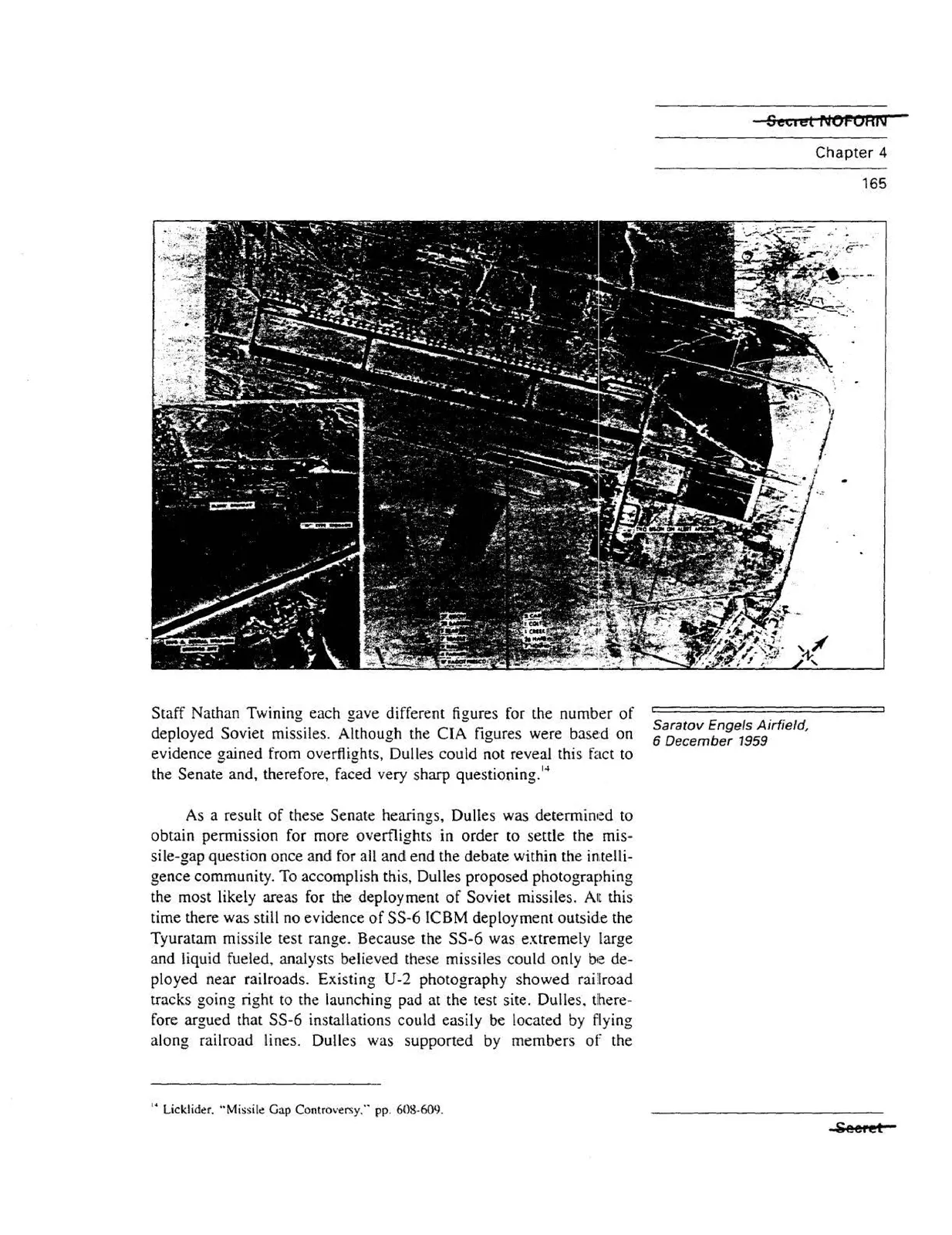
165 Sec. et NOFORl'J Chapter 4 - J . •. ~ ·~-:.. -?.,- .._.,.,,..__,_~ - -. -~1}').'~F '< ....; Staff Nathan Twining each gave different figures for the number of deployed Soviet missiles. Although the CIA figures were based on evidence gained from overflights, Dulles could not reveal this fact to the Senate and, therefore, faced very sharp questioning. 14 As a result of these Senate hearings, Dulles was determinced to obtain permission for more overflights in order to settle the mis sile-gap question once and for all and end the debate within the intelli gence community. To accomplish this, Dulles proposed photographing the most likely areas for the deployment of Soviet missiles. Alt this time there was still no evidence of SS-6 ICBM deployment outside the Tyuratam missile test range. Because the SS-6 was e:<tremely large and liquid fueled, analysts believed these missiles could only bie de ployed near railroads. Existing U-2 photography showed rai!lroad tracks going right to the launching pad at the test site. Dulles. tlhere fore argued that SS-6 installations could easily be located by flying along railroad lines. Dulles was supported by members of the " Licklider. "Missile Gap Controversy." pp. 608-609. . • -r.- -· ~ · Saratov Engels Airfield, 6 December 1959