The Central Intelligence Agency and Overhead Reconnaissance; The U-2 and OXCART Programs, 1954-1974
CIA-UAP-003 · page 212 of 406
Text
This text came with the file. It may have mistakes. When the text and the image disagree, the image is right.
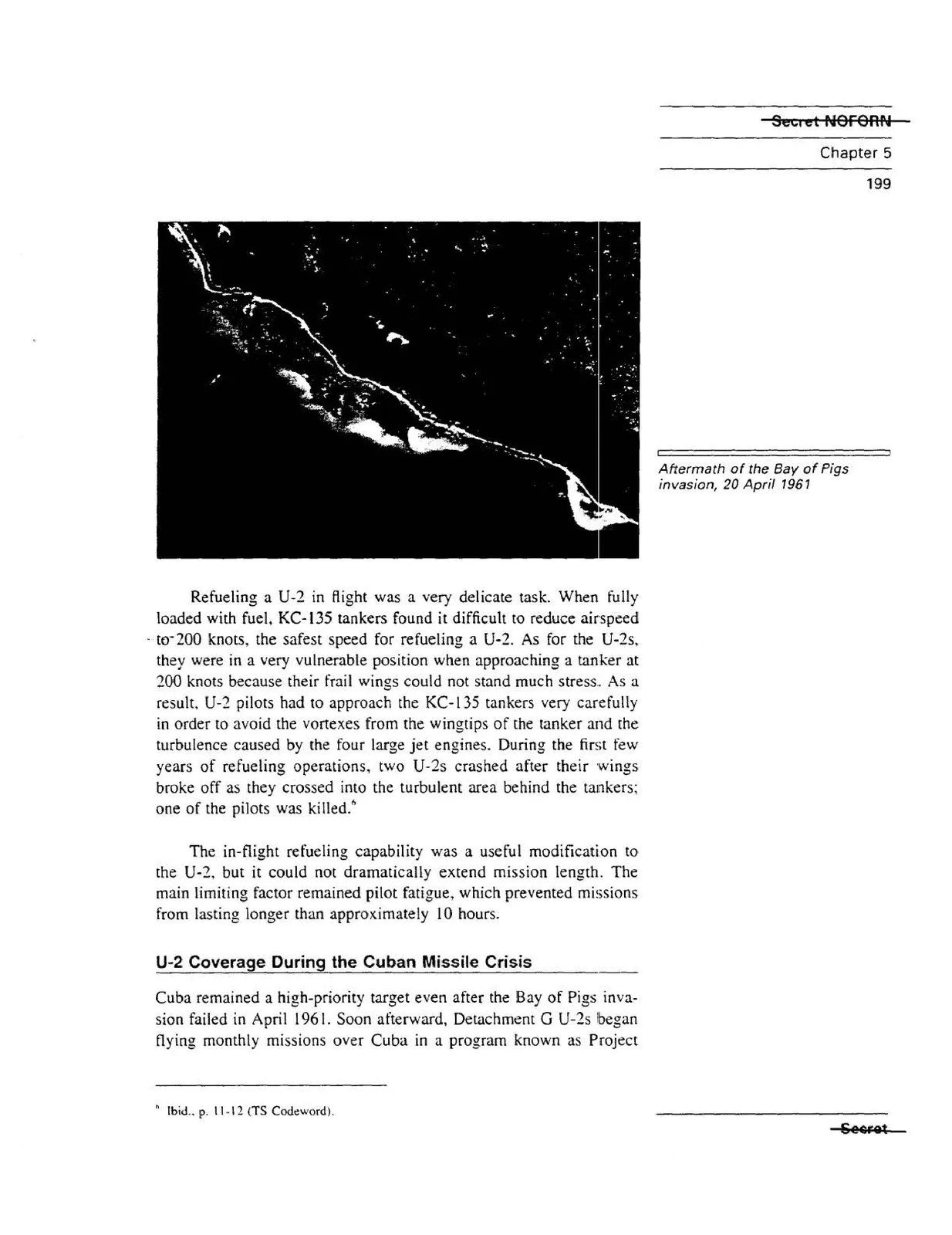
199 Sec, el NOFORN Chapter 5 Aftermath of the Bay of Pigs invasion, 20 April 1961 Refueling a U-2 in flight was a very delicate task. When fully loaded with fuel, KC-135 tankers found it difficult to reduce airspeed • w-200 knots, the safest speed for refueling a U-2. As for the U-2s, they were in a very vulnerable position when approaching a tanker at 200 knots because their frail wings could not stand much stress. As a result, U-2 pilots had to approach the KC-135 tankers very carefully in order to avoid the vonexes from the wingtips of the tanker and the turbulence caused by the four large jet engines. During the first few years of refueling operations, two U-2s crashed after their wings broke off as they crossed into the turbulent area behind the tai11kers; one of the pilots was killed." The in-flight refueling capability was a useful modificati.on to the U-2, but it could not dramatically extend mission length. The main limiting factor remained pilot fatigue, which prevented missions from lasting longer than approximately 10 hours. U-2 Coverage During the Cuban Missile Crisis Cuba remained a high-priority target even after the Bay of Pigs inva sion failed in April 1961. Soon afterward, Detachment G U-2s ibegan flying monthly missions over Cuba in a program known as Project • Ibid .. p. 11 -12 (TS Cod~word).