The Central Intelligence Agency and Overhead Reconnaissance; The U-2 and OXCART Programs, 1954-1974
CIA-UAP-003 · page 231 of 406
Text
This text came with the file. It may have mistakes. When the text and the image disagree, the image is right.
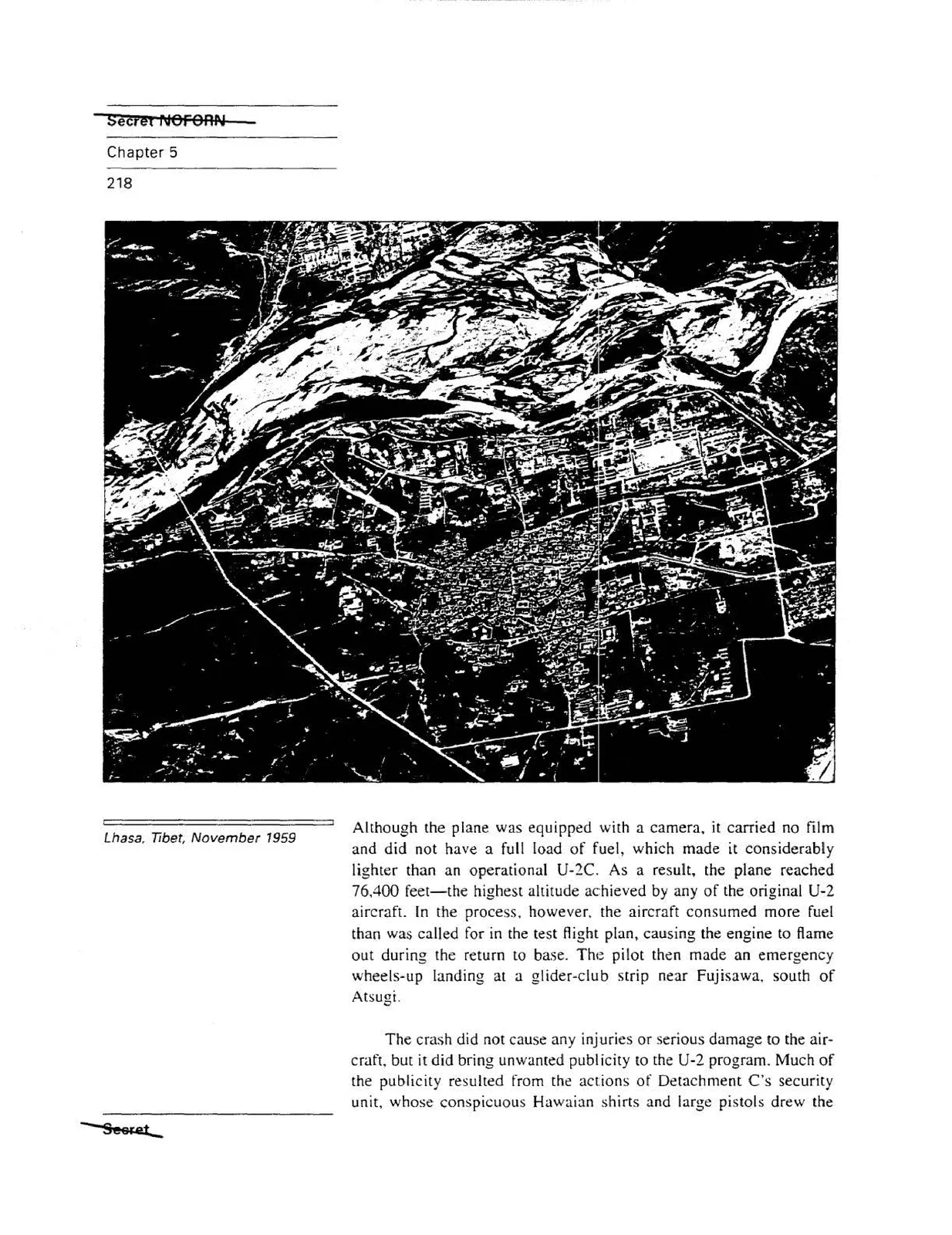
Secfei NeF8AN Chapter 5 218 A lthough the plane was equipped with a camera. it carried no film Lhasa, Tibet, November 1959 and did not have a full load of fuel, which made it considerably lighter than an operational U-2C. As a result, the plane reached 76.400 feet-the highest altitude achieved by any of the original U-2 aircraft. In the process. however, the aircraft consumed more fuel than was called for in the test flight plan, causing the engine to flame out during the return to base. The pilot then made an emergency wheels-up landing at a glider-club strip near Fujisawa. south of Atsugi. The crash did not cause any injuries or serious damage 10 the air craft, but it did bring unwanted publicity to the U-2 program. Much of the publicity resulted from the actions of Detachment C's security unit. whose conspicuous Hawaian shirts and large pistols drew the