The Central Intelligence Agency and Overhead Reconnaissance; The U-2 and OXCART Programs, 1954-1974
CIA-UAP-003 · page 293 of 406
Text
This text came with the file. It may have mistakes. When the text and the image disagree, the image is right.
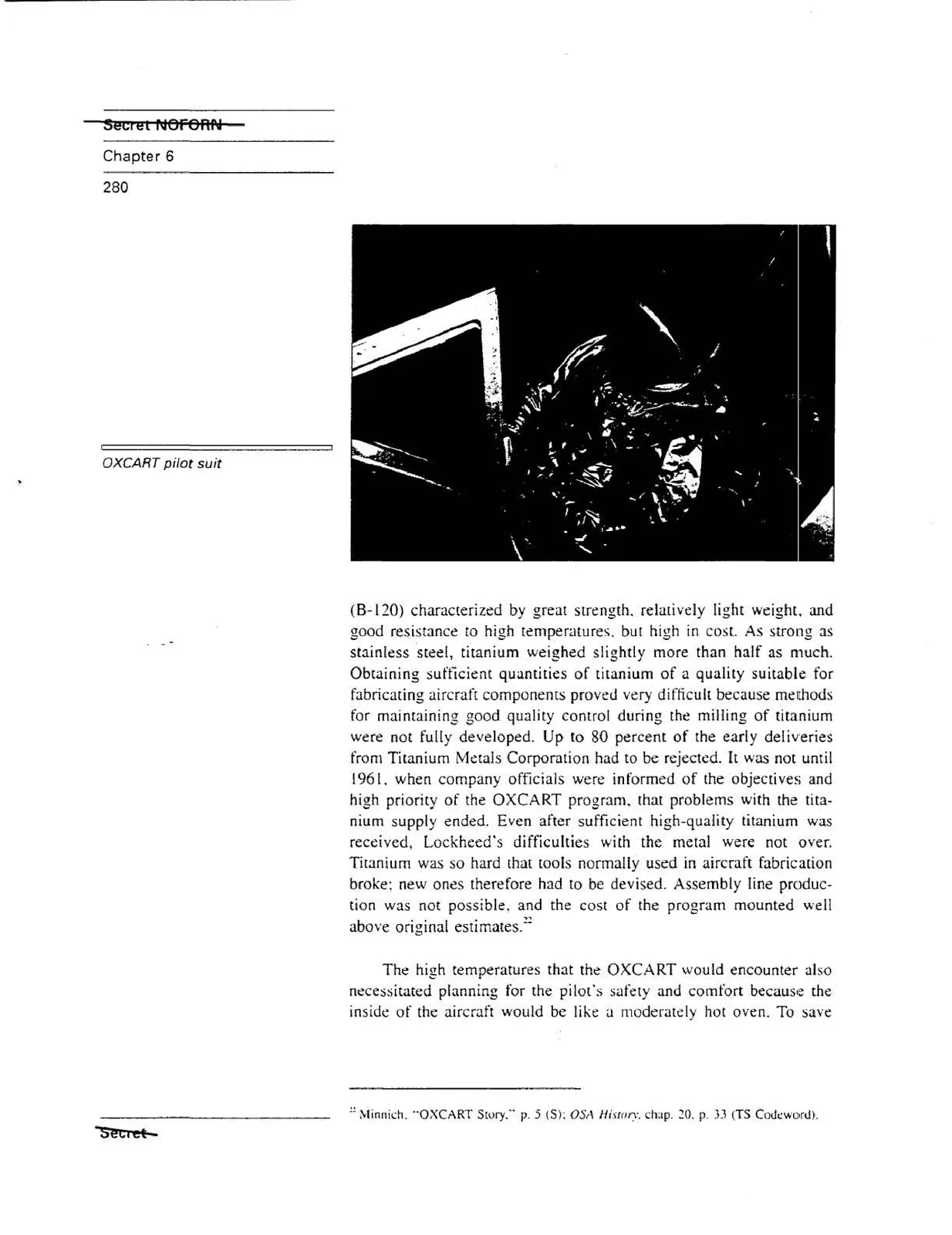
280 Secret NOF8RN Chapter 6 OXCART pilot suit (B-120) characterized by great strength. relatively light weight. and good resistance to high temperatures. bur high in cost As strong as stainless steel, titanium weighed slightly more than half as much. Obtaining sufficient quantities of titanium of a quality suitable for fabricating aircraft components proved very difficult because me1thods for maintaining good quality control during the milling of titanium were not fully developed. Up to 80 percent of the early deliveries from Titanium Metals Corporation had to be rejected. It was not until 1961 . when company officials were informed of the objectives and high priority of the OXCART program, that problems with the tita nium supply ended. Even after sufficient high-quality titanium was received, Lockheed·s difficulties with the metal were not over. Titanium was so hard that tools normally used in aircraft fabrication broke; new ones therefore had to be devised. Assembly line produc tion was not possible, and the cost of the program mounted well above original estimates.!~ The high temperatures that the OXCART would encounter also necessitated planning for the pilot's safety and comfort becaus,e the inside of the aircraft would be like a moderately hot oven. To save "Minnich. ··OXCART Story:· p. 5 (S): OSA Hiswn-. chap. :!O. p. 3J (TS Co<l.:wu,rd).