AAWSAP DIRD, Biomaterials, January 2010
DOW-UAP-D119 · page 11 of 32
Text
This text came with the file. It may have mistakes. When the text and the image disagree, the image is right.
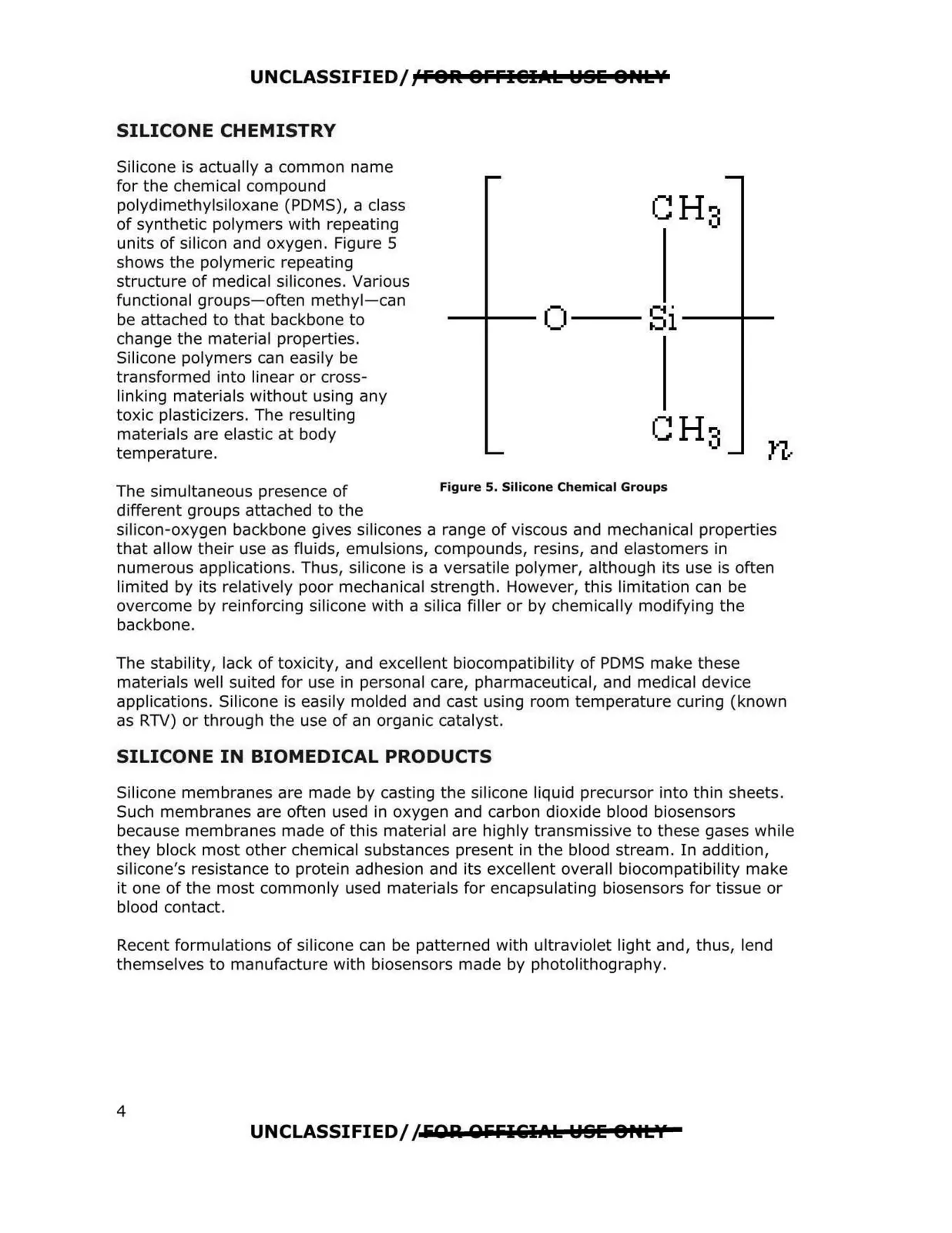
UNCLASSIFIED/;'FOR OFFI@IAL YSE OHL¥ SILICONE CHEMISTRY Silicone is actually a common name for the chemical compound polydimethylsiloxane (PDMS), a class of synthetic polymers with repeating units of silicon and oxygen. Figure 5 shows the polymeric repeating structure of medical silicones. Various functional groups-often methyl-can be attached to that backbone to change the material properties. Silicone polymers can easily be transformed into linear or cross linking materials without using any toxic plasticizers. The resulting materials are elastic at body temperature. The simultaneous presence of Figures. Silicone Chemical Groups different groups attached to the silicon-oxygen backbone gives silicones a range of viscous and mechanical properties that allow their use as fluids, emulsions, compounds, resins, and elastomers in numerous applications. Thus, silicone is a versatile polymer, although its use is often limited by its relatively poor mechanical strength. However, this limitation can be overcome by reinforcing silicone with a silica filler or by chemically modifying the backbone. The stability, lack of toxicity, and excellent biocompatibility of PDMS make these materials well suited for use in personal care, pharmaceutical, and medical device applications. Silicone is easily molded and cast using room temperature curing (known as RTV) or through the use of an organic catalyst. SILICONE IN BIOMEDICAL PRODUCTS Silicone membranes are made by casting the silicone liquid precursor into thin sheets. Such membranes are often used in oxygen and carbon dioxide blood biosensors because membranes made of this material are highly transmissive to these gases while they block most other chemical substances present in the blood stream. In addition, silicone's resistance to protein adhesion and its excellent overall biocompatibility make it one of the most commonly used materials for encapsulating biosensors for tissue or blood contact. Recent formulations of silicone can be patterned with ultraviolet light and, thus, lend themselves to manufacture with biosensors made by photolithography. UNCLASSIFIED/ /EOR OFFICilAk YSE 8HLY 4