AAWSAP DIRD, Biomaterials, January 2010
DOW-UAP-D119 · page 24 of 32
Text
This text came with the file. It may have mistakes. When the text and the image disagree, the image is right.
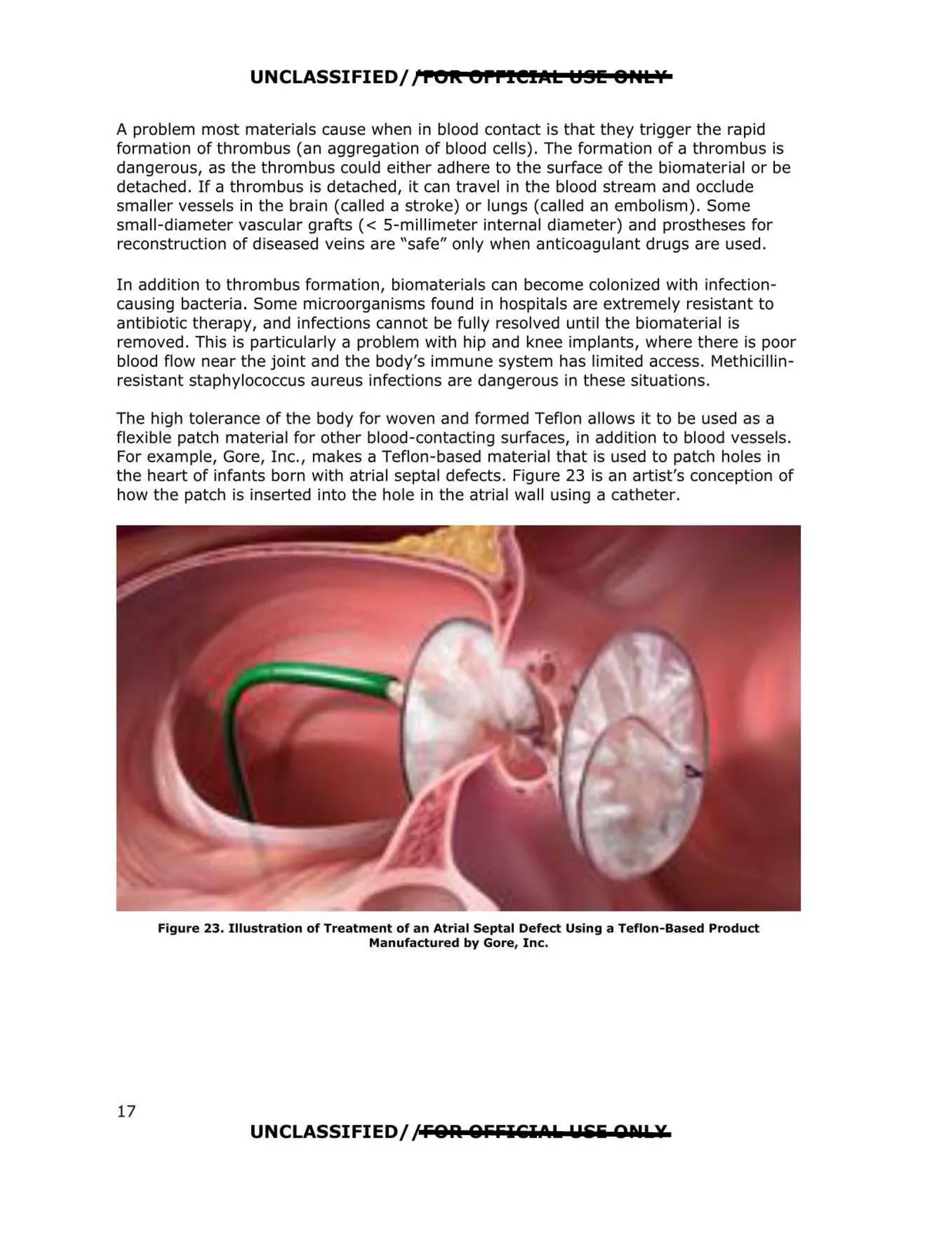
UNCLASSIFIED/ JPOI\ OPPICIJ!tt l:l!H! 8,.LY A problem most materials cause when in blood contact is that they trigger the rapid formation of thrombus (an aggregation of blood cells) . The formation of a thrombus is dangerous, as the thrombus could either adhere to the surface of the biomaterial or be detached. If a thrombus is detached, it can travel in the blood stream and occlude smaller vessels in the brain (called a stroke) or lungs (called an embolism). Some small-diameter vascular grafts ( < 5-millimeter internal diameter) and prostheses for reconstruction of diseased veins are "safe" only when anticoagulant drugs are used. In addition to thrombus formation, biomaterials can become colonized with infection causing bacteria. Some microorganisms found in hospitals are extremely resistant to antibiotic therapy, and infections cannot be fully resolved until the biomaterial is removed. This is particularly a problem with hip and knee implants, where there is poor blood flow near the joint and the body's immune system has limited access. Methicillin resistant staphylococcus aureus infections are dangerous in these situations. The high tolerance of the body for woven and formed Teflon allows it to be used as a flexible patch material for other blood-contacting surfaces, in addition to blood vessels. For example, Gore, Inc., makes a Teflon-based material that is used to patch holes in the heart of infants born with atrial septal defects. Figure 23 is an artist's conception of how the patch is inserted into the hole in the atrial wall using a catheter. Figure 23. Illustration of Treatment of an Atrial Septal Defect Using a Teflon-Based Product Manufactured by Gore, Inc. UNCLASSIFIED/;<fOA OFFICI.I ~ 1Pili Qtl! X 17