AAWSAP DIRD, Positron Aerospace Propulsion, March 2010
DOW-UAP-D123 · page 13 of 35
Text
This text came with the file. It may have mistakes. When the text and the image disagree, the image is right.
UNCLASSIFIED//POR. OFFICIAL U.!E! l>flt (
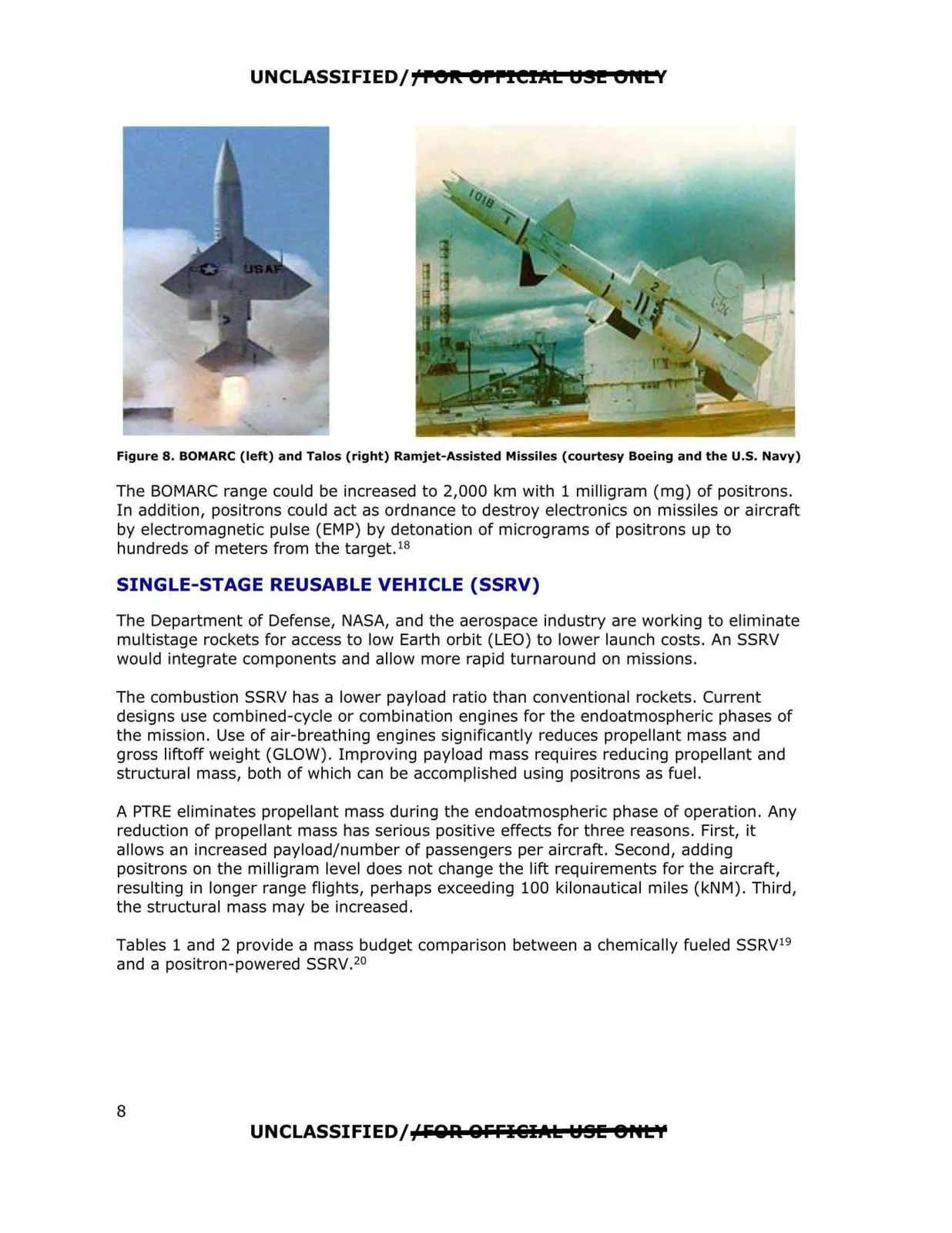
Figure 8. BOMARC (left) and Talos (right) Ramjet-Assisted Missiles (courtesy Boeing and the U.S. Navy)
The BOMARC range cou ld be increased to 2,000 km with 1 milligram (mg) of positrons.
In addition, positrons could act as ordnance to destroy electronics on missiles or aircraft
by electromagnetic pulse (EMP) by detonation of micrograms of positrons up to
hundreds of meters from the target. 18
SINGLE-STAGE REUSABLE VEHICLE (SSRV)
The Department of Defense, NASA, and the aerospace industry are working to eliminate
multistage rockets for access to low Earth orbit (LEO) to lower launch costs. An SSRV
would integrate components and allow more rapid turnaround on missions.
The combustion SSRV has a lower payload ratio than conventional rockets. Current
designs use combined-cycle or combination engines for the endoatmospheric phases of
the mission. Use of air-breathing engines significantly reduces propellant mass and
gross liftoff weight (GLOW). Improving payload mass requires reducing propellant and
structural mass, both of which can be accomplished using positrons as fuel.
A PTRE eliminates propellant mass during the endoatmospheric phase of operation . Any
reduction of propellant mass has serious positive effects for three reasons. First, it
allows an increased payload/number of passengers per aircraft. Second, adding
positrons on the milligram level does not change the lift requirements for the aircraft,
resulting in longer range flights, perhaps exceeding 100 kilonautical miles (kNM). Third,
the structural mass may be increased.
Tables 1 and 2 provide a mass budget comparison between a chemically fueled SSRV19
and a positron-powered SSRV. 20
UNCLASSIFIED/fFOA 8FFI&IAL Y!H! OHLY
8