AAWSAP DIRD, Space Access: Where We’ve Been and Where We Could Go, March 2010
DOW-UAP-D124 · page 55 of 56
Text
This text came with the file. It may have mistakes. When the text and the image disagree, the image is right.
UNCLASSIFIED/ /POlt Offl@IAL l:ISlii &PU.¥
Appendix D: Landing Ellipses for Hypersonic Gliders
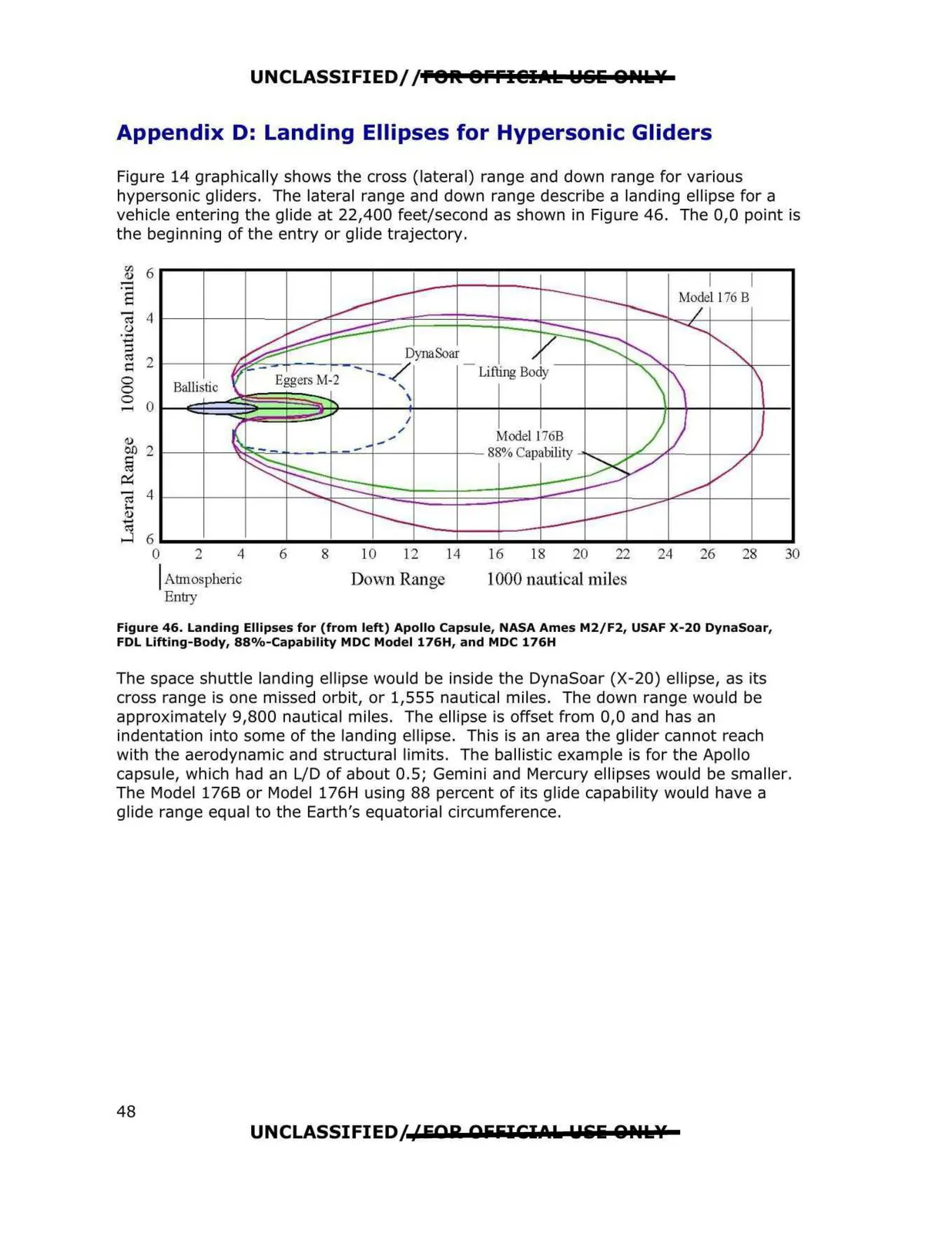
Figure 14 graphically shows the cross (lateral) range and down range for various
hypersonic gliders. The lateral range and down range describe a landing ellipse for a
vehicle entering the glide at 22,400 feet/second as shown in Figure 46. The 0,0 point is
the beginning of the entry or glide trajectory.
</J 6
(I)-
.....,...
t:::-
cd 4
-~
....
::s
~ 2
t:::
0
0
0
0-
(I)
00 2
ij -
~
~ 4
...
(I)
~
....:l 6
BalJistic
DynaSoar
-7
' \
I
Model 176B
0
2
4
6
8
10
12
14
16
18
20
22
24
26
28
30
IAtmospheric
Down Rang
1000 nautical miles
Entry
Figure 46. Landing Ellipses for {from left) Apollo Capsule, NASA Ames M2/F2, USAF X-20 DynaSoar,
FDL Lifting-Body, 88%-Capability MDC Model 176H, and MDC 176H
The space shuttle landing ellipse would be inside the DynaSoar (X-20) ellipse, as its
cross range is one missed orbit, or 1,555 nautical miles. The down range would be
approximately 9,800 nautical miles. The ellipse is offset from 0,0 and has an
indentation into some of the landing ellipse. This is an area the glider cannot reach
with the aerodynamic and structural limits. The ballistic example is for the Apollo
capsule, which had an L/D of about 0.5; Gemini and Mercury ellipses would be smaller.
The Model 176B or Model 176H using 88 percent of its glide capability would have a
glide range equal to the Earth's equatorial circumference.
UNCLASSIFIED//509 AEEICI CI. Uii &PU.¥
48