AAWSAP DIRD, Inertial Electrostatic Confinement Fusion, March 2010
DOW-UAP-D125 · page 16 of 72
Text
This text came with the file. It may have mistakes. When the text and the image disagree, the image is right.
UNCLASSIFIED!/POI\ OPPlelAL ~SE &PU:¥
'
,
I
I
I,
I
•
I
\
I
I
I
I
I
I,
... ___ ,.,. ;
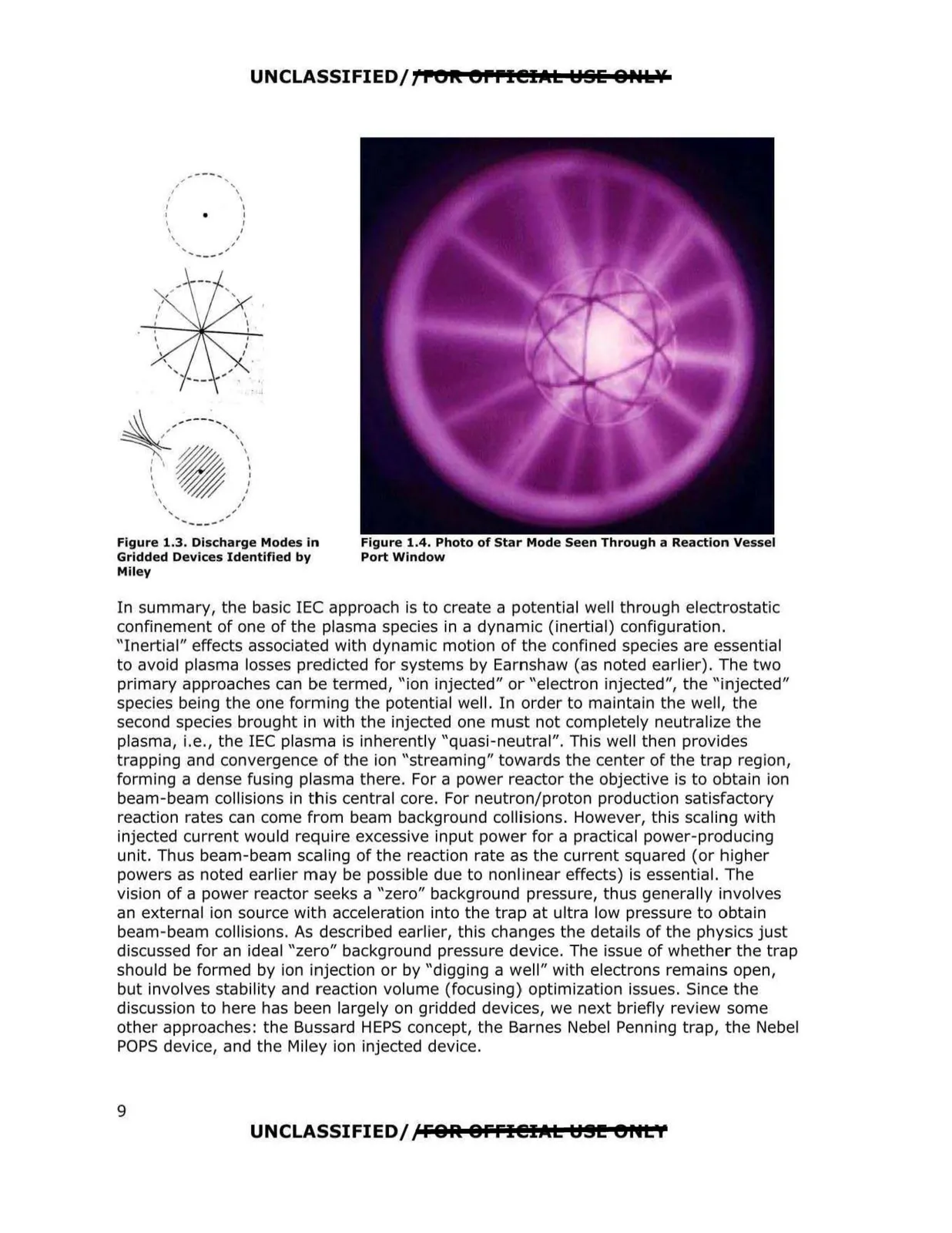
Figure 1.4. Photo of Star Mode Seen Through a Reaction Vessel
Port Window
Figure 1.3. Discharge Modes in
Gridded Devices Identified by
Miley
In summary, the basic IEC approach is to create a potential well through electrostatic
confinement of one of the plasma species in a dynamic (inertial) configuration.
"Inertial" effects associated with dynamic motion of the confined species are essential
to avoid plasma losses predicted for systems by Earnshaw (as noted earlier). The two
primary approaches can be termed, "ion injected" or "electron injected", the "injected"
species being the one forming the potential well. In order to maintain the well, the
second species brought in with the injected one must not completely neutralize the
plasma, i.e., the IEC plasma is inherently "quasi-neutral". This well then provides
trapping and convergence of the ion "streaming" towards the center of the trap region,
forming a dense fusing plasma there. For a power reactor the objective is to obtain ion
beam-beam collisions in this central core. For neutron/proton production satisfactory
reaction rates can come from beam background collisions. However, this sca ling with
injected current would require excessive input power for a practical power-producing
unit. Thus beam-beam scaling of the reaction rate as the current squared (or higher
powers as noted earlier may be possible due to nonlinear effects) is essential. The
vision of a power reactor seeks a "zero" background pressure, thus generally involves
an external ion source with acceleration into the trap at ultra low pressure to obtain
beam-beam collisions. As described earlier, this changes the details of the physics just
discussed for an ideal "zero" background pressure device. The issue of whether the trap
should be formed by ion injection or by "digging a well" with electrons remains open,
but involves stability and reaction volume (focusing) optimization issues. Since the
discussion to here has been largely on gridded devices, we next briefly review some
other approaches: the Bussard HEPS concept, the Barnes Nebel Penning trap, the Nebel
POPS device, and the Miley ion injected device.
UNCLASSIFIED/ /F8R 8ffl@IAL l:t!!! or•t I
9