AAWSAP DIRD, Inertial Electrostatic Confinement Fusion, March 2010
DOW-UAP-D125 · page 38 of 72
Text
This text came with the file. It may have mistakes. When the text and the image disagree, the image is right.
UNCLASSIFIED/ /fOR Offl@IAL W&& 8Nk¥
region is essential to decrease the center potential and consequently allow incoming
beam Ions to penetrate into the core region . In the DaIEC, it is possible to assist this
effect by an external control of the centerline potential by applying a bias voltage to the
dipole coil. In the UIUC experiment this was done by applying a voltage to a small
copper ring inserted in the core of the dipole magnet . The increase in the electron
density with a small center line bias applied was about 30 percent while the applied
voltage to the dipole structure was ~3 percent of the discharge voltage. The present
setup prevented the use of larger applied voltages which could further improve
neutralization, but these results still demonstrate the basic concept of dipole focusing
with coil bias control.
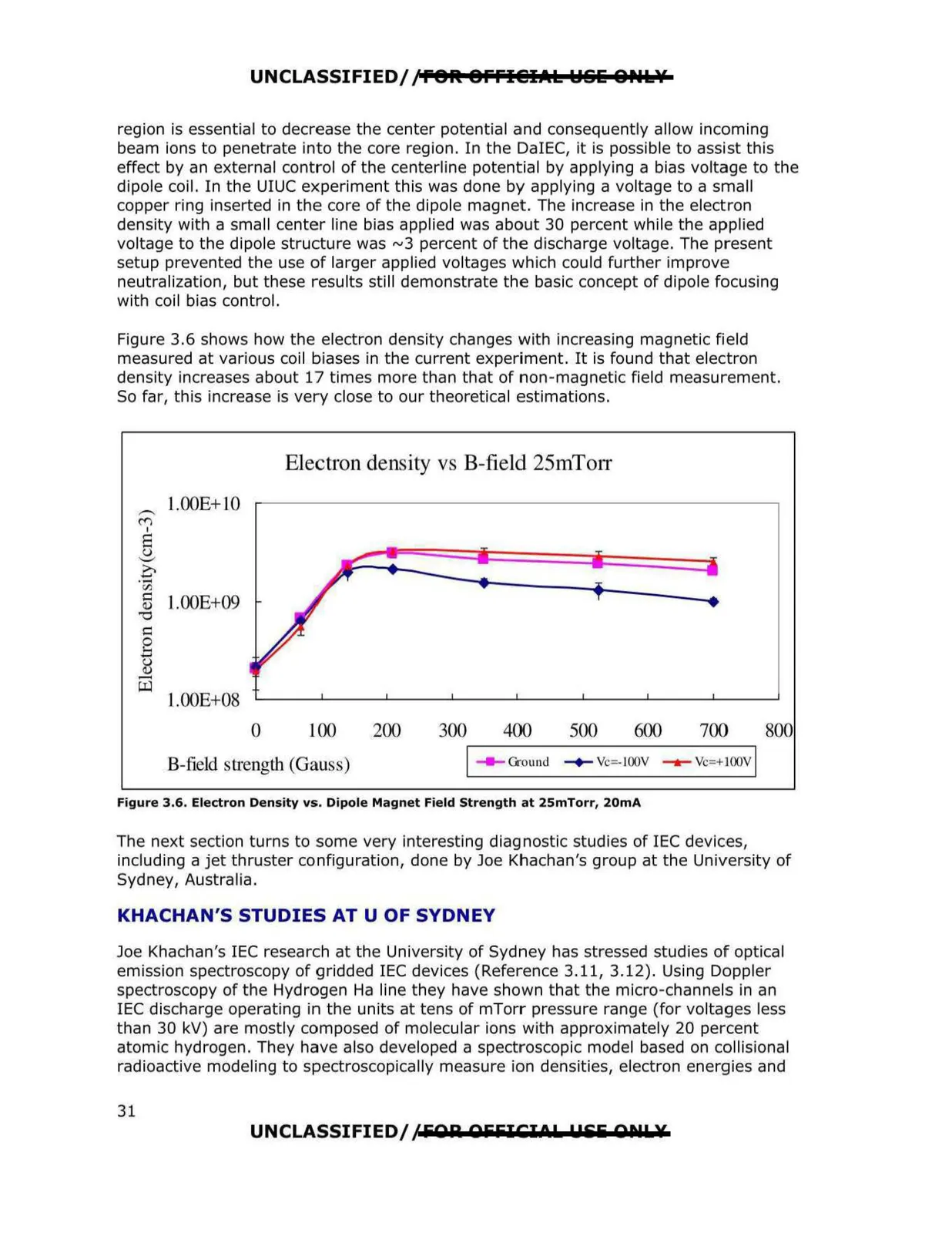
Figure 3.6 shows how the electron density changes with increasing magnetic field
measured at various coil biases in the current experiment. It is found that electron
density increases about 17 times more than that of non-magnetic field measurement.
So far, this increase is very close to our theoretical estimations.
Electron density vs B-field 25mTon
0
100
200
300
400
500
600
700
800
B-field strength (Gauss)
I -
G-ound ---+- ~ =-JOOV --- Vc=+l OOV I
---.
('f")
I
~
a
·-ell
d
(1)
"O
d g
~
~
l.OOE+lO
l.OOE+09
l.OOE+08
Figure 3.6. Electron Density vs. Dipole Magnet Field Strength at 25mTorr, 20mA
The next section turns to some very interesting diagnostic studies of IEC devices,
including a jet thruster configuration, done by Joe Khachan's group at the University of
Sydney, Australia.
KHACHAN'S STUDIES AT U OF SYDNEY
Joe Khachan's IEC research at the University of Sydney has stressed studies of optical
emission spectroscopy of gridded IEC devices (Reference 3.11, 3.12). Using Doppler
spectroscopy of the Hydrogen Ha line they have shown that the micro-channels in an
IEC discharge operating in the units at tens of mTorr pressure range (for voltages less
than 30 kV) are mostly composed of molecular ions with approximately 20 percent
atomic hydrogen. They have also developed a spectroscopic model based on collisional
radioactive modeling to spectroscopically measure ion densities, electron energies and
UNCLASSIFIED/}FOA: OFFICI0L: !Pi'li ODIL:¥
31