AAWSAP DIRD, Technological Approaches to Controlling External Devices, March 2010
DOW-UAP-D130 · page 11 of 36
Text
This text came with the file. It may have mistakes. When the text and the image disagree, the image is right.
UNCLASSIFIED/ /FOR: 8Ffl@IJltt t:191!! er•t I
of a spiking train to trigger a switch, or as complex as decoding signal from noise
utilizing a 300-channel EEG cap.
~-------------------------,
: Additional sensory
:
I ---1 -------------------'
~
Brain
Output
interface
,----1 Input
interface
Output
signal
processing
Components of a
Closed-loop BMI
Control System
Input
signal
processing
External
Device
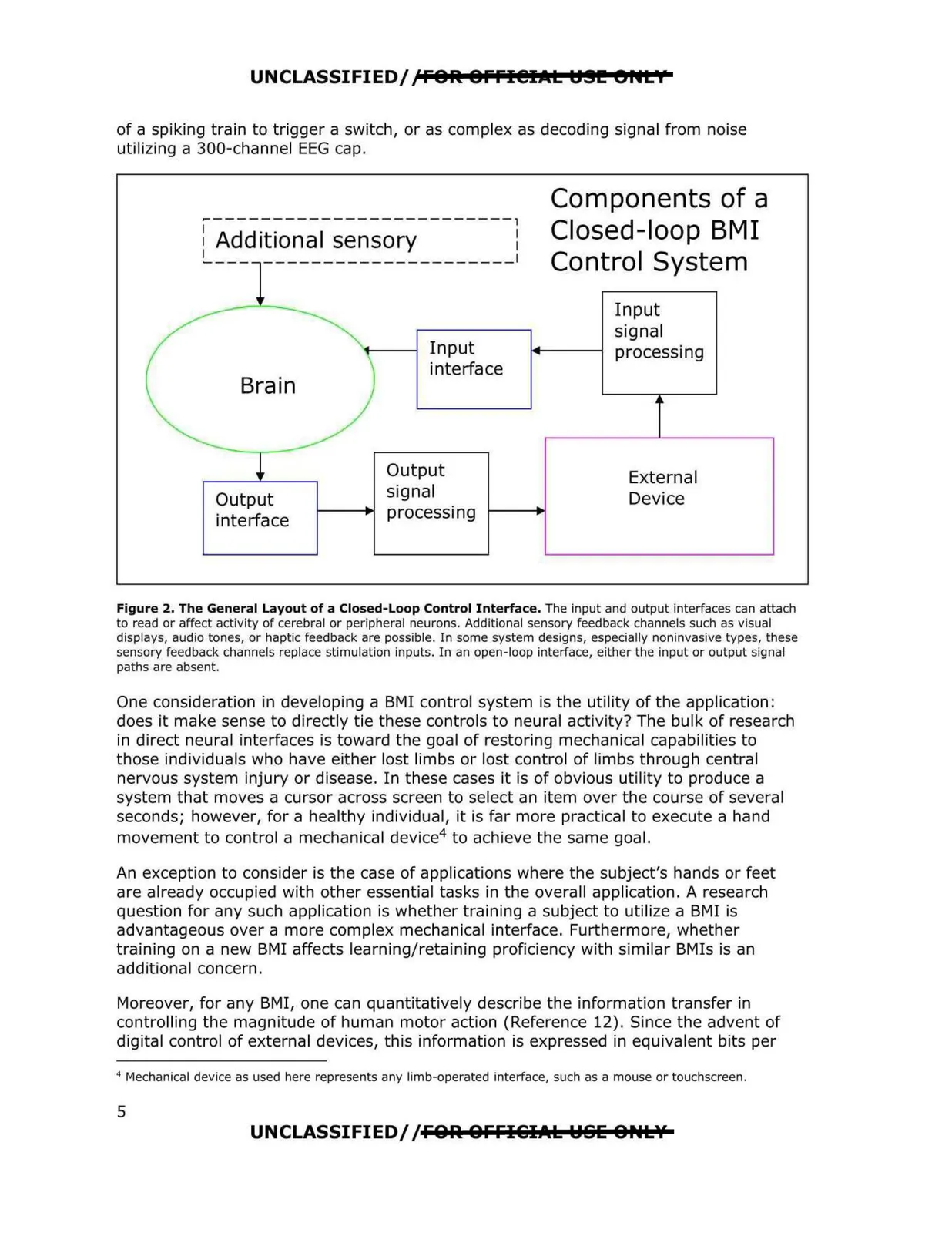
Figure 2. The General Layout of a Closed-Loop Control Interface. The input and output interfaces can attach
to read or affect activity of cerebral or peripheral neurons. Additional sensory feedback channels such as visual
displays, audio tones, or haptic feedback are possible. In some system designs, especially noninvasive types, these
sensory feedback channels replace stimulation inputs. In an open-loop interface, either the input or output signal
paths are absent.
One consideration in developing a BMI control system is the utility of the application:
does it make sense to directly tie these controls to neural activity? The bulk of research
in direct neural interfaces is toward the goal of restoring mechanical capabilities to
those individuals who have either lost limbs or lost control of limbs through central
nervous system injury or disease. In these cases it is of obvious utility to produce a
system that moves a cursor across screen to select an item over the course of several
seconds; however, for a healthy individual, it is far more practical to execute a hand
movement to control a mechanical device4 to achieve the same goal.
An exception to consider is the case of applications where the subject's hands or feet
are already occupied with other essential tasks in the overall application. A research
question for any such application is whether training a subject to utilize a BMI is
advantageous over a more complex mechanical interface. Furthermore, whether
training on a new BMI affects learning/retaining proficiency with similar BMis is an
additional concern.
Moreover, for any BMI, one can quantitatively describe the information transfer in
controlling the magnitude of human motor action (Reference 12). Since the advent of
digital control of external devices, this information is expressed in equivalent bits per
4 Mechanical device as used here represents any limb-operated interface, such as a mouse or touchscreen.
UNCLASSIFIED//FOR OFFI&IAk W&E 8Ptk¥
5