AAWSAP DIRD, The Space Communication Implications of Quantum Entanglement and Nonlocality, March 2010
DOW-UAP-D133 · page 26 of 32
Text
This text came with the file. It may have mistakes. When the text and the image disagree, the image is right.
UNCLASSIFIED//FOR OFFI@IAI! WSE OHi!:¥
lightlike interval, and in particular is never separated by a timelike interval that can go
backwards down the time stream, then timelike loops are avoided, along with the
paradoxes they imply.
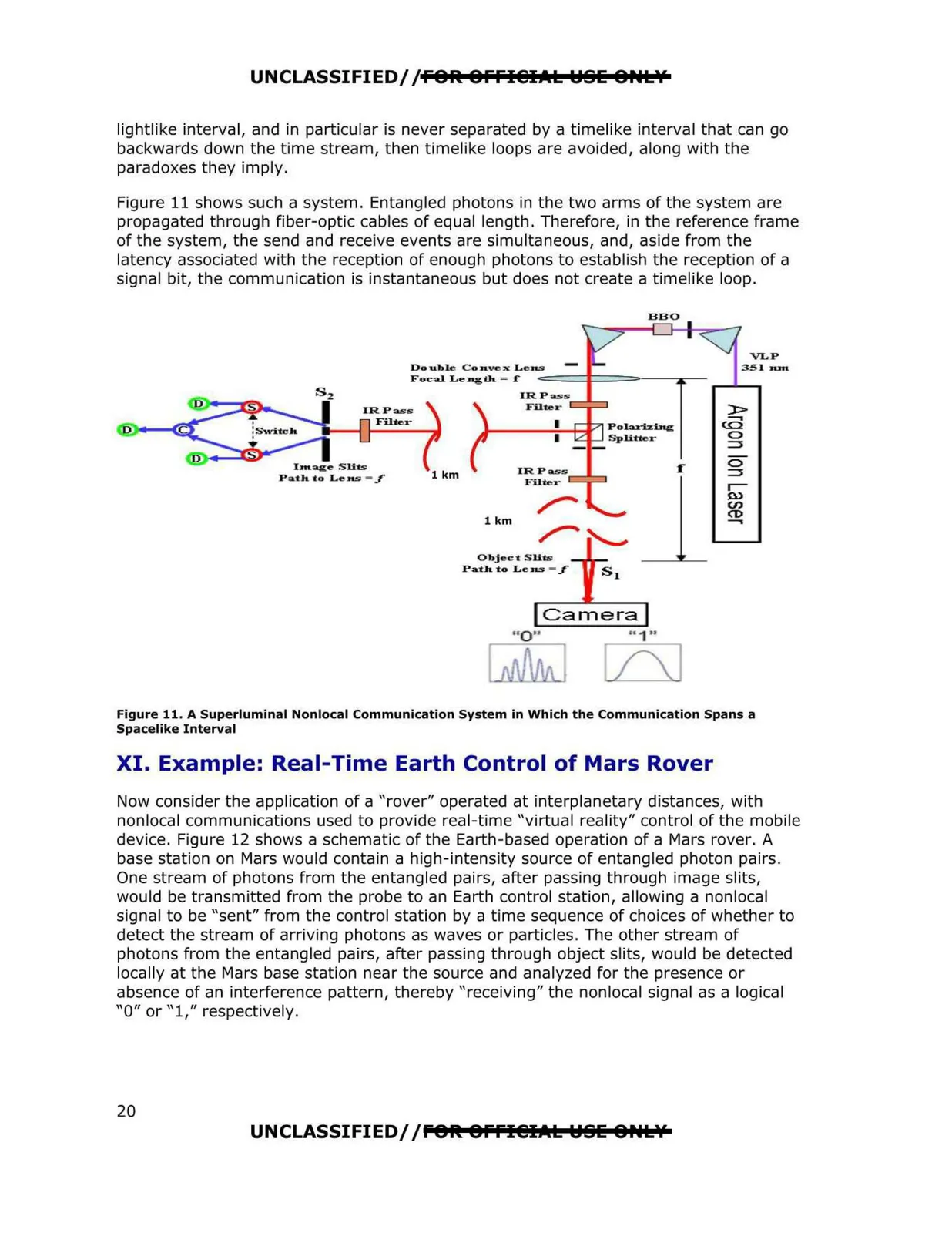
Figure 11 shows such a system. Entangled photons in the two arms of the system are
propagated through fiber-optic cables of equal length. Therefore, in the reference frame
of the system, the send and receive events are simultaneous, and, aside from the
latency associated with the reception of enough photons to establish the reception of a
signal bit, the communication is instantaneous but does not create a timelike loop.
BBO
litt.age Slits
Path to Le..,. - f
1km
1km
IR Pass
Filur
I
I
IR Pass
Filter
Object Slits
Pa:th to Le:ns - f
VLP
351
Camera
n>tt
Figure 11. A Superluminal Nonlocal Communication System in Which the Communication Spans a
Spacelike Interval
XI. Example: Real-Time Earth Control of Mars Rover
Now consider the application of a "rover" operated at interplanetary distances, with
nonlocal communications used to provide rea l-time "virtual reality" control of the mobile
device. Figure 12 shows a schematic of the Earth-based operation of a Mars rover. A
base station on Mars would contain a high-intensity source of entangled photon pairs.
One stream of photons from the entangled pairs, after passing through image slits,
would be transmitted from the probe to an Earth control station, allowing a nonlocal
signal to be "sent" from the control station by a time sequence of choices of whether to
detect the stream of arriving photons as waves or particles . The other stream of
photons from the entangled pairs, after passing through object slits, would be detected
locally at the Mars base station near the source and analyzed for the presence or
absence of an interference pattern, thereby "receiving" the nonlocal signal as a logical
"0" or "1," respectively.
UNCLASSIFIED//fOll Offl@IAI! WSIE OHi!:¥
20