AAWSAP DIRD, Biosensors and BioMEMS: A Survey of the Present Field, March 2010
DOW-UAP-D136 · page 17 of 45
Text
This text came with the file. It may have mistakes. When the text and the image disagree, the image is right.
UNCLASSIFIED//P'OR: OP'P'l@IAL WS& 0Nk¥
Vgs
1: reference
2: gate oxide
3: insulating resin
b)
4: channnel
S: source
D: drain
B: bulk
Vgs
a)
V r
Vdr
MOSFET
ISFET
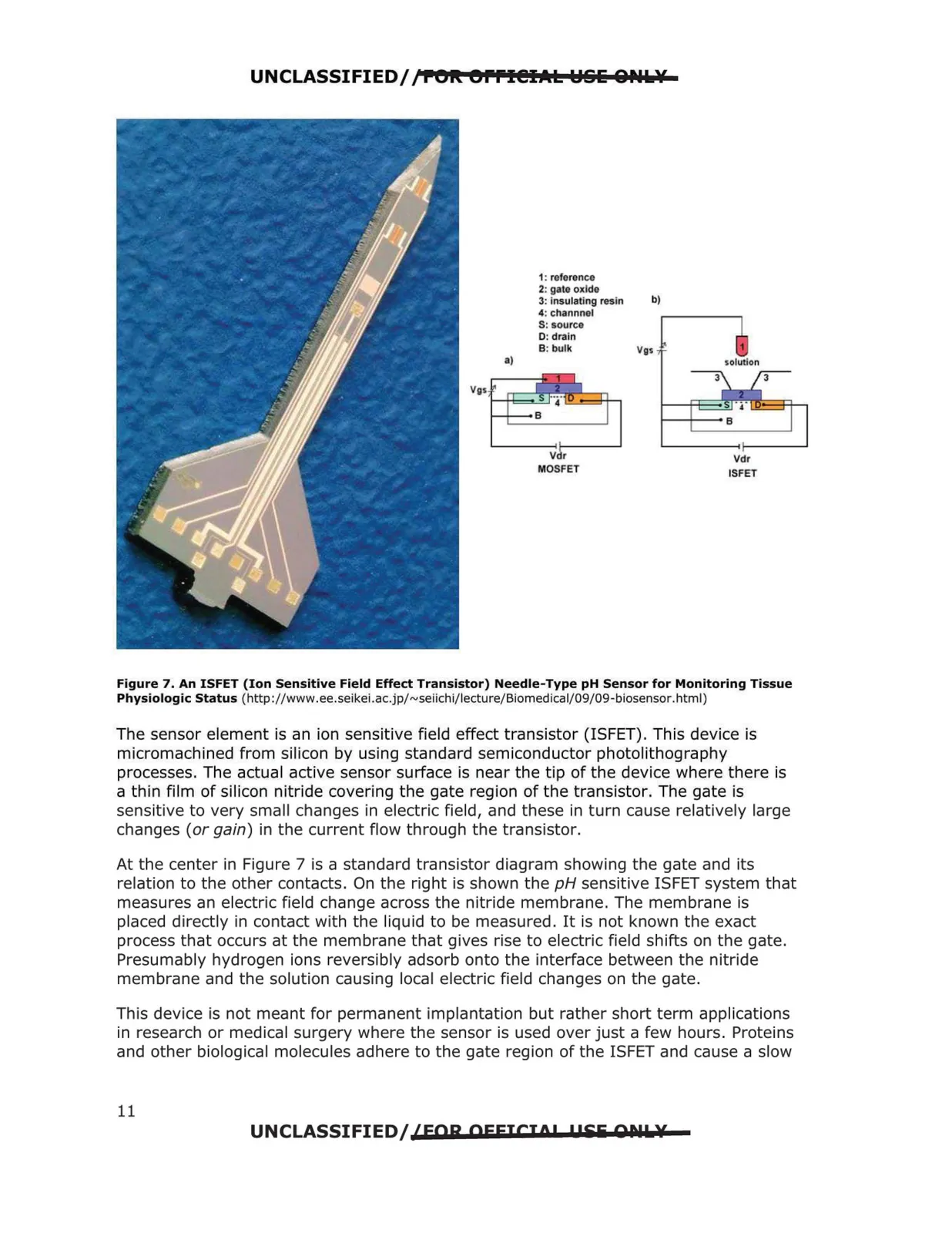
Figure 7. An ISFET (Ion Sensitive Field Effect Transistor) Needle-Type pH Sensor for Monitoring Tissue
Physiologic Status (http://www.ee.seikei .ac.jp/~seiichi/lecture/Biomedical/09/09-biosensor.html)
The sensor element is an ion sensitive field effect transistor (ISFET). This device is
micromachined from silicon by using standard semiconductor photolithography
processes. The actual active sensor surface is near the tip of the device where there is
a thin film of silicon nitride covering the gate region of the transistor. The gate is
sensitive to very small changes in electric field, and these in turn cause relatively large
changes (or gain) in the current flow through the transistor.
At the center in Figure 7 is a standard transistor diagram showing the gate and its
relation to the other contacts. On the right is shown the pH sensitive ISFET system that
measures an electric field change across the nitride membrane. The membrane is
placed directly in contact with the liquid to be measured. It is not known the exact
process that occurs at the membrane that gives rise to electric field shifts on the gate.
Presumably hydrogen ions reversibly adsorb onto the interface between the nitride
membrane and the solution causing local electric field changes on the gate.
This device is not meant for permanent implantation but rather short term applications
in research or medical surgery where the sensor is used over just a few hours. Proteins
and other biological molecules adhere to the gate region of the ISFET and cause a slow
UNCLASSIFIED/ {FOR OFFICIO! !PEii QDlk¥
11