AAWSAP DIRD, State of the Art and Evolution of High-Energy Lasers, March 2010
DOW-UAP-D137 · page 21 of 31
Text
This text came with the file. It may have mistakes. When the text and the image disagree, the image is right.
UNCLASSIFIED/fFOA OFFl&I.t.k YSE &P•tv
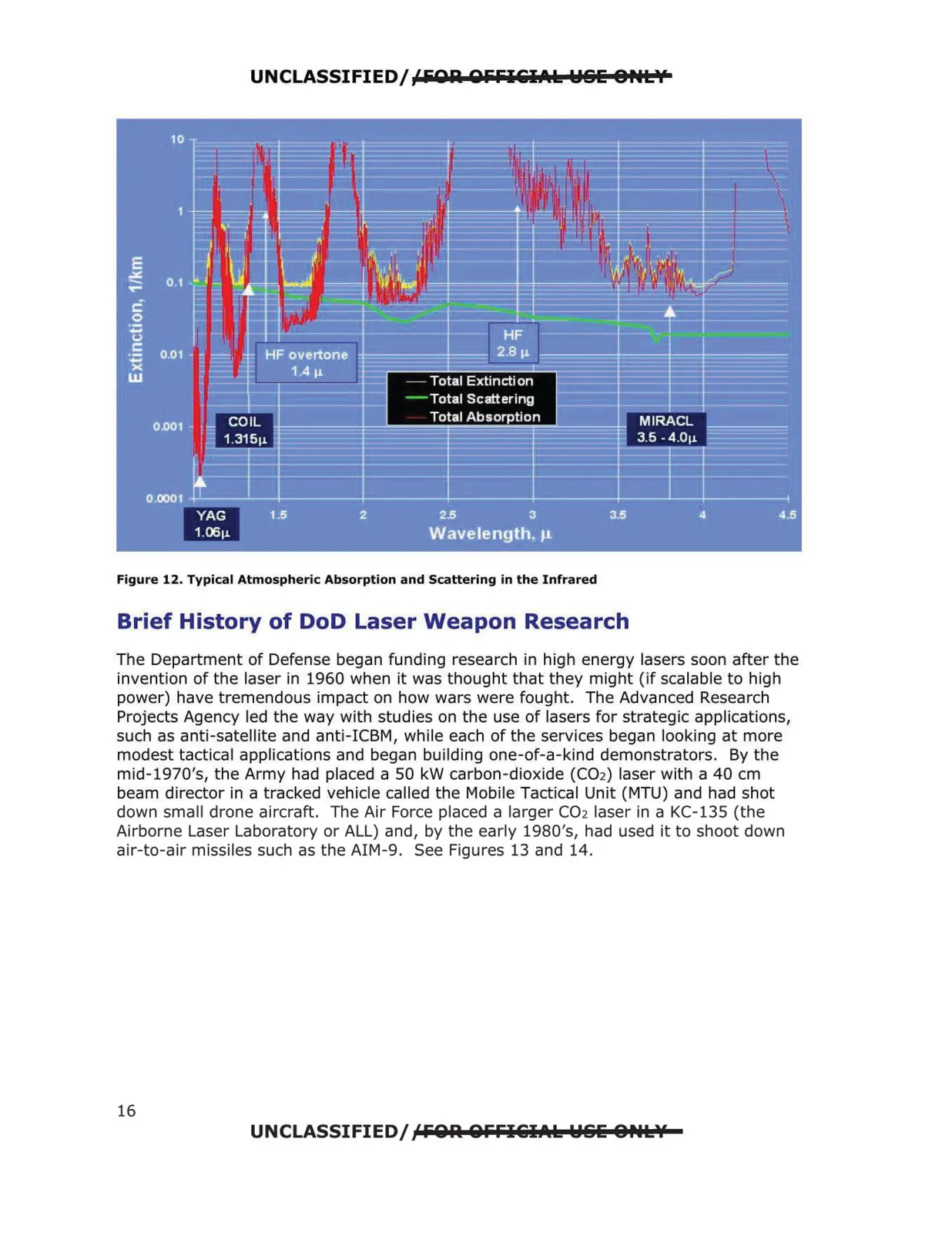
Figure 12. Typical Atmospheric Absorption and Scattering in the Infrared
Brief History of DoD Laser Weapon Research
The Department of Defense began funding research in high energy lasers soon after the
invention of the laser in 1960 when it was thought that they might (if scalable to high
power) have tremendous impact on how wars were fought. The Advanced Research
Projects Agency led the way with studies on the use of lasers for strategic applications,
such as anti-satellite and anti-ICBM, while each of the services began looking at more
modest tactical applications and began building one-of-a-kind demonstrators. By the
mid-1970's, the Army had placed a 50 kW carbon-dioxide (CO2) laser with a 40 cm
beam director in a tracked vehicle called the Mobile Tactical Unit (MTU) and had shot
down small drone aircraft. The Air Force placed a larger CO2 laser in a KC-135 (the
Airborne Laser Laboratory or ALL) and, by the early 1980's, had used it to shoot down
air-to-air missiles such as the AIM-9. See Figures 13 and 14.
UNCLASSIFIED/fFOA OFFI&I.t.k YSE 8,.L\f
16