AAWSAP DIRD, Concepts for Extracting Energy from the Quantum Vacuum, April 2010
DOW-UAP-D142 · page 9 of 57
Text
This text came with the file. It may have mistakes. When the text and the image disagree, the image is right.
UNCLASSIFIED/ /FOR OFFIEIAk WS& OPtkY
10~
110
20
114
12
14
112
_A
116
¢{
22
~
26
122
,..,,.-34
126
;[[
IT:
/
130
I
28_)
32
128_}
132
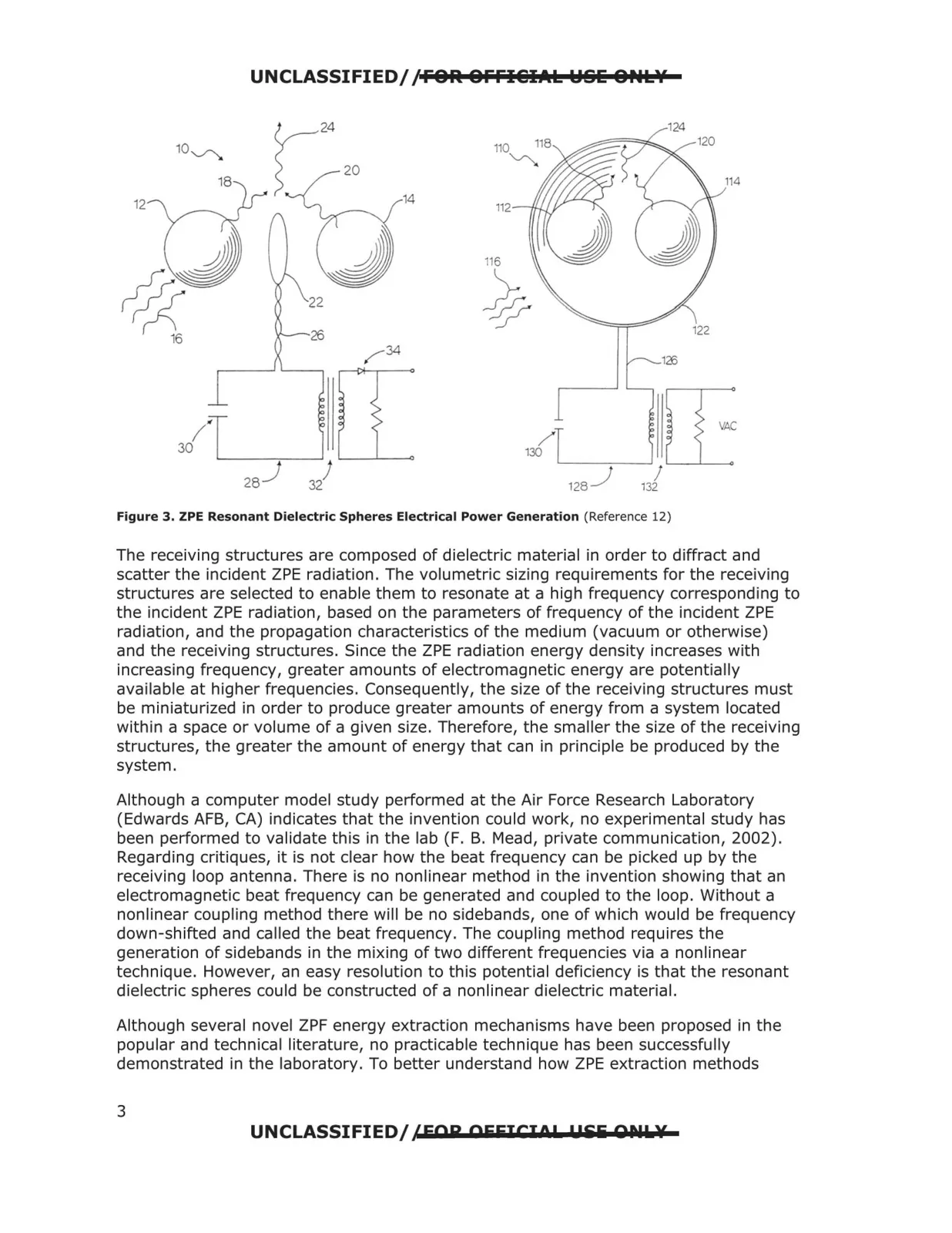
Figure 3. ZPE Resonant Dielectric Spheres Electrical Power Generation (Reference 12)
The receiving structures are composed of dielectric material in order to diffract and
scatter the incident ZPE radiation. The volumetric sizing requirements for the receiving
structures are selected to enable them to resonate at a high frequency corresponding to
the incident ZPE radiation, based on the parameters of frequency of the incident ZPE
radiation, and the propagation characteristics of the medium (vacuum or otherwise)
and the receiving structures. Since the ZPE radiation energy density increases with
increasing frequency, greater amounts of electromagnetic energy are potentially
available at higher frequencies. Consequently, the size of the receiving structures must
be miniaturized in order to produce greater amounts of energy from a system located
within a space or volume of a given size. Therefore, the smaller the size of the receiving
structures, the greater the amount of energy that can in principle be produced by the
system.
Although a computer model study performed at the Air Force Research Laboratory
(Edwards AFB, CA) indicates that the invention could work, no experimental study has
been performed to validate this in the lab (F. B. Mead, private communication, 2002).
Regarding critiques, it is not clear how the beat frequency can be picked up by the
receiving loop antenna. There is no nonlinear method in the invention showing that an
electromagnetic beat frequency can be generated and coupled to the loop. Without a
nonlinear coupling method there will be no sidebands, one of which would be frequency
down-shifted and called the beat frequency. The coupling method requires the
generation of sidebands in the mixing of two different frequencies via a nonlinear
technique. However, an easy resolution to this potential deficiency is that the resonant
dielectric spheres could be constructed of a nonlinear dielectric material.
Although several novel ZPF energy extraction mechanisms have been proposed in the
popular and technical literature, no practicable technique has been successfully
demonstrated in the laboratory. To better understand how ZPE extraction methods
UNCLASSIFIED/ /FOR OFFICIO! P!ili QIU.,¥
3