AAWSAP DIRD, Detection and High-Resolution Tracking of Vehicles at Hypersonic Velocities, November 2010
DOW-UAP-D148 · page 36 of 46
Text
This text came with the file. It may have mistakes. When the text and the image disagree, the image is right.
UNCLASSIFIED/fFOR. QFFIEl.t.L: Uii QD:I! X
Detection Method
Properties Detected
Availability
Useful for Detection of:
I
Distance
Velocity Altitude
Whole Sky Commercially Existing Expense Meteor
Reentry
Aircraft
I
To Target
Or Directed
Available
Network
Detection Vehicles
Electromagnetic
Radar
I
X
X
X
Both
X
X
Modest
X
X
X
Radio Reflection Detection
Whole Sky
X
Low
X
X
I
Optical
I
Sky Cameras, Photographic
Whole Sky
X
X
Low
X
X
X
Infrared I
possible
Both
X
Modest
X
X
X
Lidar
I
X
X
Directed
X
Medium
X
X
X
Chronograph
X
Directted
low
I
Acoustic and Seismic
lnfrasound
X
X
Whole Sky
X
X
low
X
X
X
Seismic I
X
X
Whole Sky
X
Modest
X
X
X
I
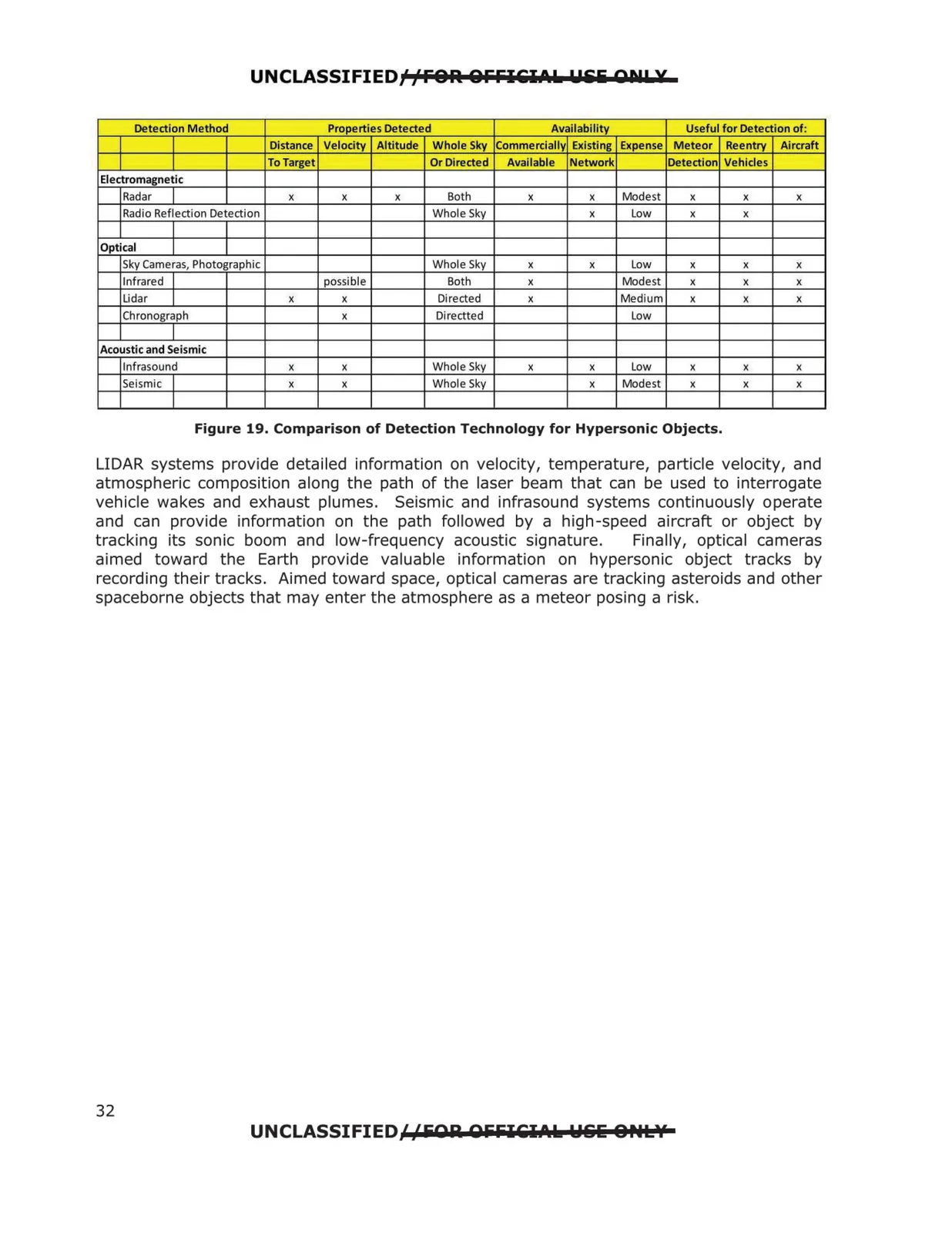
Figure 19. Comparison of Detection Technology for Hypersonic Objects.
LIDAR systems provide detailed information on velocity, temperature, particle velocity, and
atmospheric composition along the path of the laser beam that can be used to interrogate
vehicle wakes and exhaust plumes.
Seismic and infrasound systems continuously operate
and can provide information on the path followed by a high-speed aircra~ or object by
tracking its sonic boom and low-frequency acoustic signature.
Finally, optical cameras
aimed toward the Earth provide valuable information on hypersonic object tracks by
recording their tracks. Aimed toward space, optical cameras are tracking asteroids and other
spaceborne objects that may enter the atmosphere as a meteor posing a risk.
UNCLASSIFIED//EQA: QlililEl.t.L: W&&: O,.L'l
32