The Central Intelligence Agency and Overhead Reconnaissance; The U-2 and OXCART Programs, 1954-1974
CIA-UAP-003 · page 301 of 406
Text
This text came with the file. It may have mistakes. When the text and the image disagree, the image is right.
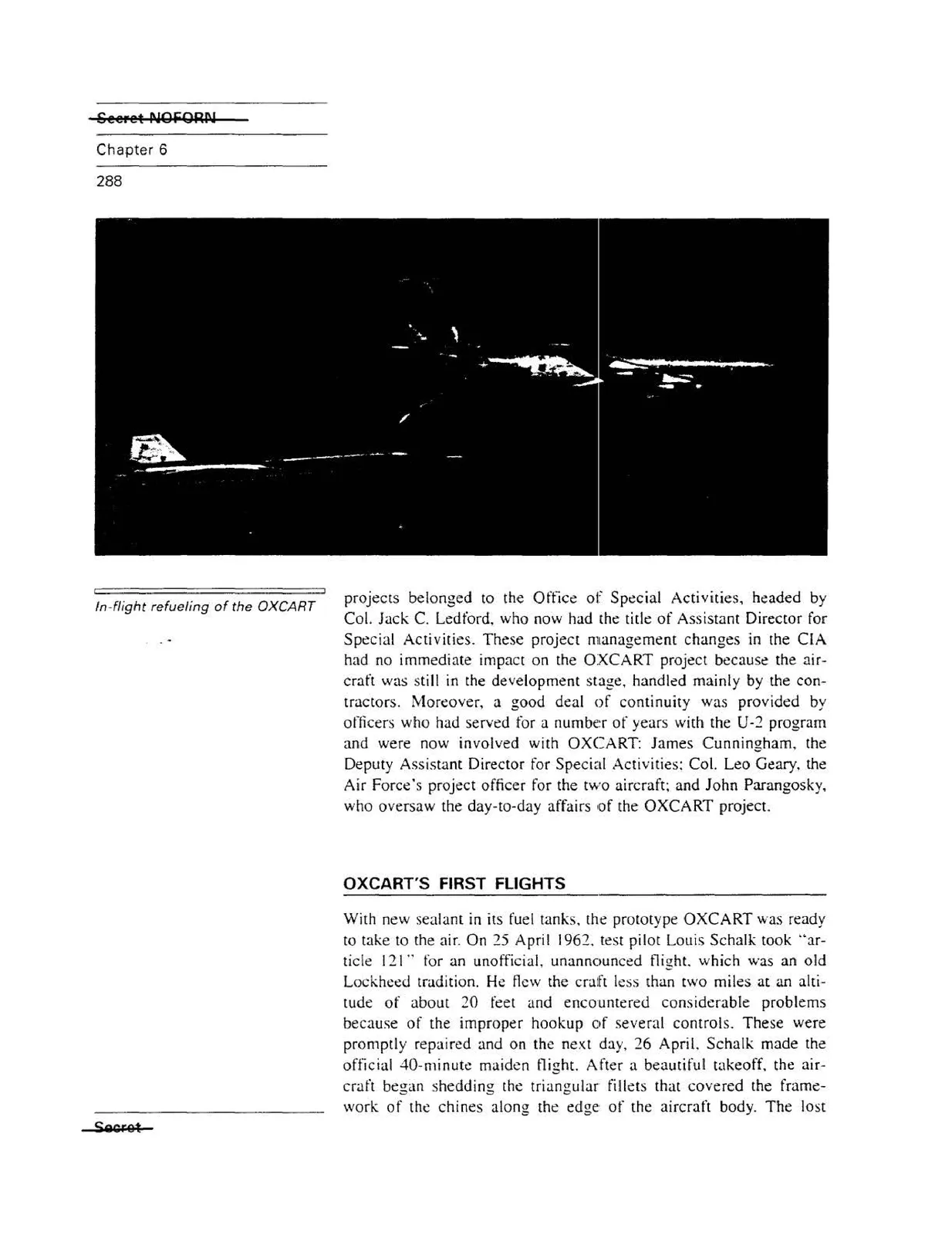
288 6eeret NQI-Omj Chapter 6 In-flight refueling of the OXCART projects belonged to the Office of Special Activities, headed by Col. Jack C. Ledford, who now had the title of Assistant Director for Special Activities. These project management changes in the ClA had no immediate impact on the OXCART project because the air craft was still in the development stage, handled mainly by the con tractors. Moreover, a good deal of continuity was provided by officers who had served for a numbe:r of years with the U-2 program and were now involved with OXCART: James Cunningham, the Deputy Assistant Director for Special Activities: Col. Leo Geary, the Air Force's project officer for the two aircraft; and John Parangosky, who oversaw the day-to-day affairs ,of the OXCART project. OXCART'S FIRST FLIGHTS With new sealant in its fuel tanks, the prototype OXCART was ready to take to the air. On 25 April 1962, test pilot Louis Schalk took "ar ticle 121" for an unofficial, unannounced tlight. which was an old Lockheed tradition. He flew the cratft less than two miles at an alti tude of about 20 feet and encountered considerable problems because of the improper hookup c,f several controls. These were promptly repaired and on the next day, 26 April, Schalk made the official 40-minute maiden flight. After a beautiful takeoff, the air craft began shedding the triangular fillets that covered the frame work of the chines along the edge: of the aircraft body. The lost Sec,;ret