The Central Intelligence Agency and Overhead Reconnaissance; The U-2 and OXCART Programs, 1954-1974
CIA-UAP-003 · page 321 of 406
Text
This text came with the file. It may have mistakes. When the text and the image disagree, the image is right.
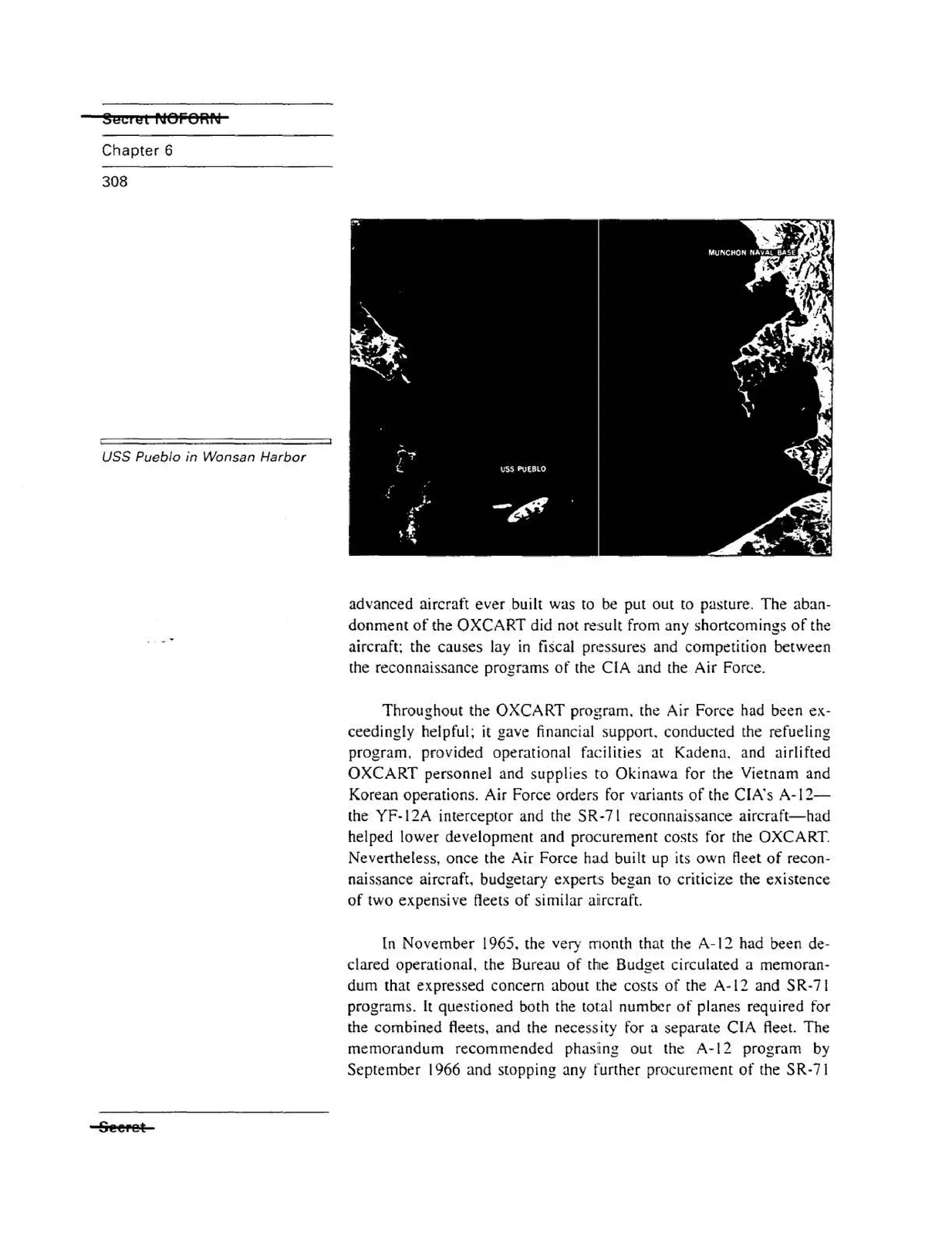
308 Sectet NOF6RN Chapter 6 USS Pueblo in Wonsan Harbor advanced aircraft ever .built was to be put out to pasture. The aban donment of the OXCART did not result from any shortcomings of the aircraft; the causes lay in fiscal pn:ssures and competition between the reconnaissance programs of the CIA and the Air Force. Throughout the OXCART program. the Air Force had been ex ceedingly helpful; it gave financial support, conducted the refueling program. provided operational facilities at Kadena, and airlifted OXCART personnel and supplies to Okinawa for the Vietnam and Korean operations. Air Force orders for variants of the CIA's A-12 the YF- I 2A interceptor and the SR-71 reconnaissance aircraft-had helped lower development and procurement costs for the OXCART. Nevertheless, once the Air Force had built up its own fleet of recon naissance aircraft, budgetary expert:s began to criticize the existence of two expensive fleets of similar aiircraft. In November 1965, the very month that the A- 12 had been de clared operational, the Bureau of thte Budget circulated a memoran dum that expressed concern about 1:he coses of the A-12 and SR-71 programs. It questioned both the total number of planes required for the combined fleets, and the necessity for a separate CIA fleet. The memorandum recommended phasiing out the A-12 program by September 1966 and stopping any further procurement of the SR-71 Seere+