AAWSAP DIRD, Aerospace Applications of Programmable Matter, December 2009
DOW-UAP-D118 · page 7 of 20
Text
This text came with the file. It may have mistakes. When the text and the image disagree, the image is right.
UNCLASSIFIED//f8R 8FFHilAI: Wli& (Ulkl/
can exert precise control over their optical, electrical, thermal, and magnetic properties
rather than simply selecting these properties from the limited catalog nature has
provided.
Barrier
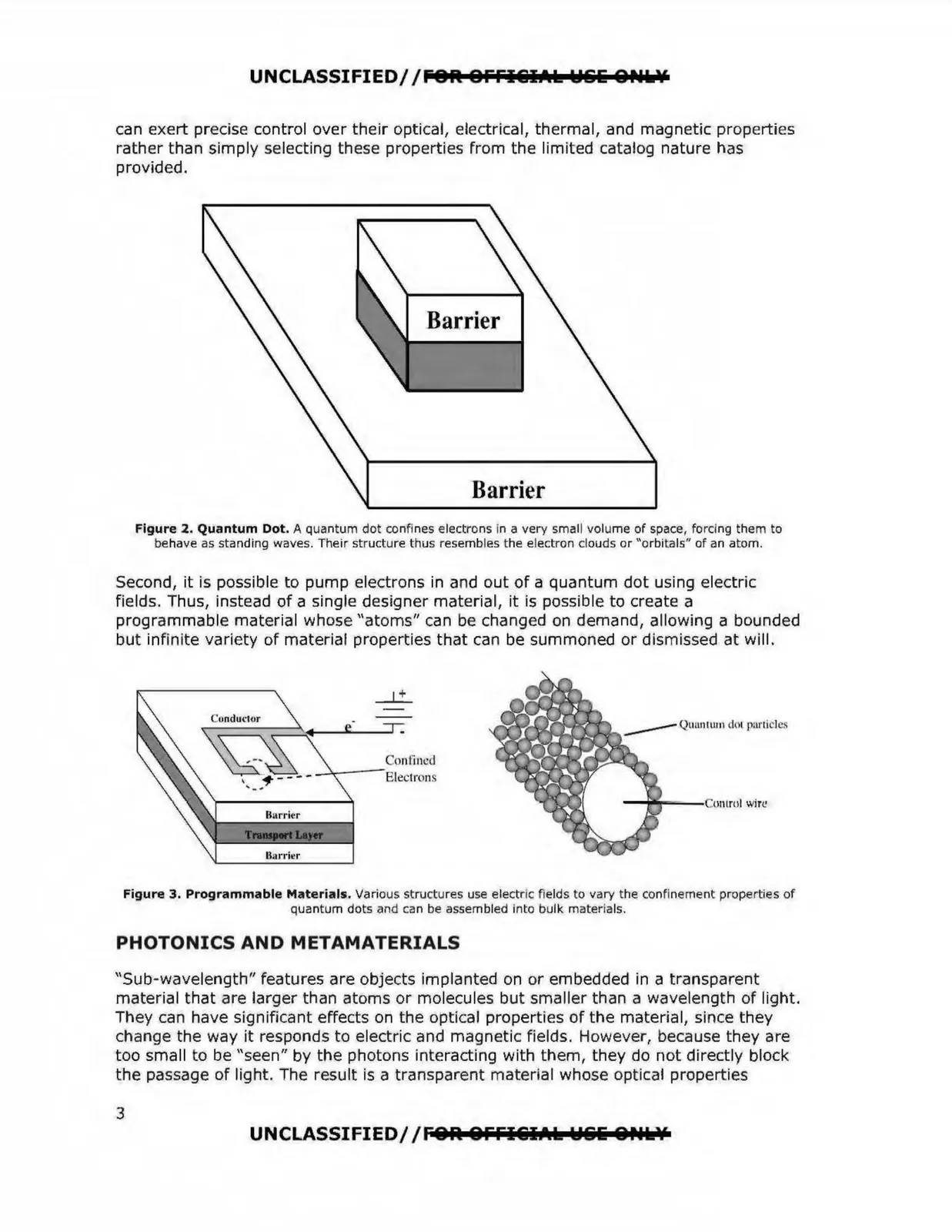
Figure 2. Quantum Dot. A quantum dot confines electrons in a very small volume of space, forcing them to
behave as standing waves. Their structure t hus resembles the electron clouds or "orbitals" of an atom.
Second, it is possible to pump electrons in and out of a quantum dot using electric
fields. Thus, instead of a single designer material, it is possible to create a
programmable material whose "atoms" can be changed on demand, allowing a bounded
but infinite variety of material properties that can be summoned or dismissed at will.
.......!.!....
:::r:
Confined
___,,___ Electrons
Figure 3. Programmable Materials. Various structures use electric fields to vary the confinement properties of
quantum dots and can be assembled into bulk materials.
PHOTONICS AND METAMATERIALS
"Sub-wavelength" features are objects implanted on or embedded in a transparent
material that are larger than atoms or molecules but smaller than a wavelength of light.
They can have significant effects on the optical properties of the material, since they
change the way it responds to electric and magnetic fields. However, because they are
too small to be "seen" by the photons interacting with them, they do not directly block
the passage of light. The result is a transparent material whose optical properties
UNCLASSIFIED//F&R &FFi&iAk W&& &•lk\f
3