AAWSAP DIRD, Biomaterials, January 2010
DOW-UAP-D119 · page 17 of 32
Text
This text came with the file. It may have mistakes. When the text and the image disagree, the image is right.
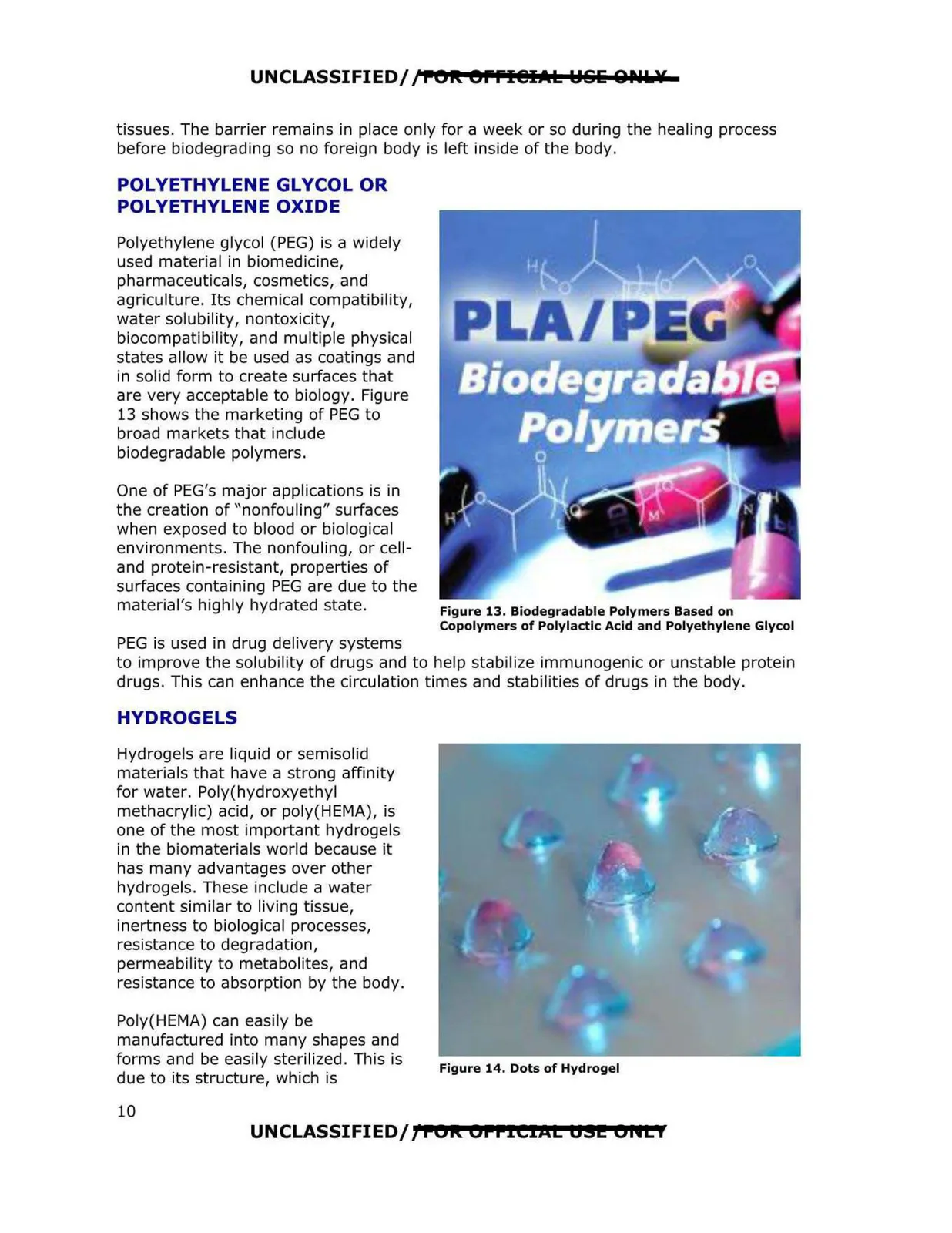
UNCLASSIFIED/, POR. OPPl@IAL WSlii Ql'.L¥ tissues. The barrier remains in place only for a week or so during the healing process before biodegrading so no foreign body is le~ inside of the body. POLYETHYLENE GLYCOL OR POLYETHYLENE OXIDE Polyethylene glycol (PEG) is a widely used material in biomedicine, pharmaceuticals, cosmetics, and agriculture. Its chemical compatibility, water solubility, nontoxicity, biocompatibility, and multiple physical states allow it be used as coatings and in solid form to create surfaces that are very acceptable to biology. Figure 13 shows the marketing of PEG to broad markets that include biodegradable polymers. One of PEG's major applications is in the creation of "nonfouling" surfaces when exposed to blood or biological environments. The nonfouling, or cell and protein-resistant, properties of surfaces containing PEG are due to the material's highly hydrated state. Figure 13. Biodegradable Polymers Based on Copolymers of Polylactic Acid and Polyethylene Glycol PEG is used in drug delivery systems to improve the solubility of drugs and to help stabilize immunogenic or unstable protein drugs. This can enhance the circulation times and stabilities of drugs in the body. HYDROGELS Hydrogels are liquid or semisolid materials that have a strong affinity for water. Poly(hydroxyethyl methacrylic) acid, or poly(HEMA), is one of the most important hydrogels in the biomaterials world because it has many advantages over other hydrogels. These include a water content similar to living tissue, inertness to biological processes, resistance to degradation, permeability to metabolites, and resistance to absorption by the body. Poly(HEMA) can easily be manufactured into many shapes and forms and be easily sterilized . This is due to its structure, which is UNCLASSIFIED/} POK OFFICIAL USE O1\LI Figure 14, Dots of Hydrogel 10