AAWSAP DIRD, Biomaterials, January 2010
DOW-UAP-D119 · page 22 of 32
Text
This text came with the file. It may have mistakes. When the text and the image disagree, the image is right.
UNCLASSIFIED//FOR OPFICIJllt l:ISE 8PUs:lf
Biodegradable polymers have been used with computer-based rapid prototyping
machines to form porous shapes where tissue cells can ingrow. The result after many
weeks of submersion in tissue culture is that the polymer slowly degrades, leaving the
cultured tissue in the shape of the predefined scaffold. Although this approach cannot
grow complex organs, like a heart or kidney, that have many different tissues, it can be
used to create simple structures of cell products-for example, of cartilage excreted by
fibroblast cells. These structures do not create their own networks of blood vessels, a
problem whose solution lies in the future.
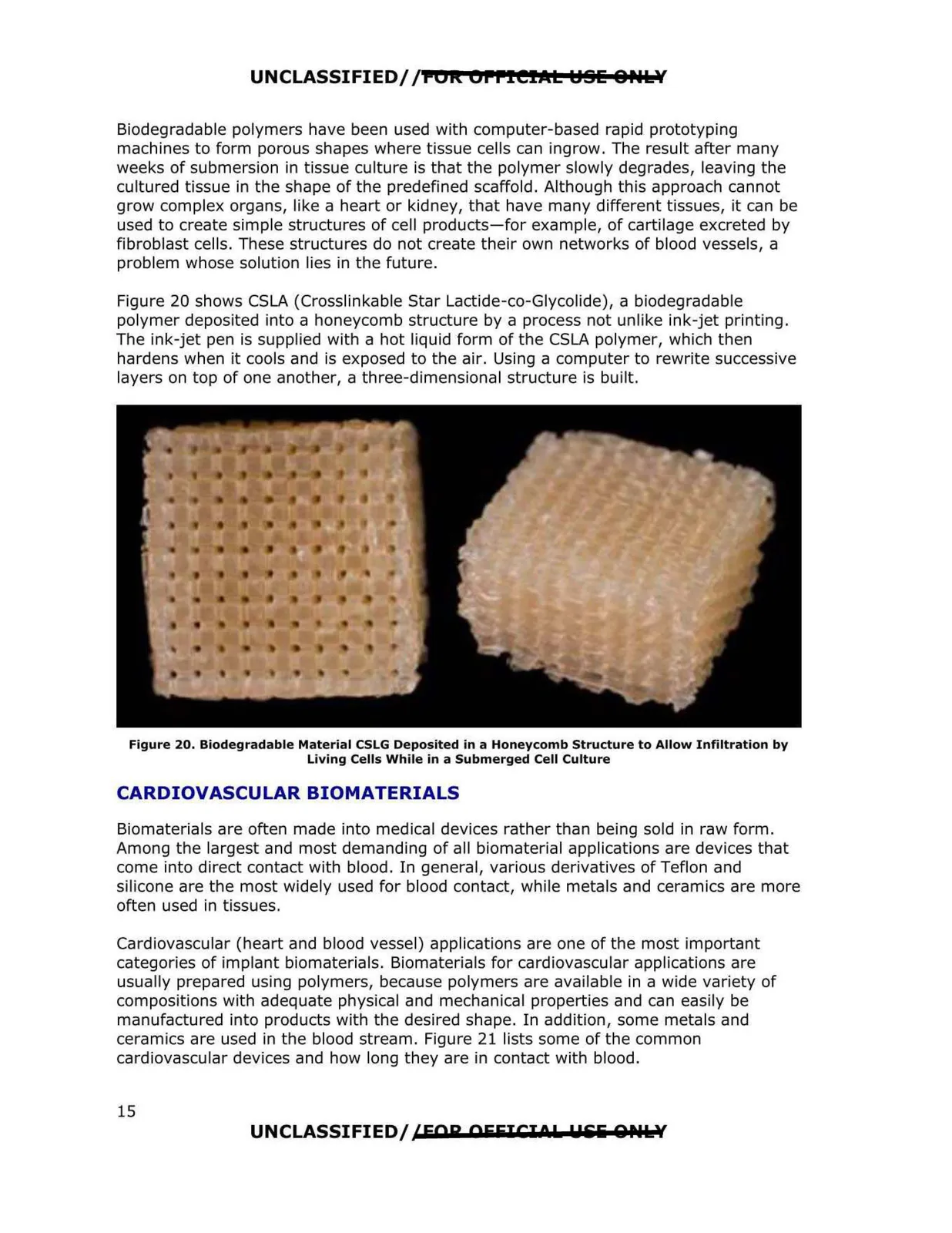
Figure 20 shows CSLA (Crosslinkable Star Lactide-co-Glycolide), a biodegradable
polymer deposited into a honeycomb structure by a process not unlike ink-jet printing.
The ink-jet pen is supplied with a hot liquid form of the CSLA polymer, which then
hardens when it cools and is exposed to the air. Using a computer to rewrite successive
layers on top of one another, a three-dimensional structure is built.
Figure 20. Biodegradable Material CSLG Deposited in a Honeycomb Structure to Allow Infiltration by
Living Cells While in a Submerged Cell Culture
CARDIOVASCULAR BIOMATERIALS
Biomaterials are often made into medical devices rather than being sold in raw form.
Among the largest and most demanding of all biomaterial applications are devices that
come into direct contact with blood. In general, various derivatives of Teflon and
silicone are the most widely used for blood contact, while metals and ceramics are more
often used in tissues.
Cardiovascular (heart and blood vessel) applications are one of the most important
categories of implant biomaterials. Biomaterials for cardiovascular applications are
usually prepared using polymers, because polymers are available in a wide variety of
compositions with adequate physical and mechanical properties and can easily be
manufactured into products with the desired shape. In addition, some metals and
ceramics are used in the blood stream . Figure 21 lists some of the common
cardiovascular devices and how long they are in contact with blood.
UNCLASSIFIED//FOR OFFICIO~ 11&5 QNla:lf
15