AAWSAP DIRD, Biomaterials, January 2010
DOW-UAP-D119 · page 27 of 32
Text
This text came with the file. It may have mistakes. When the text and the image disagree, the image is right.
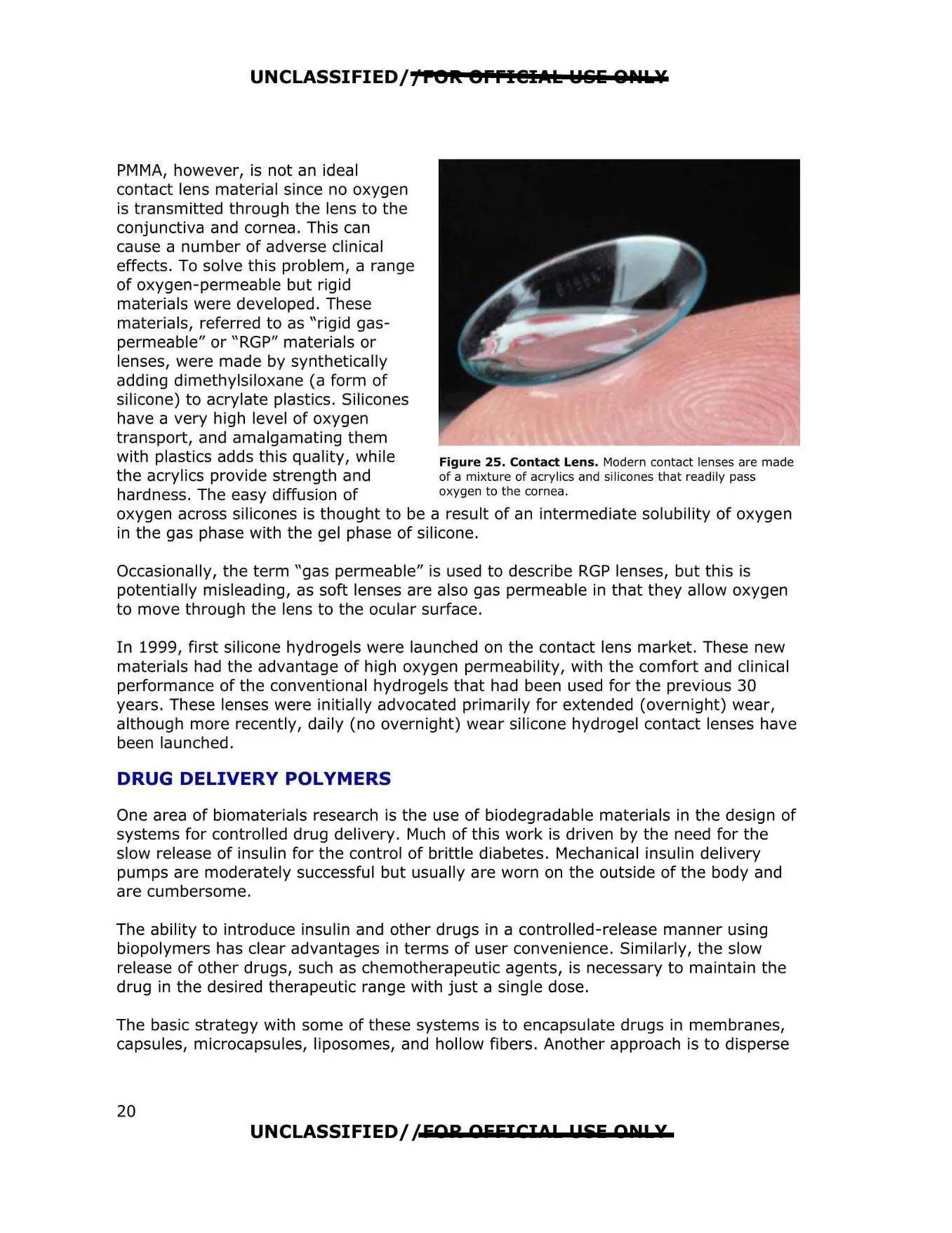
UNCLASSIFIED//P'OR. OP'fl@IAL W&lii QPIL¥ PMMA, however, is not an ideal contact lens material since no oxygen is transmitted through the lens to the conjunctiva and cornea. This can cause a number of adverse clinical effects. To solve this problem, a range of oxygen-permeable but rigid materials were developed. These materials, referred to as "rigid gas permeable" or "RGP" materials or lenses, were made by synthetically adding dimethylsiloxane (a form of silicone) to acrylate plastics. Silicones have a very high level of oxygen transport, and amalgamating them with plastics adds this quality, while Figure 25. contact Lens. Modern contact lenses are made the acrylics provide strength and of a mixture of acrylics and silicones that readily pass hardness. The easy diffusion of oxygen to the cornea. oxygen across silicones is thought to be a result of an intermediate solubility of oxygen in the gas phase with the gel phase of silicone. Occasionally, the term "gas permeable" is used to describe RGP lenses, but this is potentially misleading, as soft lenses are also gas permeable in that they allow oxygen to move through the lens to the ocular surface. In 1999, first silicone hydrogels were launched on the contact lens market. These new materials had the advantage of high oxygen permeability, with the comfort and clinical performance of the conventional hydrogels that had been used for the previous 30 years. These lenses were initially advocated primarily for extended (overnight) wear, although more recently, daily (no overnight) wear silicone hydrogel contact lenses have been launched. DRUG DELIVERY POLYMERS One area of biomaterials research is the use of biodegradable materials in the design of systems for controlled drug delivery. Much of this work is driven by the need for the slow release of insulin for the control of brittle diabetes. Mechanical insulin delivery pumps are moderately successful but usually are worn on the outside of the body and are cumbersome. The ability to introduce insulin and other drugs in a controlled-release manner using biopolymers has clear advantages in terms of user convenience. Similarly, the slow release of other drugs, such as chemotherapeutic agents, is necessary to maintain the drug in the desired therapeutic range with just a single dose. The basic strategy with some of these systems is to encapsulate drugs in membranes, capsules, microcapsules, liposomes, and hollow fibers. Another approach is to disperse UNCLASSIFIED//FOR OFFICIO! 1 !SE ON! X 20