AAWSAP DIRD, Materials for Advanced Aerospace Platforms, January 2010
DOW-UAP-D120 · page 18 of 27
Text
This text came with the file. It may have mistakes. When the text and the image disagree, the image is right.
UNCLASSIFIED/;'FOR OFFl&IAl W&IE 9fslllf
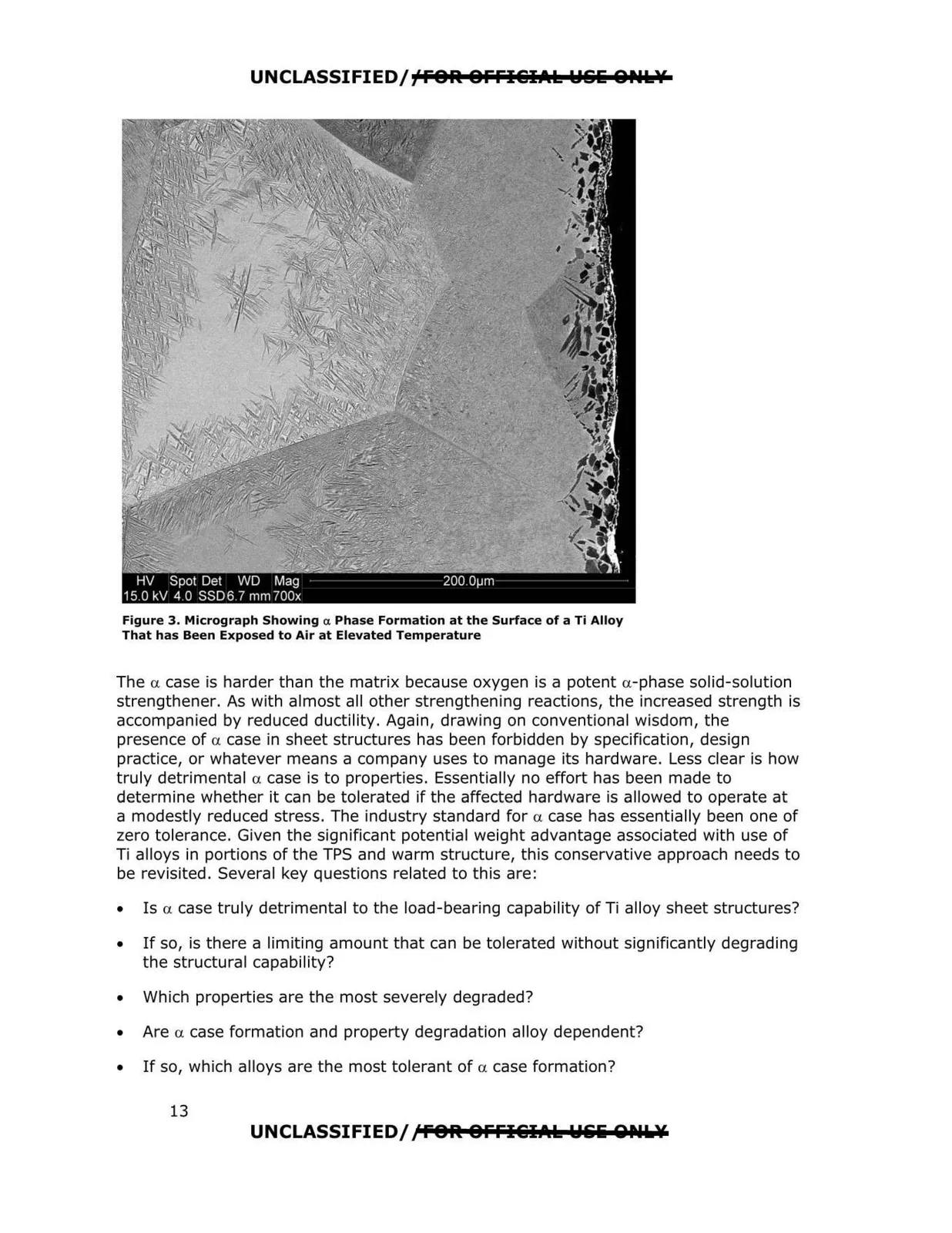
Figure 3. Micrograph Showing a Phase Formation at the Surface of a Ti Alloy
That has Been Exposed to Air at Elevated Temperature
The a case is harder than the matrix because oxygen is a potent a-phase solid-solution
strengthener. As with almost all other strengthening reactions, the increased strength is
accompanied by reduced ductility. Again, drawing on conventional wisdom, the
presence of a case in sheet structures has been forbidden by specification, design
practice, or whatever means a company uses to manage its hardware. Less clear is how
truly detrimental a case is to properties. Essentially no effort has been made to
determine whether it can be tolerated if the affected hardware is allowed to operate at
a modestly reduced stress. The industry standard for a case has essentially been one of
zero tolerance. Given the significant potential weight advantage associated with use of
Ti alloys in portions of the TPS and warm structure, this conservative approach needs to
be revisited. Several key questions related to this are:
•
Is a case truly detrimental to the load-bearing capability of Ti alloy sheet structures?
•
If so, is there a limiting amount that can be tolerated without significantly degrading
the structural capability?
•
Which properties are the most severely degraded?
•
Are a case formation and property degradation alloy dependent?
•
If so, which alloys are the most tolerant of a case formation?
13
UNCLASSIFIED/ /FOR OFFI&IAl Wliliii QfslL¥