AAWSAP DIRD, Space Access: Where We’ve Been and Where We Could Go, March 2010
DOW-UAP-D124 · page 20 of 56
Text
This text came with the file. It may have mistakes. When the text and the image disagree, the image is right.
UNCLASSIFIED/ ;5P81l Offl@IAL YSli QPU,¥
transpiration cooled with a low-rate water-porous spherical nose. The sharp leading
edges (the same leading edge radius was used for the nose tip) were liquid-metal heat
pipes. This approach was tested successfully during the 1964-68 timeframe and was
found to be equal in weight and far more durable than a comparable ceramic
tile/carbon-carbon system. The AFFDL's experience with carbon-carbon leading edges
on the ASSET test vehicle convinced the Air Force it needed a more durable solution.
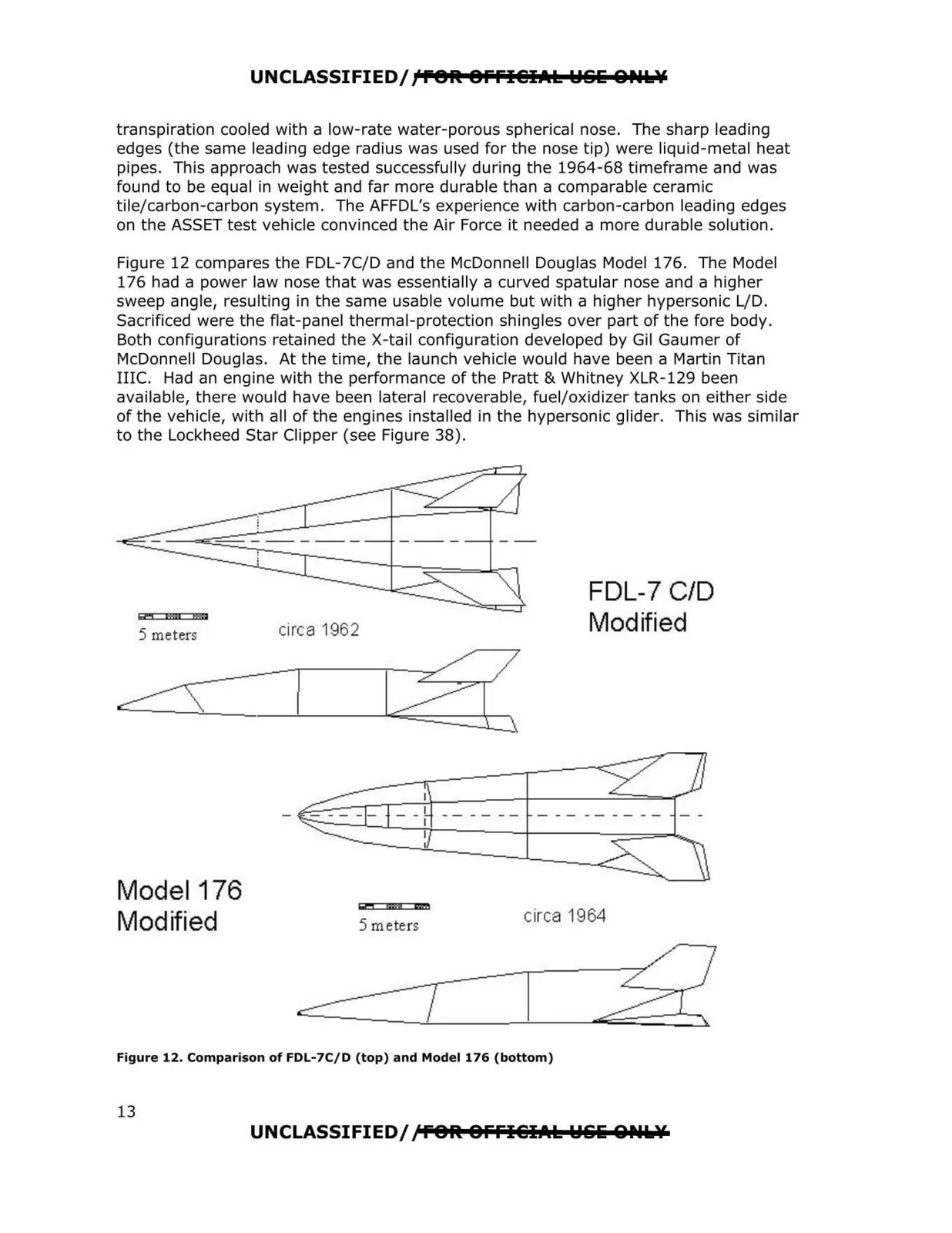
Figure 12 compares the FDL-7C/D and the McDonnell Douglas Model 176. The Model
176 had a power law nose that was essentially a curved spatular nose and a higher
sweep angle, resulting in the same usable volume but with a higher hypersonic L/D.
Sacrificed were the flat-panel thermal-protection shingles over part of the fore body.
Both configurations retained the X-tail configuration developed by Gil Gaumer of
McDonnell Douglas. At the time, the launch vehicle would have been a Martin Titan
IIIC. Had an engine with the performance of the Pratt & Whitney XLR-129 been
available, there would have been lateral recoverable, fuel/oxidizer tanks on either side
of the vehicle, with all of the engines installed in the hypersonic glider. This was similar
to the Lockheed Star Clipper (see Figure 38).
FDL-7 CID
&a e a
e&a
circa 1962
Modified
5 meters
..,.,
Gffl
Wd1
circa 1964
5 meters
Model 176
Modified
Figure 12. Comparison of FDL-7C/D (top) and Model 176 {bottom)
UNCLASSIFIED/ ,«FOil OPFISl.t.L Y&liii 0PIL¥
13