AAWSAP DIRD, Space Access: Where We’ve Been and Where We Could Go, March 2010
DOW-UAP-D124 · page 43 of 56
Text
This text came with the file. It may have mistakes. When the text and the image disagree, the image is right.
UNCLASSIFIED/.'FOR OFFICl.t... Uili QN .. ¥
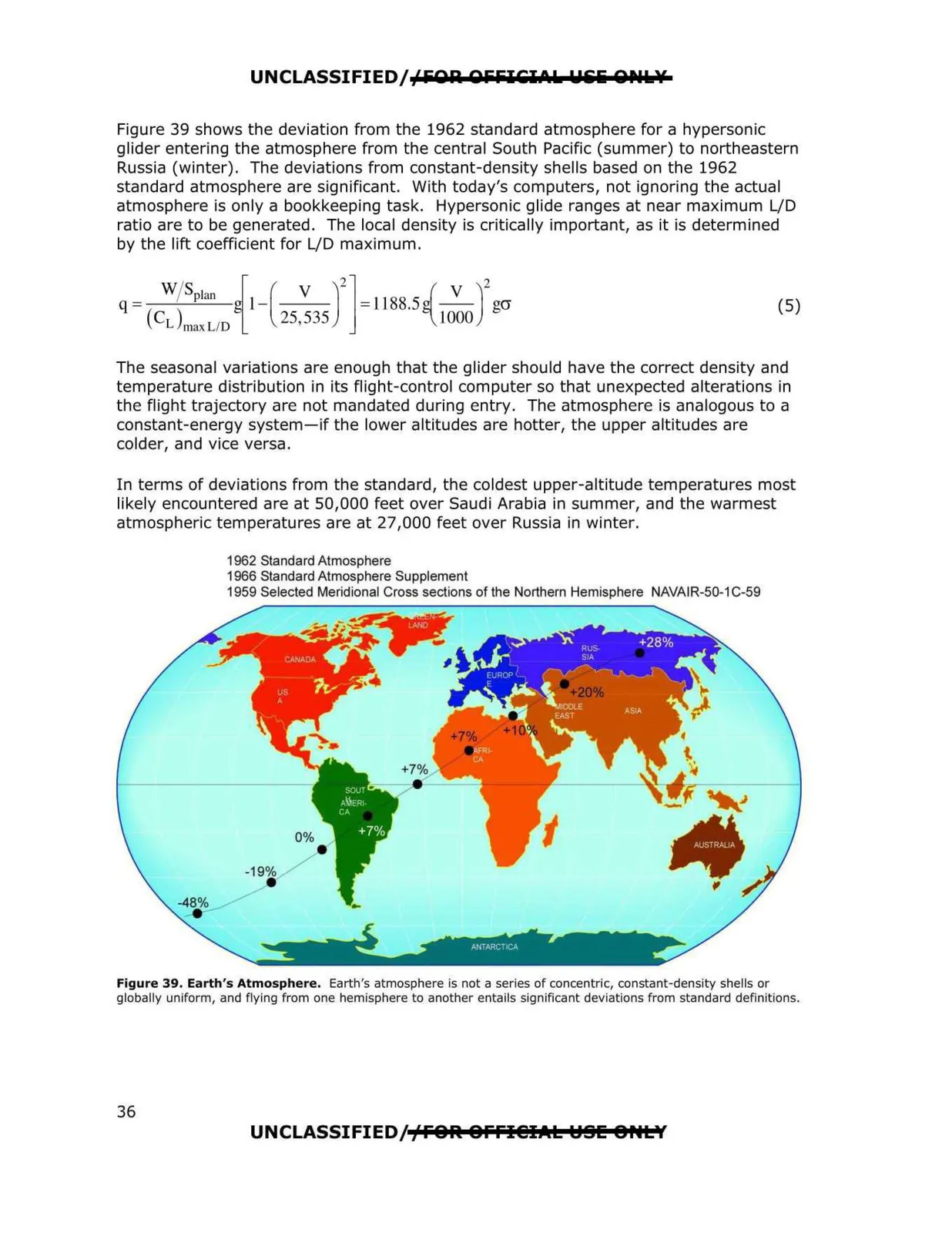
Figure 39 shows the deviation from the 1962 standard atmosphere for a hypersonic
glider entering the atmosphere from the central South Pacific (summer) to northeastern
Russia (winter). The deviations from constant-density shells based on the 1962
standard atmosphere are significant. With today's computers, not ignoring the actual
atmosphere is only a bookkeeping task. Hypersonic glide ranges at near maximum L/D
ratio are to be generated. The local density is critically important, as it is determined
by the lift coefficient for L/D maximum.
2
2
q =
W/ S plan
{ 1- ( --
y
) ] =1188 5 ~--
y
)
0 CT
(5)
(CL)maxL/D
25,535
•
1000 °
The seasonal variations are enough that the glider should have the correct density and
temperature distribution in its flight-control computer so that unexpected alterations in
the flight trajectory are not mandated during entry. The atmosphere is analogous to a
constant-energy system-if the lower altitudes are hotter, the upper altitudes are
colder, and vice versa.
In terms of deviations from the standard, the coldest upper-altitude temperatures most
likely encountered are at 50,000 feet over Saudi Arabia in summer, and the warmest
atmospheric temperatures are at 27,000 feet over Russia in winter.
1962 Standard Atmosphere
1966 Standard Atmosphere Supplement
1959 Selected Meridional Cross sections of the Northern Hemisphere NAVAIR-50-1 C-59
-48%-•
Figure 39. Earth's Atmosphere. Earth's atmosphere is not a series of concentric, constant-density shells or
globally uniform, and flying from one hemisphere to another enta ils significant deviations from standard definitions.
UNCLASSIFIED/fFOR OFFI@IAL Y81: 8HLY
36