AAWSAP DIRD, High-Frequency Gravitational Wave Communications, April 2010
DOW-UAP-D140 · page 18 of 57
Text
This text came with the file. It may have mistakes. When the text and the image disagree, the image is right.
UNCLASSIFIED//&OR Oii&ICI0L Ll&li QPIL¥
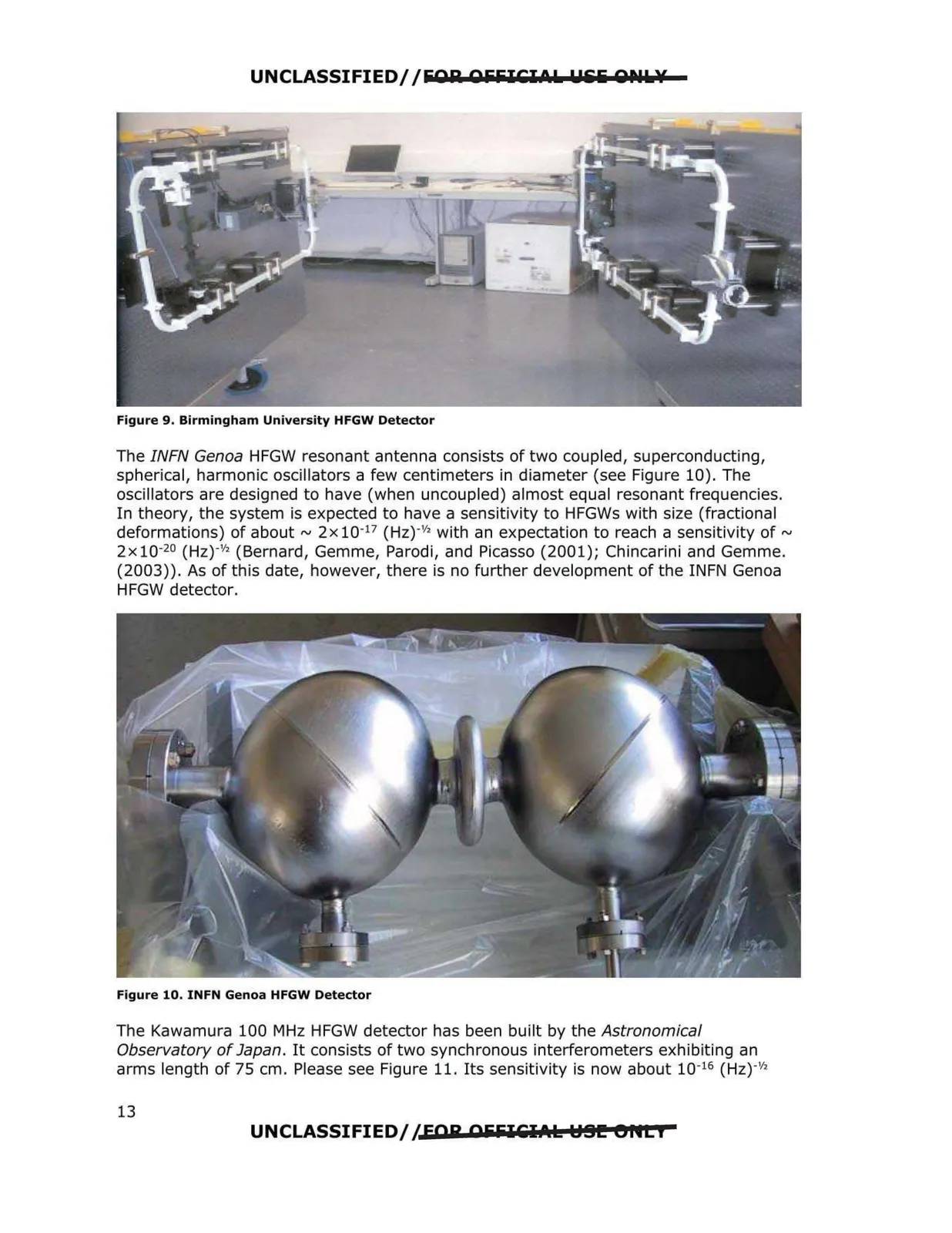
Figure 9. Birmingham University HFGW Detector
The INFN Genoa HFGW resonant antenna consists of two coupled, superconducting,
spherical, harmonic oscillators a few centimeters in diameter (see Figure 10). The
oscillators are designed to have (when uncoupled) almost equal resonant frequencies.
In theory, the system is expected to have a sensitivity to HFGWs with size (fractional
deformations) of about ~ 2x 10·17 (Hz)·½ with an expectation to reach a sensitivity of~
2x 10-20 (Hz)·½ (Bernard, Gemme, Parodi, and Picasso (2001); Chincarini and Gemme.
(2003)). As of this date, however, there is no further development of the INFN Genoa
HFGW detector.
Figure 10. INFN Genoa HFGW Detector
The Kawamura 100 MHz HFGW detector has been built by the Astronomical
Observatory ofJapan. It consists of two synchronous interferometers exhibiting an
arms length of 75 cm. Please see Figure 11. Its sensitivity is now about 10-16 (Hz)·½
UNCLASSIFIED//FOP OiiiilCl.t.k l!ISI!!! l>flti
13