AAWSAP DIRD, High-Frequency Gravitational Wave Communications, April 2010
DOW-UAP-D140 · page 20 of 57
Text
This text came with the file. It may have mistakes. When the text and the image disagree, the image is right.
UNCLASSIFIED//&Olil OiiiilCI0L Llili QPIL¥
:z
Signal (PPF) and Noise (BPF)
have very different physical behavior
PPF > BPF at this end of x-axis
Very Noisy
(BPF)
/
Poynting Vector or
Detection
Photons (PP )
/
/
Poynting Vector or
-✓-----------► Y
S
Detection
X
otons (P F)
..
Signal (PPF) and Noise (BPF)
have very different physical behavior
PPF > BPF at this end of x-axis
GW&E
Synchro-Resonant
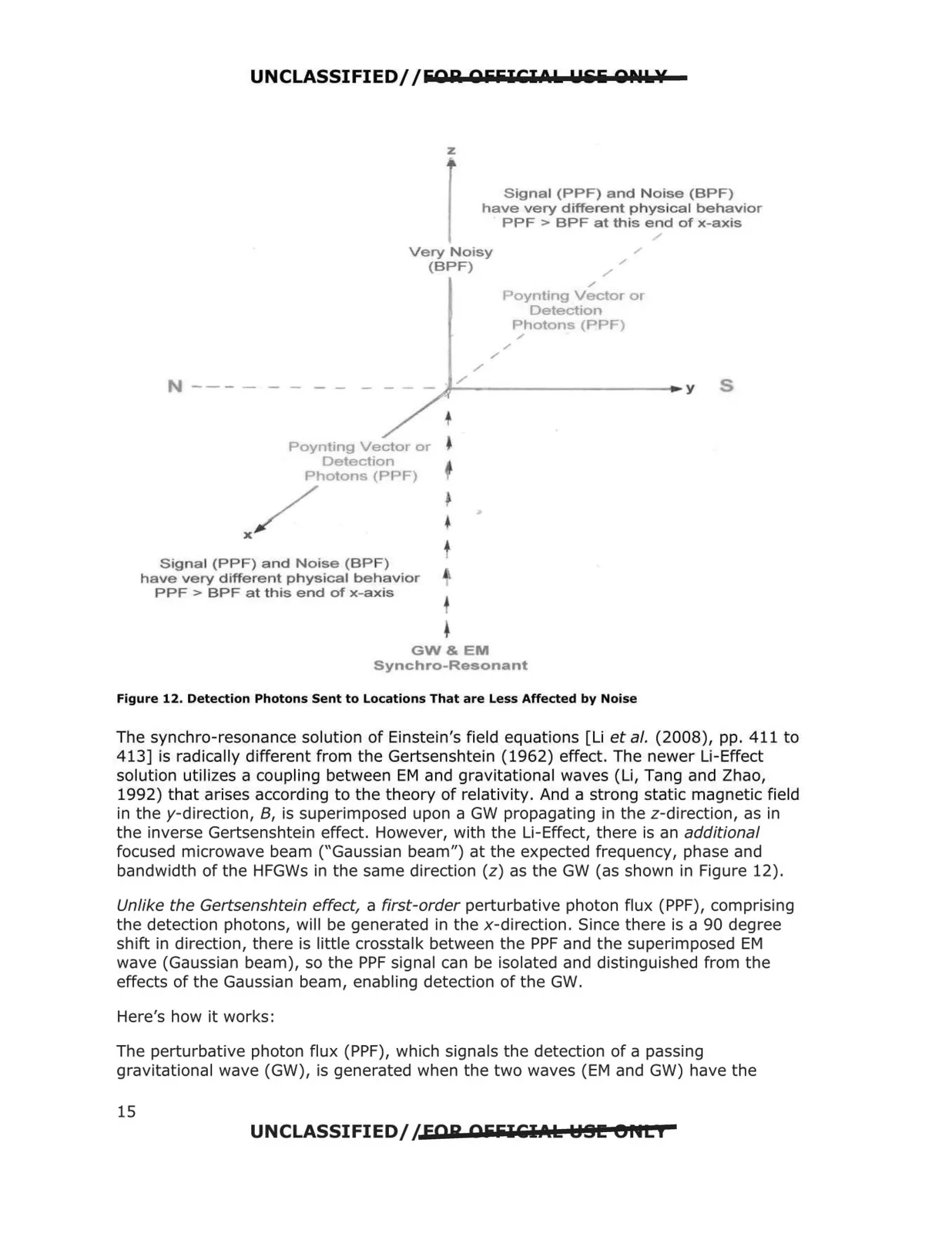
Figure 12. Detection Photons Sent to Locations That are Less Affected by Noise
The synchro-resonance solution of Einstein's field equations [Li et al. (2008), pp. 411 to
413] is radically different from the Gertsenshtein (1962) effect. The newer Li-Effect
solution utilizes a coupling between EM and gravitational waves (Li, Tang and Zhao,
1992) that arises according to the theory of relativity. And a strong static magnetic field
in the y-direction, B, is superimposed upon a GW propagating in the z-direction, as in
the inverse Gertsenshtein effect. However, with the Li-Effect, there is an additional
focused microwave beam ("Gaussian beam") at the expected frequency, phase and
bandwidth of the HFGWs in the same direction (z) as the GW (as shown in Figure 12).
Unlike the Gertsenshtein effect, a first-order perturbative photon flux (PPF), comprising
the detection photons, will be generated in the x-direction. Since there is a 90 degree
shift in direction, there is little crosstalk between the PPF and the superimposed EM
wave (Gaussian beam), so the PPF signal can be isolated and distinguished from the
effects of the Gaussian beam, enabling detection of the GW.
Here's how it works:
The perturbative photon flux (PPF), which signals the detection of a passing
gravitational wave (GW), is generated when the two waves (EM and GW) have the
UNCLASSIFIED//FOR OiiiilCl.t.k HSI!! eflti
15