AAWSAP DIRD, Concepts for Extracting Energy from the Quantum Vacuum, April 2010
DOW-UAP-D142 · page 20 of 57
Text
This text came with the file. It may have mistakes. When the text and the image disagree, the image is right.
UNCLASSIFIED//FOR OFFI@IAk WSE 9Ptk\f
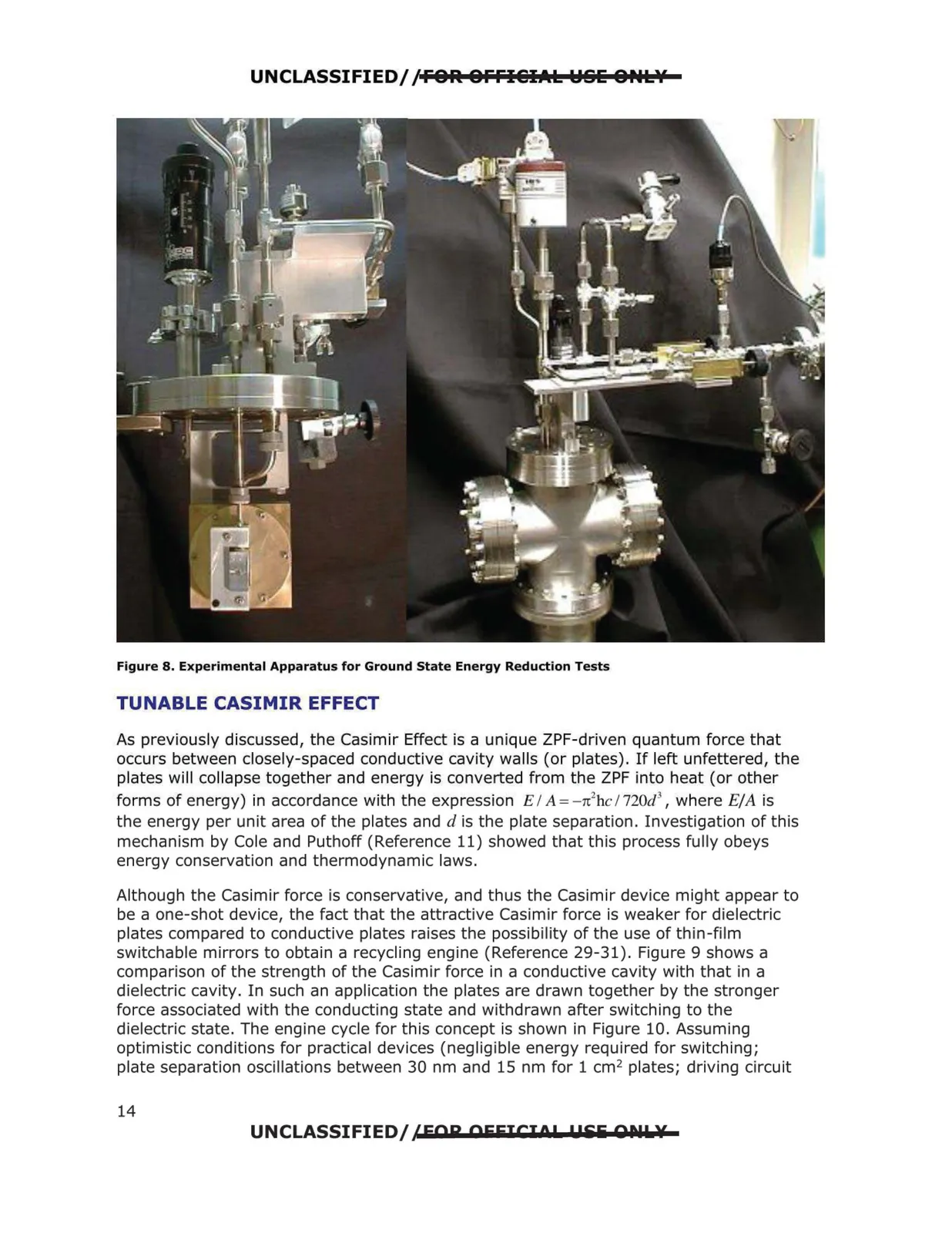
Figure 8. Experimental Apparatus for Ground State Energy Reduction Tests
TUNABLE CASIMIR EFFECT
As previously discussed, the Casimir Effect is a unique ZPF-driven quantum force that
occurs between closely-spaced conductive cavity walls (or plates). If left unfettered, the
plates will collapse together and energy is converted from the ZPF into heat (or other
forms of energy) in accordance with the expression El A =-rc2hc/720d 3 , where EJA is
the energy per unit area of the plates and dis the plate separation. Investigation of this
mechanism by Cole and Puthoff (Reference 11) showed that this process fully obeys
energy conservation and thermodynamic laws.
Although the Casimir force is conservative, and thus the Casimir device might appear to
be a one-shot device, the fact that the attractive Casimir force is weaker for dielectric
plates compared to conductive plates raises the possibility of the use of thin-film
switchable mirrors to obtain a recycling engine (Reference 29-31). Figure 9 shows a
comparison of the strength of the Casimir force in a conductive cavity with that in a
dielectric cavity. In such an application the plates are drawn together by the stronger
force associated with the conducting state and withdrawn after switching to the
dielectric state. The engine cycle for this concept is shown in Figure 10. Assuming
optimistic conditions for practical devices (negligible energy required for switching;
plate separation oscillations between 30 nm and 15 nm for 1 cm 2 plates; driving circuit
UNCLASSIFIED//FOR OFFICI0L: 11ili QIU.,¥
14