AAWSAP DIRD, Laser Lightcraft Nanosatellites, November 2010
DOW-UAP-D143 · page 38 of 77
Text
This text came with the file. It may have mistakes. When the text and the image disagree, the image is right.
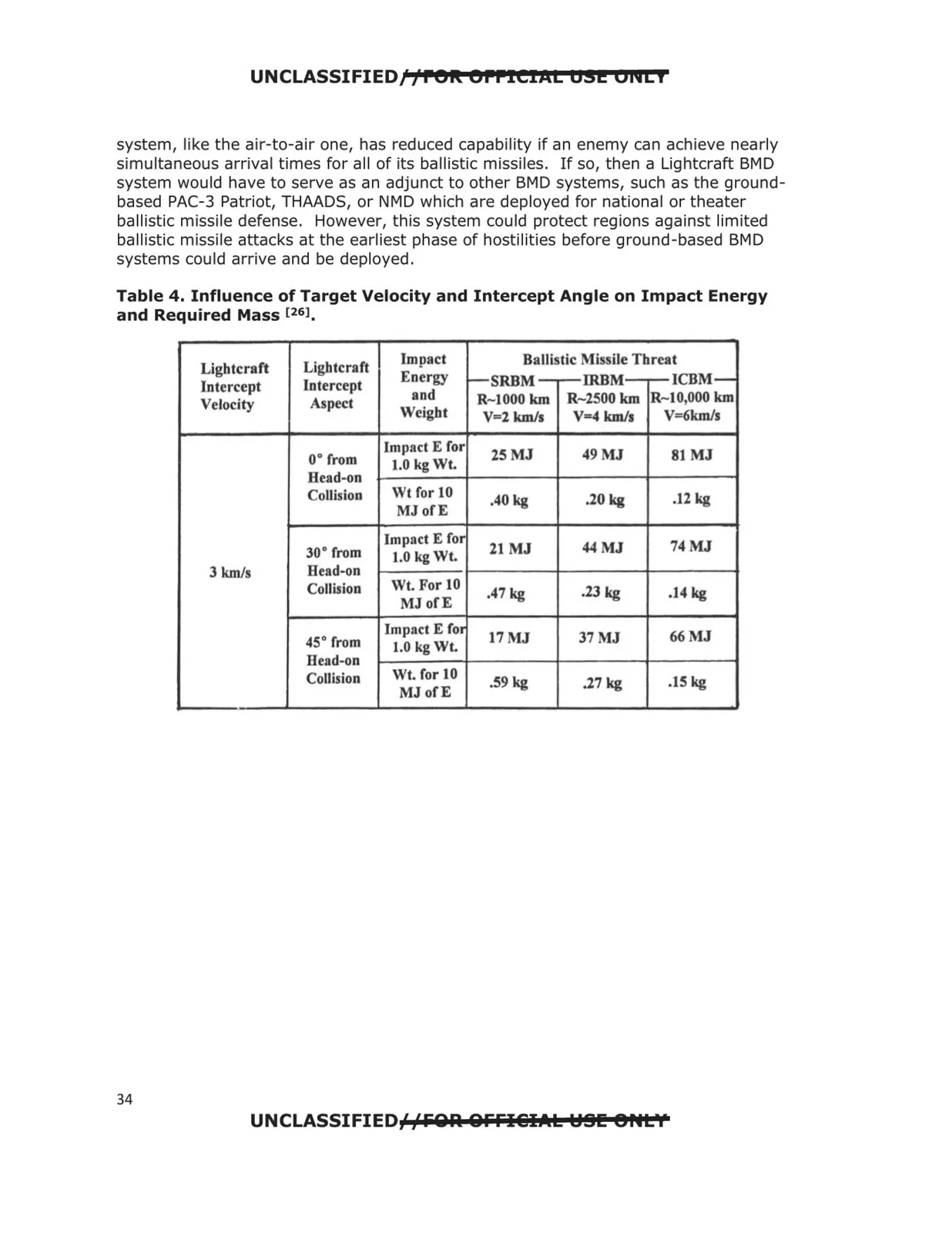
UNCLASSIFIED/;'POR: OPPICIAL USE 014Lf system, like the air-to-air one, has reduced capability if an enemy can achieve nearly simultaneous arrival times for all of its ballistic missiles. If so, then a Lightcraft BMD system would have to serve as an adjunct to other BMD systems, such as the ground based PAC-3 Patriot, THAADS, or NMD which are deployed for national or theater ballist ic missile defense. However, this system could protect regions against limited ballistic missile attacks at the earliest phase of hostilities before ground-based BMD systems cou ld arrive and be deployed. Table 4. Influence of Target Velocity and Intercept Angle on Impact Energy and Required Mass [261. Lightcraft Intercept Velocity Lightcraft Intercept Aspect Impact Energy and Weight Ballistic Missile Threat -SRBM--IRBM--ICBM R~l000 km R~2500km R~l0,000 km V=l km/s V=4 km/s V=6km/s 0° from Impact E for 1.0 kg Wt. 25MJ 49MJ 81 MJ Bead-on Collision Wt for 10 MJofE .40kg .20 kg .12 kg 30° from Impact E for 1.0 kg Wt. 21 MJ 44MJ 74MJ 3 km/s Bead-on Collision Wt. For 10 MJofE .47 kg .23 kg .14 kg 45° from Bead-on Collision Impact E for 1.0 kg Wt. 17MJ 37MJ 66MJ Wt. for 10 MJofE .59 kg .27kg .15 kg UNCLASSIFIED,'fFOA QFFISIAL 1!181!! 8HLY 34