AAWSAP DIRD, Aneutronic Fusion Propulsion I, November 2010
DOW-UAP-D145 · page 19 of 50
Text
This text came with the file. It may have mistakes. When the text and the image disagree, the image is right.
UNCLASSIFIED//POlt Offl@IAL WS& &NkY
---+- Payload
liquid H, Tank
Turbopump
Nuclea r Fuel Assembfy
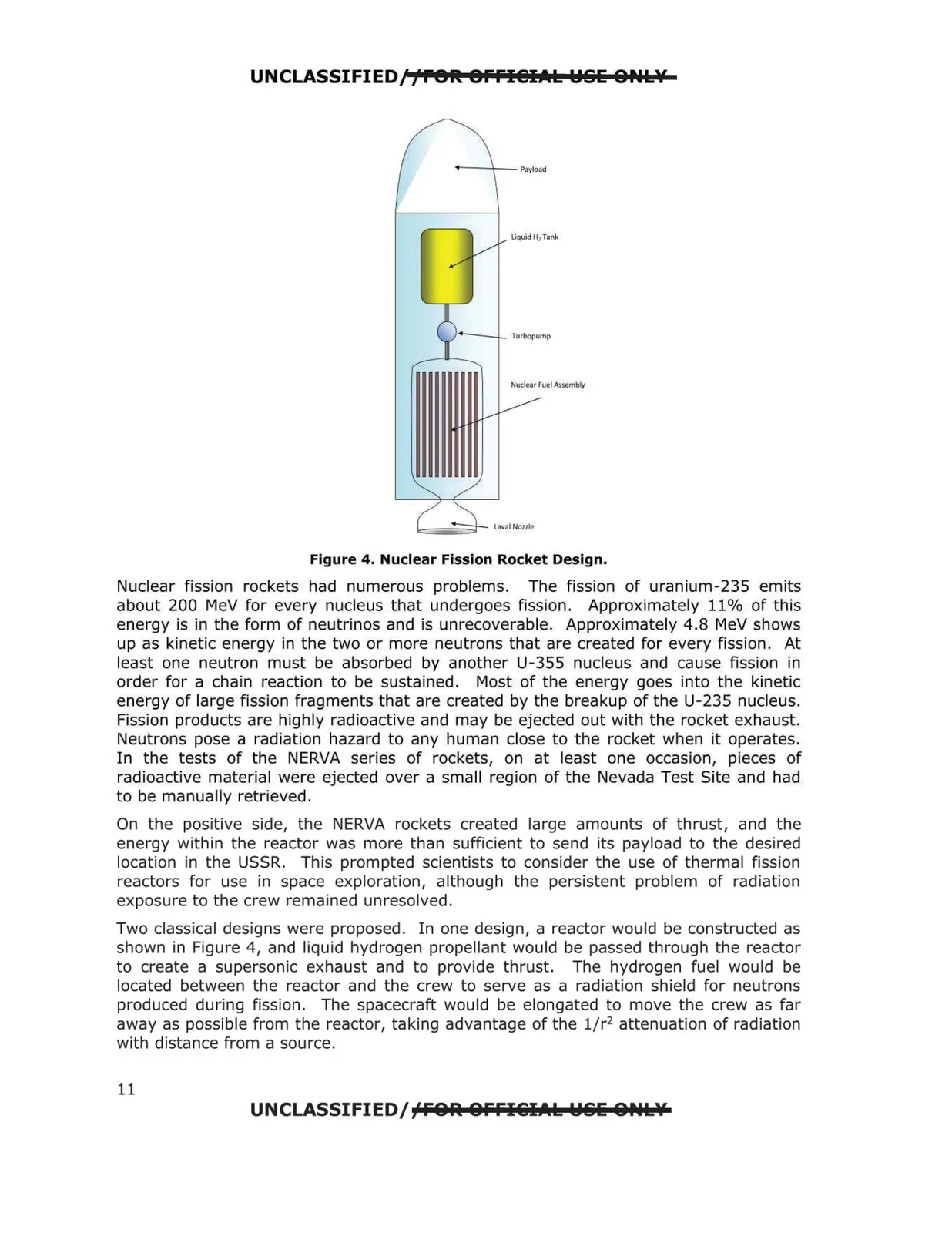
Figure 4. Nuclear Fission Rocket Design.
Nuclear fission rockets had numerous problems.
The fission of uranium-235 emits
about 200 MeV for every nucleus that undergoes fission.
Approximately 11% of this
energy is in the form of neutrinos and is unrecoverable. Approximately 4.8 MeV shows
up as kinetic energy in the two or more neutrons that are created for every fission. At
least one neutron must be absorbed by another U-355 nucleus and cause fission in
order for a chain reaction to be sustained.
Most of the energy goes into the kinetic
energy of large fission fragments that are created by the breakup of the U-235 nucleus.
Fission products are highly radioactive and may be ejected out with the rocket exhaust.
Neutrons pose a radiation hazard to any human close to the rocket when it operates.
In the tests of the NERVA series of rockets, on at least one occasion, pieces of
radioactive material were ejected over a small region of the Nevada Test Site and had
to be manually retrieved.
On the positive side, the NERVA rockets created large amounts of thrust, and the
energy within the reactor was more than sufficient to send its payload to the desired
location in the USSR. This prompted scientists to consider the use of thermal fission
reactors for use in space exploration, although the persistent problem of radiation
exposure to the crew remained unresolved.
Two classical designs were proposed. In one design, a reactor would be constructed as
shown in Figure 4, and liquid hydrogen propellant would be passed through the reactor
to create a supersonic exhaust and to provide thrust.
The hydrogen fuel would be
located between the reactor and the crew to serve as a radiation shield for neutrons
produced during fission. The spacecraft would be elongated to move the crew as far
away as possible from the reactor, taking advantage of the 1/r2 attenuation of radiation
with distance from a source.
UNCLASSIFIED/fF&A &FFI&I:.l.k W&li &NkY
11