AAWSAP DIRD, Aneutronic Fusion Propulsion I, November 2010
DOW-UAP-D145 · page 8 of 50
Text
This text came with the file. It may have mistakes. When the text and the image disagree, the image is right.
UNCLASSIFIED//POR. Offl@IAI:: ~S& Qptk\f
space ship, and there is a high probability that neutrons produced by fusion reactors
would escape into space without providing much of their energy to a hydrogen
propellant. Other fusion reactions using isotopes of helium and lithium will generate
only charged particles, such as protons, that travel very short distances before giving
up all of their energy as heat. These "aneutronic fusion" reactions take place without
neutron production and decrease the need to carry large amounts of radiation shielding
material for the crew. The energy from charged particles generated by aneutronic
fusion can also be captured in conductive coils and converted directly into electricity.
Aneutronic fusion promises to be an important mechanism for future space propulsion,
although novel accelerator or laser systems must be researched and developed in order
to initiate, sustain, and control the fusion reaction.
Another futuristic method of spacecraft propulsion involves the use of antimatter.
Antimatter includes antiprotons, antineutrons, and positrons (anti-electrons). Although
this propulsion process may be the most efficient, antimatter has some drawbacks. For
example, antimatter is generated in only minute quantities at accelerator facilities
around the world. Although it has been captured and stored, containment remains a
problem. When antimatter combines with matter, it completely annihilates and
converts to energy, which then can be converted into heat for a propulsion system.
Antimatter reactions provide the greatest amount of energy per unit mass of any
potential fuel, but the ability to generate significant quantities of antihydrogen or
similar antimatter fuels at any accelerator facility is very limited.
The focus of this study is on aneutronic fusion propulsion. Integral to this study are the
topics of fuel, rocket design, and the organizations that research aneutronic fusion
development.
Uquld H,
LOX
I.Jwal-
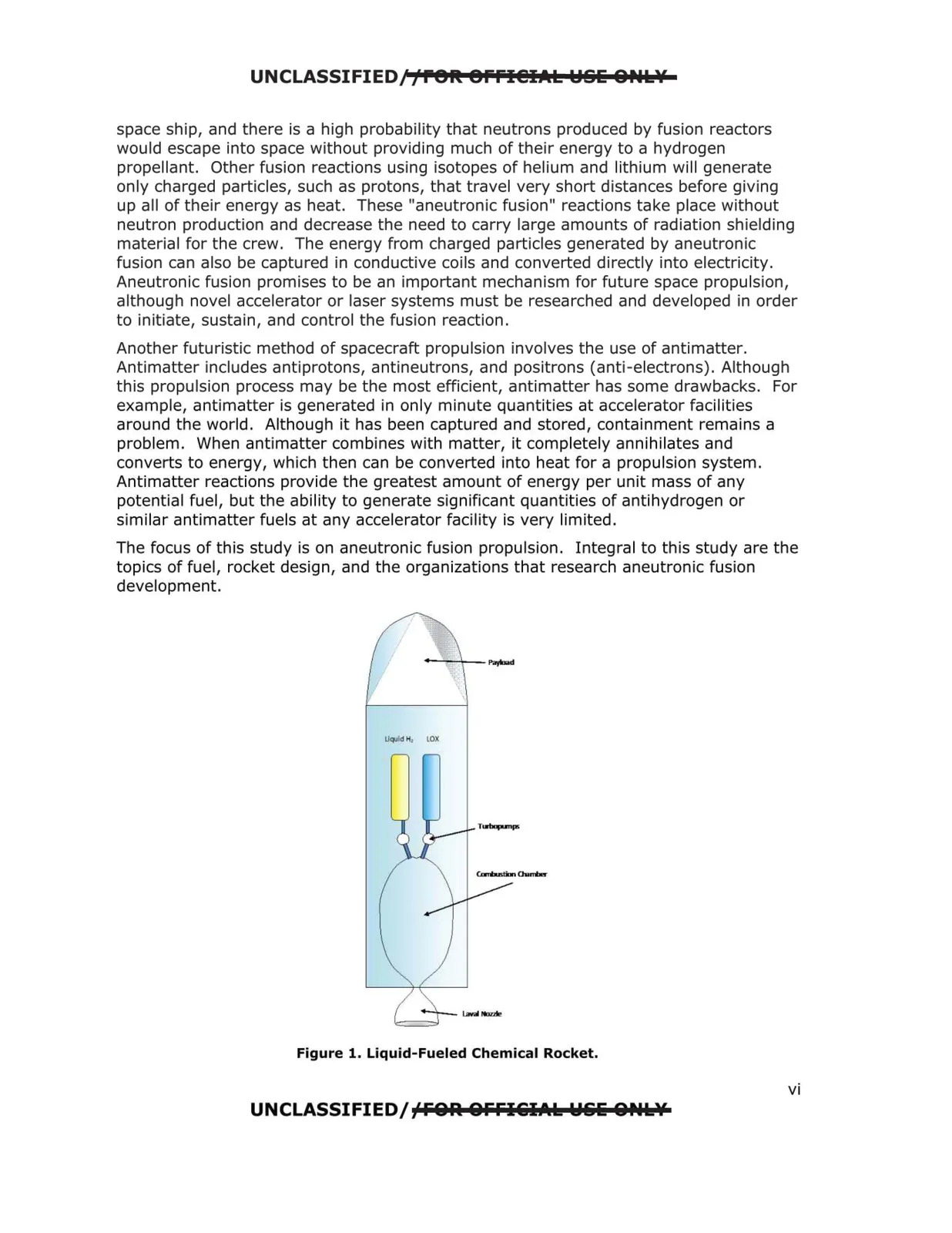
Figure 1. Liquid-Fueled Chemical Rocket.
UNCLASSIFIED/fF&A &FFI€il.t.k W&& Qptk\f
vi