AAWSAP DIRD, Aneutronic Fusion Propulsion II, November 2010
DOW-UAP-D146 · page 27 of 36
Text
This text came with the file. It may have mistakes. When the text and the image disagree, the image is right.
UNCLASSIFIED/ /FOR OFFICIAL tJ!H! 8HLY
UI0/'20001
Pl; (18MI)
"7..15 '"' ,,.,)-
ST(ca 19731
COMPASS-D
Cross s e ction ofpres e nt E U 0 -shape
tokamaks compared to the JTE R project
0..0001 -1,.;....,,__,,.......,...,..i,......,__,_....,...11,-.....,,.....,.,..,,..i
i
k h ttttttnl 11 111t1 1l n 111tttd tttt !! !Ph t!tt1 ttt l H ttt't ■ 1 .. ., w ........, ,, tl
·0.1
':LO
,oo
0
2
4
6
8
:A(MA}
Major radius (m )
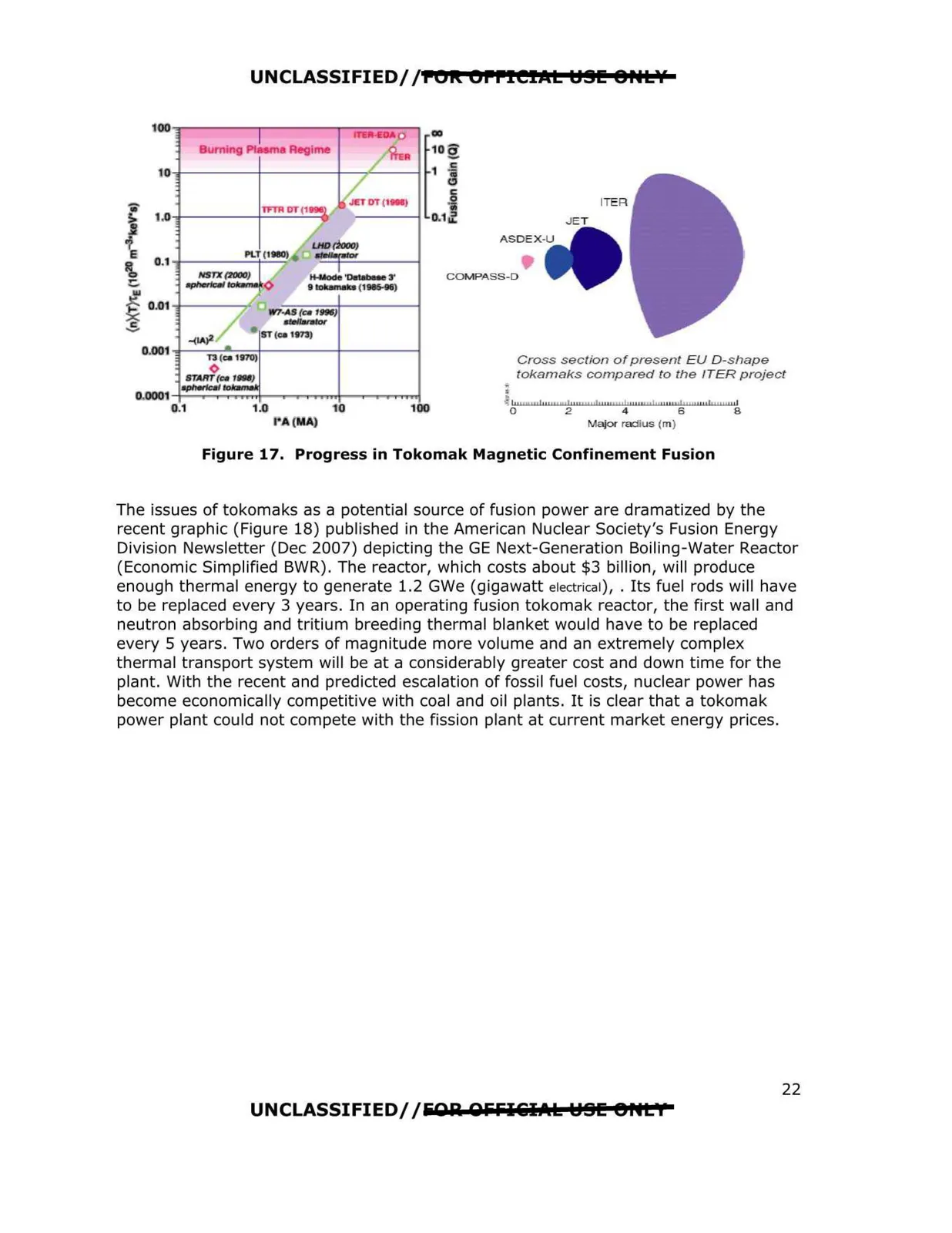
Figure 17. Progress in Tokomak Magnetic Confinement Fusion
The issues of tokomaks as a potential source of fusion power are dramatized by the
recent graphic (Figure 18) published in the American Nuclear Society's Fusion Energy
Division Newsletter (Dec 2007) depicting the GE Next-Generation Boiling-Water Reactor
(Economic Simplified BWR). The reactor, which costs about $3 billion, will produce
enough thermal energy to generate 1.2 GWe (gigawatt electrical), . Its fuel rods will have
to be replaced every 3 years. In an operating fusion tokamak reactor, the first wall and
neutron absorbing and tritium breeding thermal blanket would have to be replaced
every 5 years. Two orders of magnitude more volume and an extremely complex
thermal transport system will be at a considerably greater cost and down time for the
plant. With the recent and predicted escalation of fossil fuel costs, nuclear power has
become economically competitive with coal and oil plants. It is clear that a tokamak
power plant could not compete with the fission plant at current market energy prices.
UNCLASSIFIED/ /EOA QFFI&IAl l:l!H! 9Ht'I"
22