AAWSAP DIRD, Detection and High-Resolution Tracking of Vehicles at Hypersonic Velocities, November 2010
DOW-UAP-D148 · page 23 of 46
Text
This text came with the file. It may have mistakes. When the text and the image disagree, the image is right.
UNCLASSIFIED/fFOR. QFFIEl.t.L: Uii QD:I! X
I x I06
i
J
\
\ I
u(A, T 2)
I ''!. \
\
SxI05
•.
!
o~---~----~--------~---~
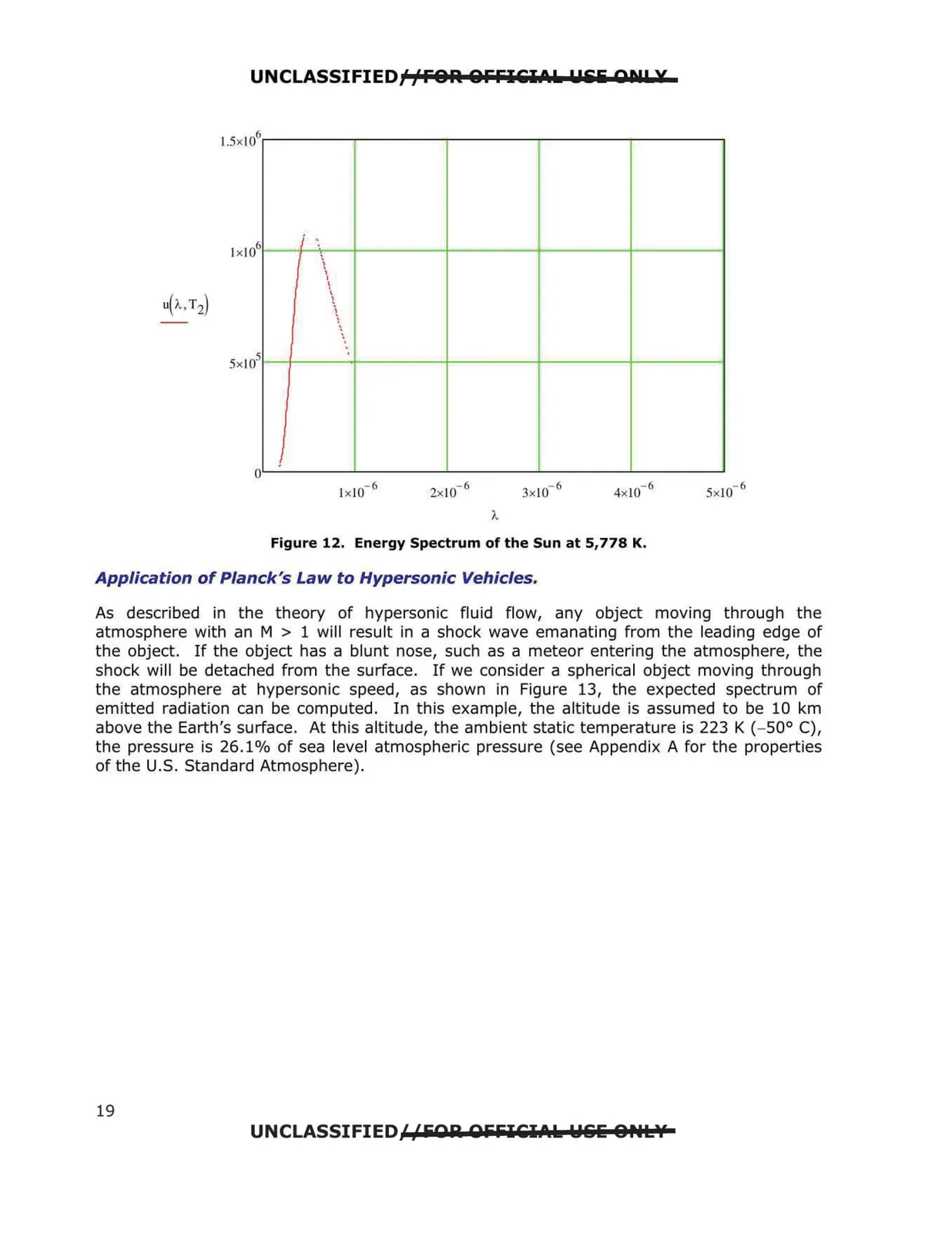
Figure 12. Energy Spectrum of the Sun at 5,778 K.
Application of Planck's Law to Hypersonic Vehicles.
As described in the theory of hypersonic fluid flow, any object moving through the
atmosphere with an M > 1 will result in a shock wave emanating from the leading edge of
the object. If the object has a blunt nose, such as a meteor entering the atmosphere, the
shock will be detached from the surface. If we consider a spherical object moving through
the atmosphere at hypersonic speed, as shown in Figure 13, the expected spectrum of
emitted radiation can be computed. In this example, the altitude is assumed to be 10 km
above the Earth's surface. At this altitude, the ambient static temperature is 223 K (- 50° C),
the pressure is 26.1 % of sea level atmospheric pressure (see Appendix A for the properties
of the U.S. Standard Atmosphere).
UNCLASSIFIED//EQA: QlililEl.t.L: W&&: O,.L'l
19