AAWSAP DIRD, Quantum Computing and Utilizing Organic Molecules in Automation Technology, December 2010
DOW-UAP-D150 · page 41 of 54
Text
This text came with the file. It may have mistakes. When the text and the image disagree, the image is right.
UNCLASSIFIED/ j FOR OFFICiltL tJ!lf! 8HL¥
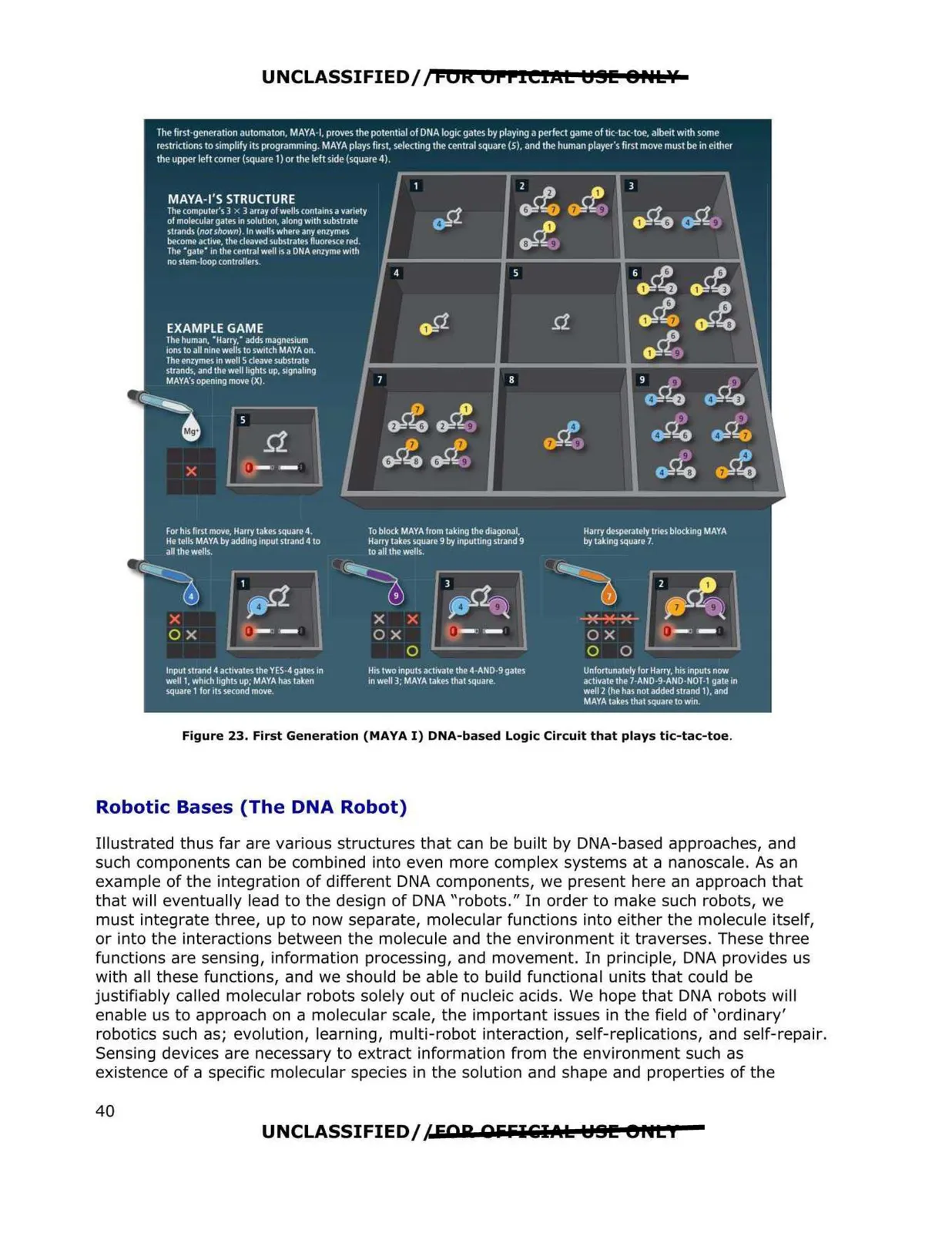
Figure 23. First Generation (MAYA I} DNA-based Logic Circuit that plays tic-tac-toe.
Robotic Bases (The DNA Robot)
Illustrated thus far are various structures that can be built by DNA-based approaches, and
such components can be combined into even more complex systems at a nanoscale. As an
example of the integration of different DNA components, we present here an approach that
that will eventually lead to the design of DNA "robots." In order to make such robots, we
must integrate three, up to now separate, molecular functions into either the molecule itself,
or into the interactions between the molecule and the environment it traverses. These three
functions are sensing, information processing, and movement. In principle, DNA provides us
with all these functions, and we should be able to build functional units that could be
justifiably called molecular robots solely out of nucleic acids. We hope that DNA robots will
enable us to approach on a molecular scale, the important issues in the field of 'ordinary'
robotics such as; evolution, learning, multi-robot interaction, self-replications, and self-repair.
Sensing devices are necessary to extract information from the environment such as
existence of a specific molecular species in the solution and shape and properties of the
UNCLASSIFIED//EAR OfiFI&ilAL Y!II!!! 8fltt
40