AAWSAP DIRD, Cognitive Limits on Simultaneous Control of Multiple Unmanned Spacecraft, December 2010
DOW-UAP-D151 · page 21 of 31
Text
This text came with the file. It may have mistakes. When the text and the image disagree, the image is right.
UNCLASSIFIED/ j FOR OFFICl,CL tl.!l!! 8HL'&'
States:
Fatigue
II Intensity f
Decision Time <= Task load +Processing Rate
Motive
sec)
(bits)
(bits•sec1)
Anxiety...
etc.
increases
Decision Time + Time available ⇒ Time pressure
(sec)
(sec)
ITime I
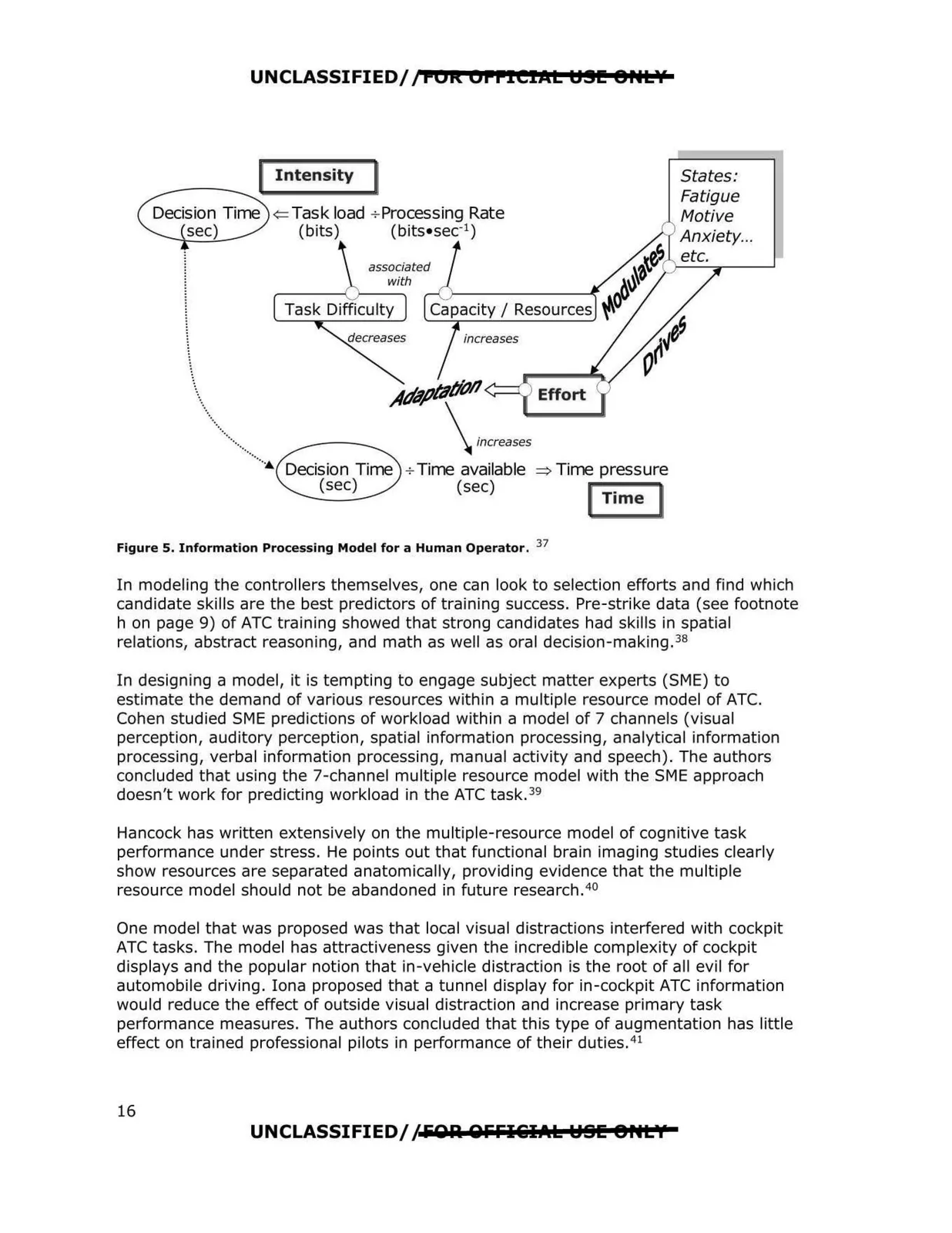
Figure 5. Information Processing Model for a Human Operator. 37
In modeling the controllers themselves, one can look to selection efforts and find which
candidate skills are the best predictors of training success. Pre-strike data (see footnote
h on page 9) of ATC training showed that strong candidates had skills in spatial
relations, abstract reasoning, and math as well as oral decision-making.38
In designing a model, it is tempting to engage subject matter experts (SME) to
estimate the demand of various resources within a multiple resource model of ATC.
Cohen studied SME predictions of workload within a model of 7 channels (visual
perception, auditory perception, spatial information processing, analytical information
processing, verbal information processing, manual activity and speech). The authors
concluded that using the 7-channel multiple resource model with the SME approach
doesn't work for predicting workload in the ATC task. 39
Hancock has written extensively on the multiple-resource model of cognitive task
performance under stress. He points out that functional brain imaging studies clearly
show resources are separated anatomically, providing evidence that the multiple
resource model should not be abandoned in future research. 40
One model that was proposed was that local visual distractions interfered with cockpit
ATC tasks. The model has attractiveness given the incredible complexity of cockpit
displays and the popular notion that in-vehicle distraction is the root of all evil for
automobile driving. Iona proposed that a tu nnel display for in-cockpit ATC information
would reduce the effect of outside visual distraction and increase primary task
performance measures. The authors concluded that this type of augmentation has little
effect on trained professional pilots in performance of their duties. 41
UNCLASSIFIED//EOA OFFl&l.t.l:: Y!U! 8HLY
16