AAWSAP DIRD, Cognitive Limits on Simultaneous Control of Multiple Unmanned Spacecraft, December 2010
DOW-UAP-D151 · War Dept. · Dec 15, 2010 · document · 31 pages · Release 6
What the war.gov catalog says
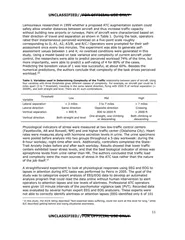
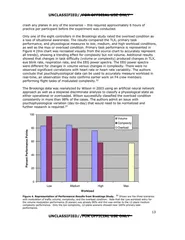
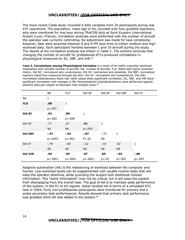
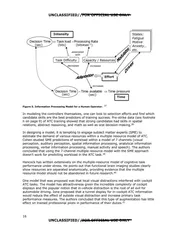
This document is a Defense Intelligence Reference Document (DIRD), a technical reference format used by the Defense Intelligence Agency (DIA) to capture baseline knowledge on a specific topic for later analytic use. DIRDs are best understood as reference and synthesis products rather than as original research. It is one of 38 DIRDs produced under the Advanced Aerospace Weapon System Applications Program (AAWSAP) between 2009 and 2011. Because AAWSAP’s scope permitted a broad range of supporting topics, not every DIRD in the series directly concerns aerospace systems or future threat assessment. The following summary reflects the DIRD’s scope and framing at the time of writing and should not be read as implying current validation of the concepts discussed. This DIRD examines how many unmanned spacecraft a single human operator could realistically supervise or control at once, using research from air traffic control and multi-vehicle remote piloting as rough analogs. The report argues that the practical limit depends heavily on task complexity: about 16 craft for simple monitoring or destination assignment, about 7 for moderately complex piloting or mission tasks, and about 4 for complex heterogeneous operations. It places particular emphasis on the operator’s ability to maintain a coherent mental “big picture” of multiple vehicles at once, and it suggests that automation and external displays can help by offloading working-memory demands, though not eliminating them. The document also highlights physiological workload measures as a possible way to detect or predict operator overload in real time. Overall, it presents multi-spacecraft control as a human-factors and systems-integration problem in which progress depends on managing cognitive limits through interface design, automation, and workload monitoring.

From the file
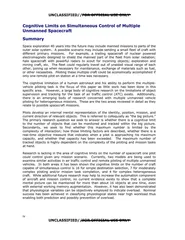
Accomplishing this monitoring task and the occasional piloting task for multiple craft in the fleet could be economically accomplished if only one remote pilot on station at a time was necessary. p. 6
The primary research question we seek to answer is whether there is a cognitive limit to the number of moving objects that can be maintained in the big picture. p. 6
This text came with the file. It may have mistakes. When the text and the image disagree, the image is right.