AAWSAP DIRD, Aneutronic Fusion Propulsion II, November 2010
DOW-UAP-D146 · page 17 of 36
Text
This text came with the file. It may have mistakes. When the text and the image disagree, the image is right.
UNCLASSIFIED/ Jfdk OFFICIAL U.!I! 9HL>f
Ion lqectOI' fl
llagllelE...
Pllsllla
Tlmtstl \
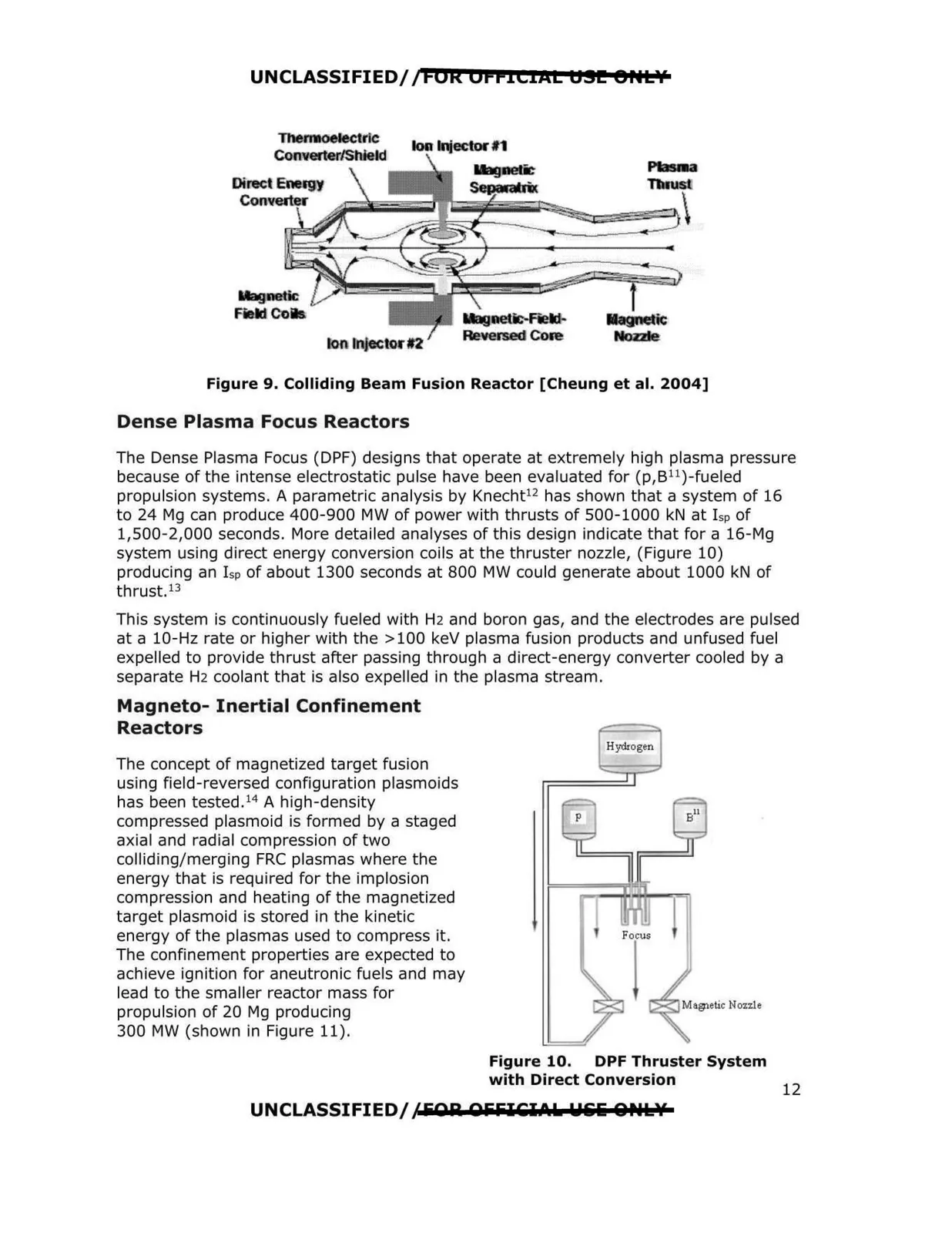
Figure 9. Colliding Beam Fusion Reactor [Cheung et al. 2004]
Dense Plasma Focus Reactors
The Dense Plasma Focus (DPF) designs that operate at extremely high plasma pressure
because of the intense electrostatic pulse have been evaluated for (p,B 11)-fueled
propulsion systems. A parametric analysis by Knecht12 has shown that a system of 16
to 24 Mg can produce 400-900 MW of power with thrusts of 500-1000 kN at lsp of
1,500-2,000 seconds. More detailed analyses of this design indicate that for a 16-Mg
system using direct energy conversion coils at the thruster nozzle, (Figure 10)
producing an lsp of about 1300 seconds at 800 MW could generate about 1000 kN of
thrust.13
This system is continuously fueled with H2 and boron gas, and the electrodes are pulsed
at a 10-Hz rate or higher with the >100 keV plasma fusion products and unfused fuel
expelled to provide thrust after passing through a direct-energy converter cooled by a
separate H2 coolant that is also expelled in the plasma stream.
Magneto- Inertial Confinement
Reactors
The concept of magnetized target fusion
using field-reversed configuration plasmoids
has been tested. 14 A high-density
compressed plasmoid is formed by a staged
axial and radial compression of two
colliding/merging FRC plasmas where the
energy that is required for the implosion
compression and heating of the magnetized
target plasmoid is stored in the kinetic
energy of the plasmas used to compress it.
The confinement properties are expected to
achieve ignition for aneutronic fuels and may
lead to the smaller reactor mass for
propulsion of 20 Mg producing
300 MW (shown in Figure 11).
Figure 10.
DPF Thruster System
with Direct Conversion
UNCLASSIFIED//FOR OfifilCIA.k Wi& 0NLY
12