AAWSAP DIRD, Ultracapacitors as Energy and Power Storage Devices, November 2010
DOW-UAP-D147 · page 25 of 34
Text
This text came with the file. It may have mistakes. When the text and the image disagree, the image is right.
UNCLASSIFIED1/FOR 8ffl@IAL tt91! e"t I
15
Ill
II
't
~
-Y
°! 10
(Cll,Cfl1),N•
0.68rvnclame.
I
Is
0
0 L--+--1----========:'.....J .______,...
0
3
s
Aveqge pore Size {Ml)
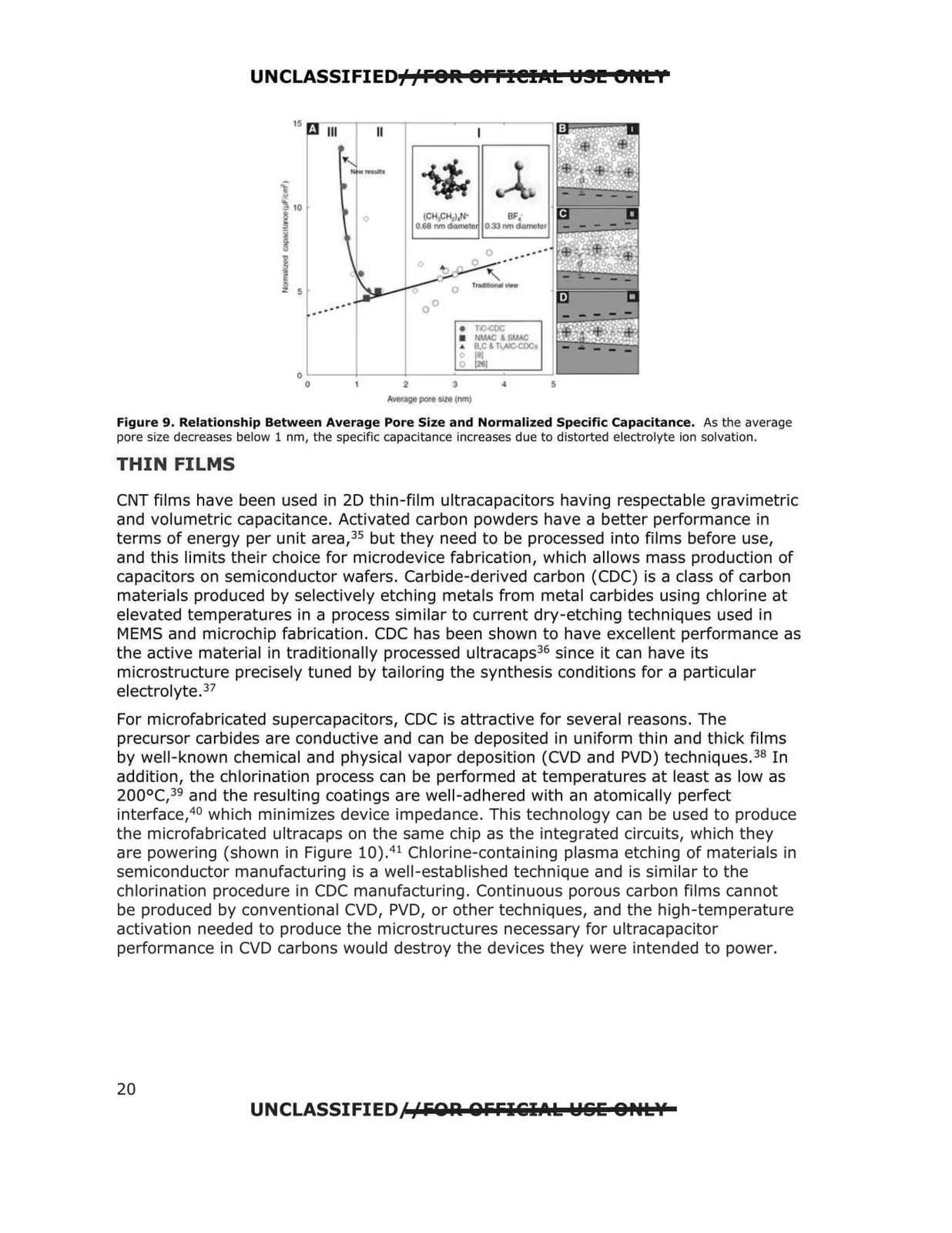
Figure 9. Relationship Between Average Pore Size and Normalized Specific Capacitance. As the average
pore size decreases below 1 nm, the specific capacitance increases due to distorted electrolyte Ion salvation.
THIN FILMS
CNT films have been used in 2D thin-film ultracapacitors having respectable gravimetric
and volumetric capacitance. Activated carbon powders have a better performance in
terms of energy per unit area, 35 but they need to be processed into films before use,
and this limits their choice for microdevice fabrication, which allows mass production of
capacitors on semiconductor wafers. Carbide-derived carbon (CDC) is a class of carbon
materials produced by selectively etching metals from meta l carbides using chlorine at
elevated temperatures in a process similar to current dry-etching techniques used in
MEMS and microchip fabrication. CDC has been shown to have excellent performance as
the active material in traditionally processed ultracaps36 since it can have its
microstructure precisely tuned by tailoring the synthesis conditions for a particular
electrolyte.37
For microfabricated supercapacitors, CDC is attractive for several reasons. The
precursor carbides are conductive and can be deposited in uniform thin and thick films
by well-known chemical and physical vapor deposition (CVD and PVD) techniques. 38 I n
addition, the chlorination process can be performed at temperatures at least as low as
200°C,39 and the resulting coatings are well-adhered with an atomically perfect
interface,40 which minimizes device impedance. This technology can be used to produce
the microfabricated ultracaps on the same chip as the integrated circuits, which they
are powering (shown in Figure 10).41 Chlorine-containing plasma etching of materials in
semiconductor manufacturing is a well-established technique and is similar to the
chlorination procedure in CDC manufacturing. Continuous porous carbon films cannot
be produced by conventional CVD, PVD, or other techniques, and the high-temperature
activation needed to produce the microstructures necessary for ultracapacitor
performance in CVD carbons would destroy the devices they were intended to power.
UNCLASSIFIEO/fFOA OFFI&I:.l.b YS& ONLY
20