AAWSAP DIRD, Ultracapacitors as Energy and Power Storage Devices, November 2010
DOW-UAP-D147 · page 8 of 34
Text
This text came with the file. It may have mistakes. When the text and the image disagree, the image is right.
UNCLASSIFIED1/FOR 8ffl@IAL tt91! e"t I
Activated
Material selection
and construction
carbon
electrodes
Electrolyte
Activated
carbon
electrodes
0000000000
Separator soaked in electrolyte
0000000000
■ Electrodes
■ Separator
■ Electrolyte
■ Wound component
■ Case
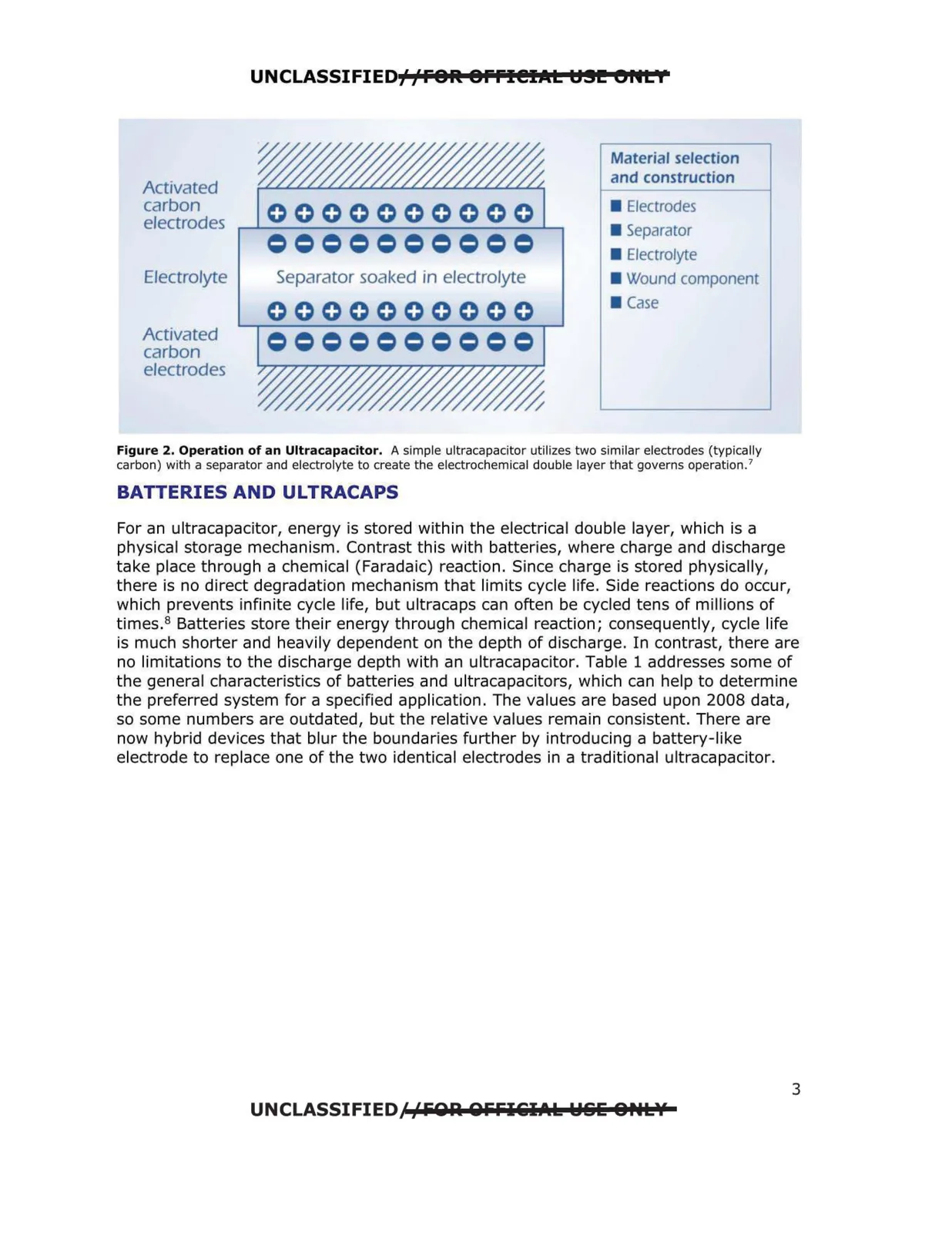
Figure 2. Operation of an Ultracapacitor. A simple ultracapacitor utilizes two similar electrodes (typically
carbon) with a separator and electrolyte to create the electrochemical double layer that governs operation. 7
BATTERIES AND ULTRACAPS
For an ultracapacitor, energy is stored within the electrical double layer, which is a
physical storage mechanism. Contrast this with batteries, where charge and discharge
take place through a chemical (Faradaic) reaction. Since charge is stored physically,
there is no direct degradation mechanism that limits cycle life. Side reactions do occur,
which prevents infinite cycle life, but ultracaps can often be cycled tens of millions of
times.8 Batteries store their energy through chemical reaction; consequently, cycle life
is much shorter and heavily dependent on the depth of discharge. In contrast, there are
no limitations to the discharge depth with an ultracapacitor. Table 1 addresses some of
the general characteristics of batteries and ultracapacitors, which can help to determine
the preferred system for a specified application . The values are based upon 2008 data,
so some numbers are outdated, but the relative values remain consistent. There are
now hybrid devices that blur the boundaries further by introducing a battery-like
electrode to replace one of the two identical electrodes in a traditional ultracapacitor.
UNCLASSIFIEO/fFOA OFFI&I:.l.b YS& ONLY
3