AAWSAP DIRD, Detection and High-Resolution Tracking of Vehicles at Hypersonic Velocities, November 2010
DOW-UAP-D148 · page 9 of 46
Text
This text came with the file. It may have mistakes. When the text and the image disagree, the image is right.
UNCLASSIFIED/fFOR. QFFIEl .t.L: Uii QD:I! X
Boundary Layers
Strouhal Eddies or
Streamlines
Vortices
Direction of Flow
Projectile
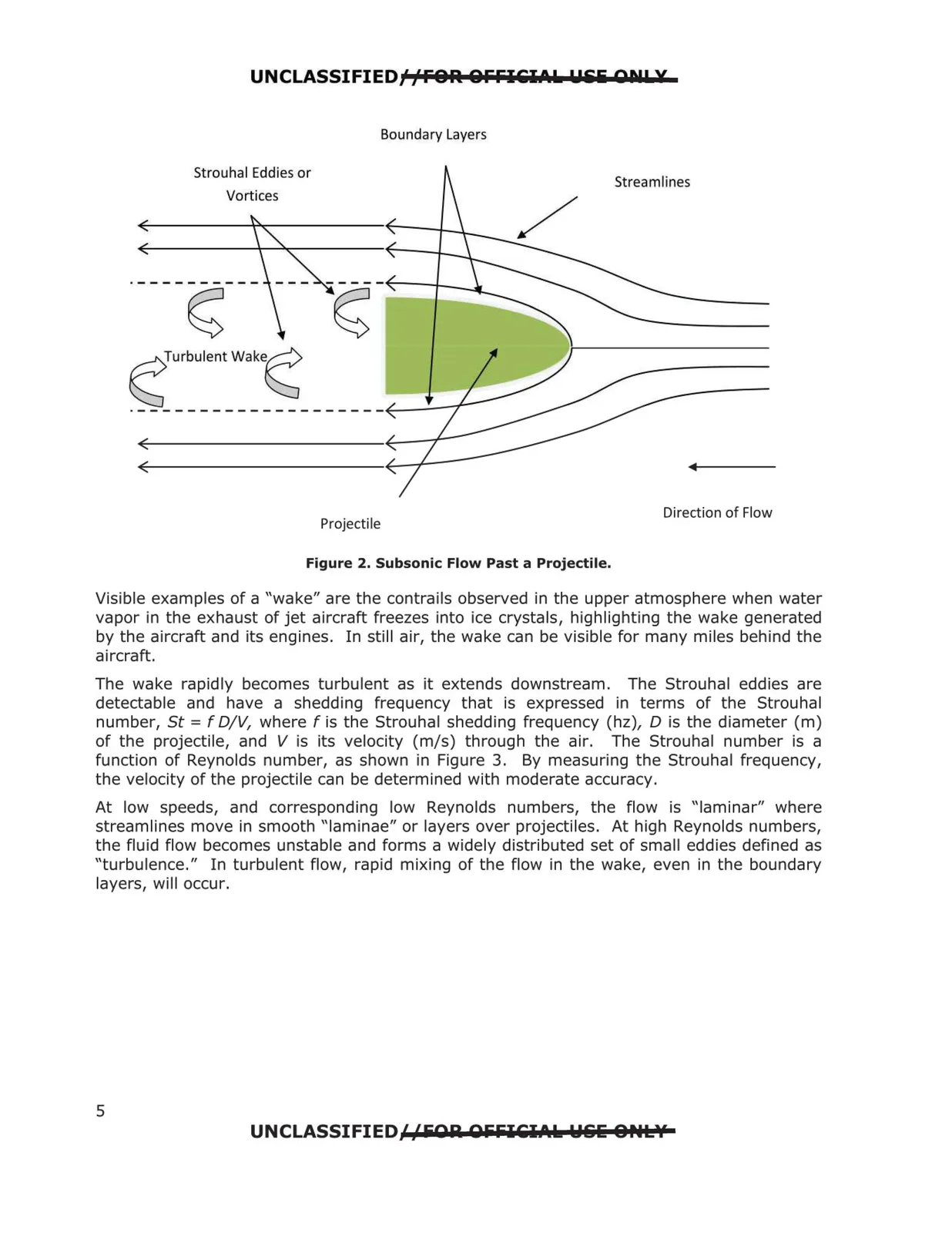
Figure 2. Subsonic Flow Past a Projectile.
Visible examples of a "wake" are the contrails observed in the upper atmosphere when water
vapor in the exhaust of jet aircraft freezes into ice crystals, highlighting the wake generated
by the aircraft and its engines. In still air, the wake can be visible for many miles behind the
aircraft.
The wake rapidly becomes turbulent as it extends downstream.
The Strauhal eddies are
detectable and have a shedding frequency that is expressed in terms of the Strauhal
number, St = f D/V, where f is the Strauhal shedding frequency (hz), D is the diameter (m)
of the projectile, and V is its velocity (m/s) through the air.
The Strauhal number is a
function of Reynolds number, as shown in Figure 3. By measuring the Strauhal frequency,
the velocity of the projectile can be determined with moderate accuracy.
At low speeds, and corresponding low Reynolds numbers, the flow is "laminar" where
streamlines move in smooth "laminae" or layers over projectiles. At high Reynolds numbers,
the fluid flow becomes unstable and forms a widely distributed set of small eddies defined as
"turbulence." In turbulent flow, rapid mixing of the flow in the wake, even in the boundary
layers, will occur.
UNCLASSIFIED//EQA: QlililEl.t.L: W&&: O,.L'l
5