AAWSAP DIRD, Quantum Computing and Utilizing Organic Molecules in Automation Technology, December 2010
DOW-UAP-D150 · page 27 of 54
Text
This text came with the file. It may have mistakes. When the text and the image disagree, the image is right.
UNCLASSIFIED//FOR: orr1e1At l:ISI!! e ..tv
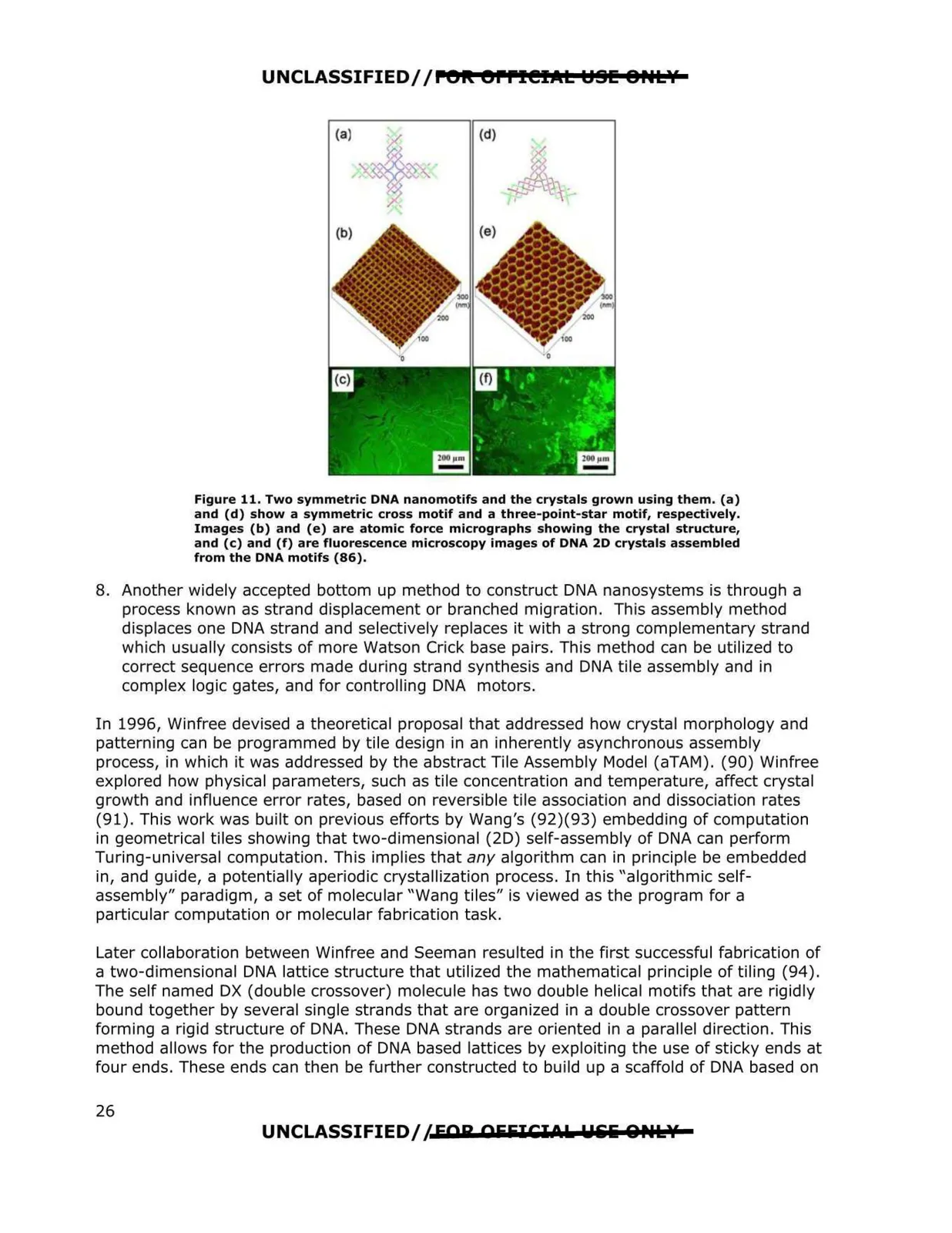
Figure 11. Two symmetric DNA nanomotifs and the crystals grown using them. {a)
and {d) show a symmetric cross motif and a three-point-star motif, respectively.
Images {b) and {e) are atomic force micrographs showing the crystal structure,
and (c) and (f) are fluorescence microscopy images of DNA 2D crystals assembled
from the DNA motifs {86).
8. Another widely accepted bottom up method to construct DNA nanosystems is through a
process known as strand displacement or branched migration. This assembly method
displaces one DNA strand and selectively replaces it with a strong complementary strand
which usually consists of more Watson Crick base pairs. This method can be utilized to
correct sequence errors made during strand synthesis and DNA tile assembly and in
complex logic gates, and for controlling DNA motors.
In 1996, Winfree devised a theoretical proposal that addressed how crystal morphology and
patterning can be programmed by tile design in an inherently asynchronous assembly
process, in which it was addressed by the abstract Tile Assembly Model (aTAM) . (90) Winfree
explored how physical parameters, such as tile concentration and temperature, affect crystal
growth and influence error rates, based on reversible tile association and dissociation rates
(91). This work was built on previous efforts by Wang 's (92)(93) embedding of computation
in geometrical tiles showing that two-dimensional (20) self-assembly of DNA can perform
Turing-universal computation. This implies that any algorithm can in principle be embedded
in, and guide, a potentially aperiodic crystallization process. In this "algorithmic self
assembly" paradigm, a set of molecular "Wang tiles" is viewed as the program for a
particular computation or molecular fabrication task.
Later collaboration between Winfree and Seeman resulted in the first successful fabrication of
a two-dimensional DNA lattice structure that utilized the mathematical principle of tiling (94) .
The self named DX (double crossover) molecule has two double helical motifs that are rigidly
bound together by several single strands that are organized in a double crossover pattern
forming a rigid structure of DNA. These DNA strands are oriented in a parallel direction. This
method allows for the production of DNA based lattices by exploiting the use of sticky ends at
four ends. These ends can then be further constructed to build up a scaffold of DNA based on
UNCLASSIFIED/,{FOR OFFICIO .. Uii 8PtLY
26